 Book Printing in China
 Custom Card Decks
 Custom Holographic Cards
 Free Wall Calendar Template
 Free Desk Calendar Template
 Folding Cartons
 Rigid Boxes
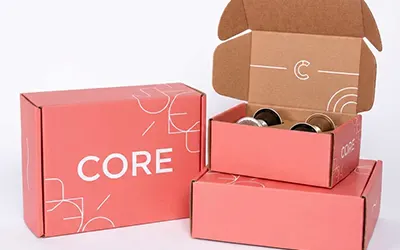 Corrugated Boxes
 Custom Board Game
 Custom Card Game
 Kickstarter Print Solutions
Packaging Insert Materials
Packaging inserts hold products in place inside a box, preventing movement during transit, cushioning against impact, and creating a clean, organized presentation when the customer opens the package. The right insert material depends on the product’s weight, fragility, the type of box, and the level of unboxing experience you want to deliver.
We produce inserts in five material categories: blister trays (PVC and PET), EVA foam, sponge, molded pulp, and paperboard. Each serves a different purpose and pairs with different box types.
Blister Trays (PVC / PET)
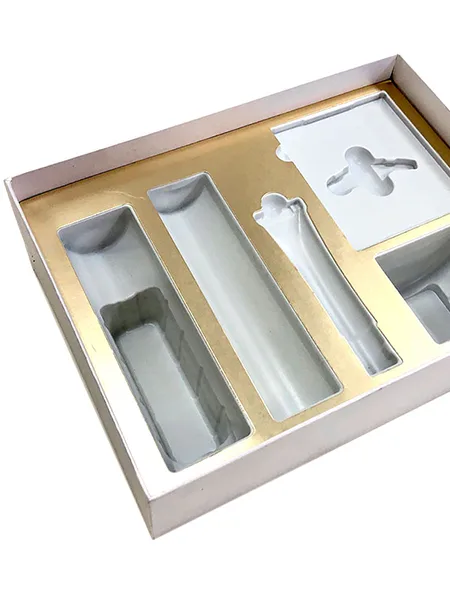
Blister trays, also called thermoformed trays or PVC/PET trays, are vacuum-formed plastic inserts molded to the exact shape of your product. Available in black, white, or clear, the material keeps the product visible while holding it firmly in a custom-fitted cavity.
- Materials: black or white PVC (polyvinyl chloride) is the standard choice. PET (polyethylene terephthalate) is also available. Note: our blister trays are designed for product packaging only and are not intended for direct food contact.
- Typical use: folding cartons for cosmetics, electronics accessories, candles, and small consumer products. Also used inside card deck tuck boxes and board game boxes to hold components.
- Advantages: product visibility through the tray, precise fit, lightweight, cost-effective at medium to large volumes.
- Customization: cavities are molded to the exact dimensions of each item. Multiple cavities per tray are possible for kits, gift sets, and multi-product packaging.
EVA Foam Inserts
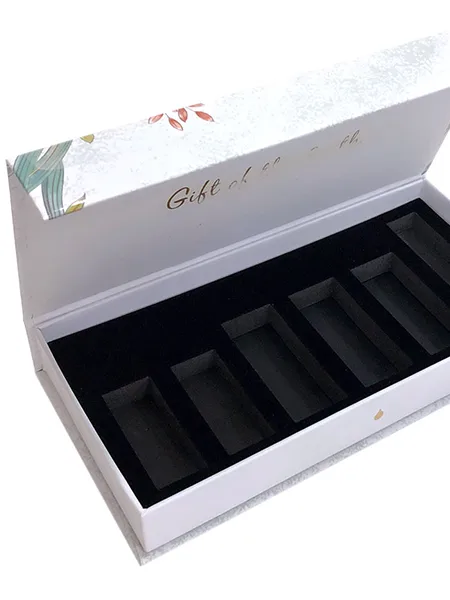
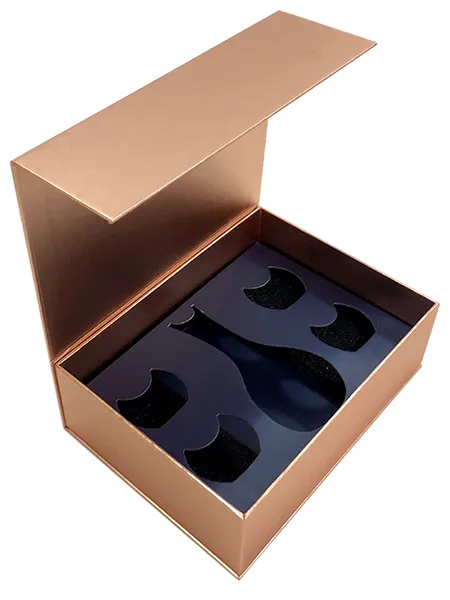
EVA (ethylene-vinyl acetate) foam is a closed-cell foam with a smooth, slightly rubbery surface. It is dense, semi-rigid, and provides excellent cushioning. EVA is the premium insert material for packaging where both protection and visual presentation matter. For an even more luxurious finish, EVA inserts can be covered with velvet or silk fabric to further elevate the unboxing experience.
- Typical use: rigid boxes for electronics, luxury goods, collectibles, cosmetics sets, and board game components such as miniatures and painted figures.
- Advantages: premium look and feel, excellent shock absorption, clean die-cut edges. Available in black, white, and gray.
- Customization: CNC-routed or die-cut to precise shapes. Multi-layer construction allows different cavity depths within the same insert, so products of different heights sit flush with the surface.
Sponge Inserts
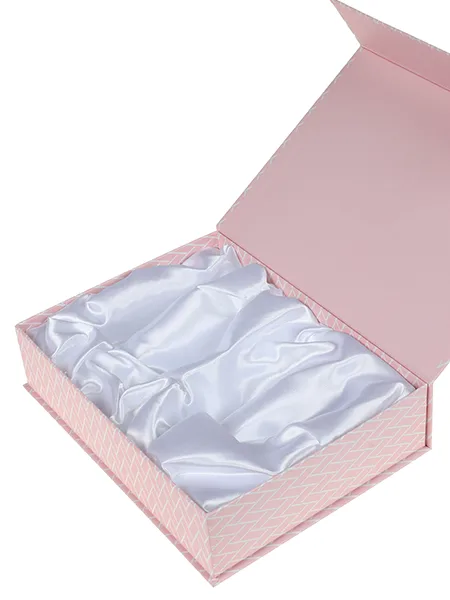
Sponge is an open-cell foam with a soft, compressible feel. It is used in packaging where a plush, cushioned interior adds to the perceived luxury of the product. Like EVA, sponge inserts can also be covered with velvet or silk fabric for an upgraded presentation.
- Typical use: gift boxes, cosmetic sets, small luxury items, and any packaging where a soft, padded interior enhances the unboxing experience.
- Advantages: soft and plush feel, conforms gently to product shape. Available in black, white, and gray
- Customization: die-cut cavities, slotted grids, or layered construction for multi-level inserts.
Molded Pulp Inserts
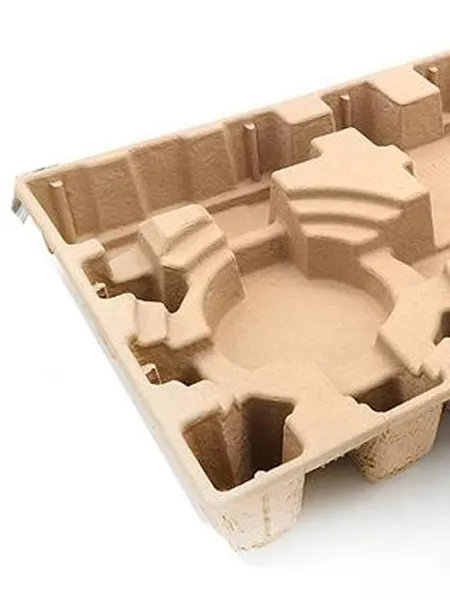
Molded pulp inserts are made from recycled paper fiber pressed into a rigid, contoured shape. They are the most environmentally friendly insert option and are fully recyclable and compostable. Note: molded pulp requires a custom mold, so the minimum order quantity is significantly higher than for other insert types.
- Typical use: electronics packaging, food and beverage products, cosmetics, and any brand that prioritizes sustainable packaging materials.
- Advantages: fully recyclable and biodegradable, rigid enough to hold products securely, natural kraft appearance communicates eco-consciousness.
- Customization: custom molds are produced to match your product dimensions. Molded pulp works best for products with simple, regular shapes.
Paperboard Inserts and Dividers
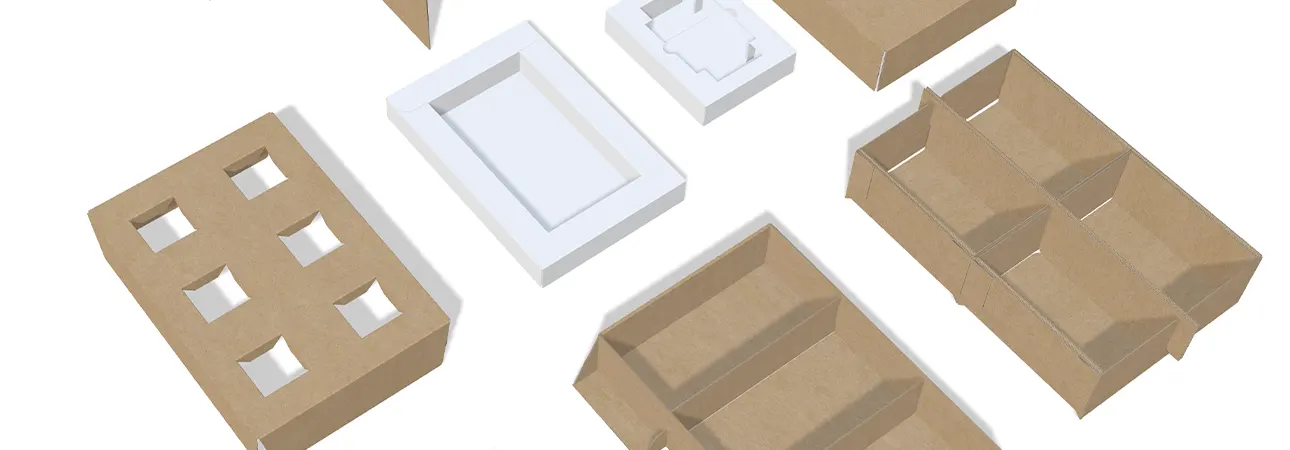
Paperboard inserts are die-cut and folded from cardboard or corrugated board. They are the most cost-effective insert type and can be printed with branding, instructions, or decorative artwork.
- Typical use: folding cartons, corrugated mailer boxes, game boxes (to separate card decks, boards, and components), and any box that needs internal dividers or compartments.
- Advantages: lowest cost per unit, printable with full-color artwork, lightweight, fully recyclable.
- Customization: die-cut to any shape. Can include slots, tabs, folding platforms, and multi-tier structures. Corrugated inserts provide additional cushioning for heavier items.
Insert Material Comparison
| Material | Rigidity | Cushioning | Cost | Best For |
|---|---|---|---|---|
| Blister tray (PVC / PET) | Semi-rigid | Low | Medium | Retail packaging where product visibility matters. Cosmetics, electronics, card decks, candles. |
| EVA foam | Rigid | High | Higher | Premium rigid boxes, luxury goods, collectibles, board game miniatures. |
| Sponge | Soft | Medium | Medium | Gift boxes, cosmetic sets, small luxury items where a plush interior adds value. |
| Molded pulp | Rigid | Medium | Medium | Eco-friendly packaging for electronics, food, cosmetics. Fully recyclable and compostable. |
| Paperboard | Semi-rigid | Low | Lowest | Folding cartons, mailer boxes, game boxes. Printable dividers and compartments. |
How to Choose the Right Insert
The choice comes down to three factors: what you are packaging, what type of box you are using, and the experience you want the customer to have when they open it.
For retail folding cartons, board game boxes: PVC or PET trays are the standard choice. They hold the product visibly in place and work well with automated packing lines. For premium or Kickstarter-tier games, PVC tray inserts elevate the component presentation.
For rigid boxes: EVA foam or sponge inserts create the most polished presentation. EVA is better for heavier or more complex product shapes; sponge is better when a soft, cushioned feel is the priority.
For card deck boxes: paperboard inserts are the most common and cost-effective option.
For eco-conscious brands: molded pulp or paperboard inserts are the most sustainable options. Both are fully recyclable.
Frequently Asked Questions
Do I need to provide a 3D model for a custom insert?
No. Provide the dimensions and shape of each product, and we will design the insert to fit. For PVC/PET trays and EVA inserts, we create the mold or die-cut template based on your product specifications. A physical product sample is helpful.
Can inserts be printed or branded?
Paperboard inserts can be printed with full-color artwork. PVC/PET trays, EVA, and sponge are not printed.
What is the minimum order quantity for custom inserts?
Minimum quantities depend on the insert type and complexity. Contact us with your project details for a specific quote.
Can you assemble the products into the inserts and boxes before shipping?
Yes. We offer assembly and packing services. We can load your products into the inserts, place them in the boxes, and shrink-wrap the finished packages before shipping.
Are PVC trays food-safe?
No. We do not produce packaging intended for direct contact with food. Our blister trays and other insert materials are designed for product packaging only.
Related Resources