 Book Printing in China
 Custom Card Decks
 Custom Holographic Cards
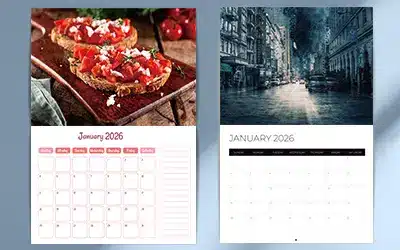 Free Wall Calendar Template
 Free Desk Calendar Template
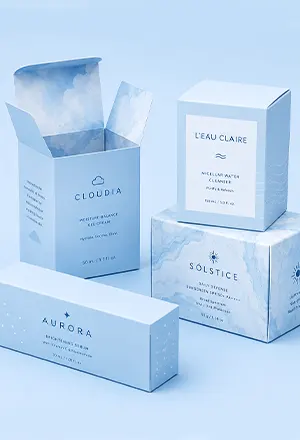 Folding Cartons
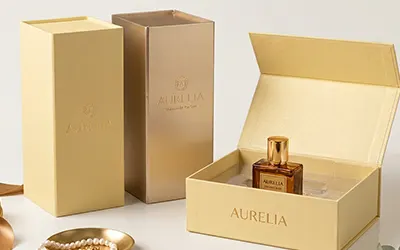 Rigid Boxes
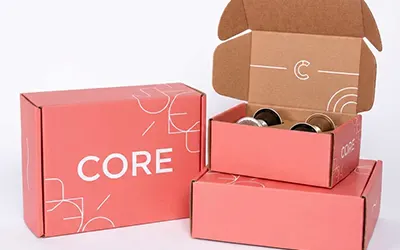 Corrugated Boxes
 Custom Board Game
 Custom Card Game
 Kickstarter Print Solutions
Colored Paper Options
Colored paper is paper that has been dyed during manufacturing to produce a consistent, solid color throughout the sheet. Unlike printing a color onto white paper, the color in colored paper is part of the material itself, which means the edges, back surface, and any exposed fibers all show the same hue. This gives printed products a clean, cohesive appearance that is difficult to achieve with ink alone.
Colored paper is available in a wide spectrum of options, from soft pastels and neutral earth tones to bold primaries and deep blacks. It is used for book covers, end sheets, packaging wraps, invitations, and any application where the paper color itself is part of the design.
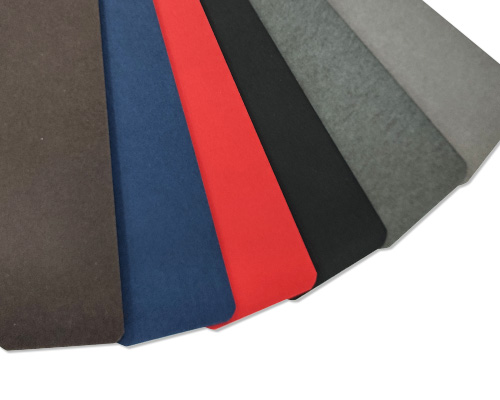
Different Surface Options for Colored Paper
Colored paper is not limited to a single surface finish. We offer colored paper in several different surface types, each with its own look and feel:
Uncoated colored paper: The most common type, with a natural uncoated surface that absorbs ink well. Uncoated colored paper works for a wide range of applications including book covers, end sheets, and packaging wraps. Uncoated black paper is one of the most popular options in this category.
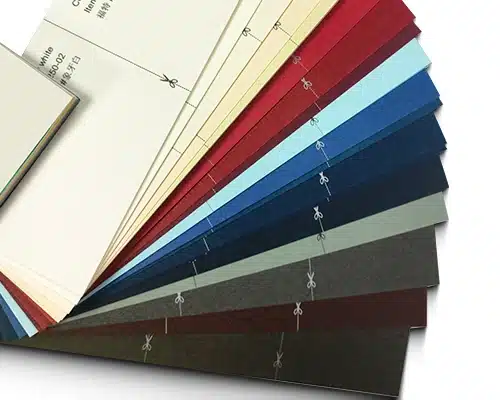
Pearlescent colored paper: Features a subtle shimmer effect that catches the light at different angles. The pearlescent finish adds a layer of elegance and is often used for invitations, luxury packaging, and special edition book covers.
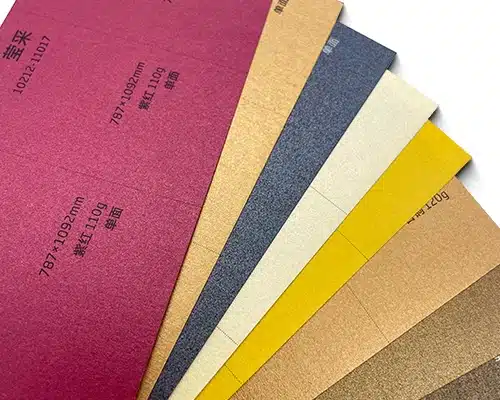
Soft-touch colored paper: Coated with a velvety, smooth-to-the-touch finish that gives the paper a premium tactile quality. Soft-touch colored paper is ideal for high-end packaging and products where the feel of the material matters as much as the look.
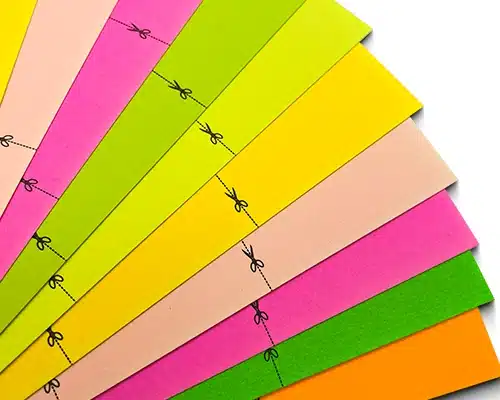
Fluorescent colored paper: Available in vivid, high-visibility neon hues such as fluorescent pink, green, orange, and yellow. Fluorescent paper is eye-catching and is typically used for promotional materials, event signage, or any application where maximum visual impact is the goal.
Available Colors and Weights
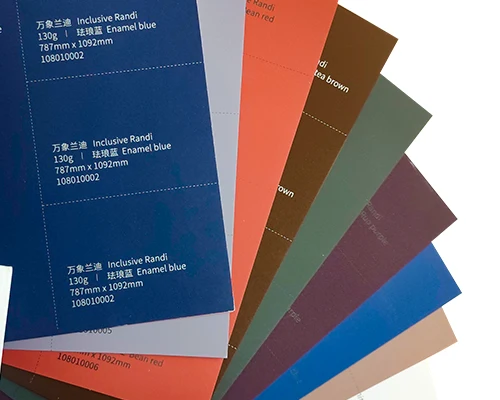
We offer colored paper in a wide range of hues, including black, navy, dark green, burgundy, red, brown, cream, light blue, pink, grey, and more.
Colors are selected from our suppliers’ existing stock, so custom color matching is not available for standard orders. However, if your order quantity is exceptionally large, we may be able to arrange a custom color run. For most projects, you will choose from the available palette, which covers the most commonly requested hues.
Standard weights range from 80 gsm (for interior and lightweight wrapping) to 400 gsm (for covers and packaging boxes). Exact availability varies by color. Contact us for current stock information or to request samples of specific colors and weights.
When to Use Colored Paper
- Hardcover book wraps: colored paper wrapped on grayboard creates a solid-color cover that can be enhanced with foil stamping, embossing, or debossing. Black paper with gold foil is a classic combination for luxury editions.
- End sheets: colored end sheets add a design element inside the book without requiring any printing. A deep navy or burgundy end sheet, for example, signals quality the moment the cover is opened.
- Rigid box wrapping: colored paper gives packaging a clean, branded look. Combined with foil stamping or embossing, it creates a high-end unboxing experience.
- Invitations and stationery: colored paper sets the tone for weddings, events, and corporate communications.
- Decorative inserts and dividers: colored sheets can be used as section dividers in books or as decorative layers in packaging.
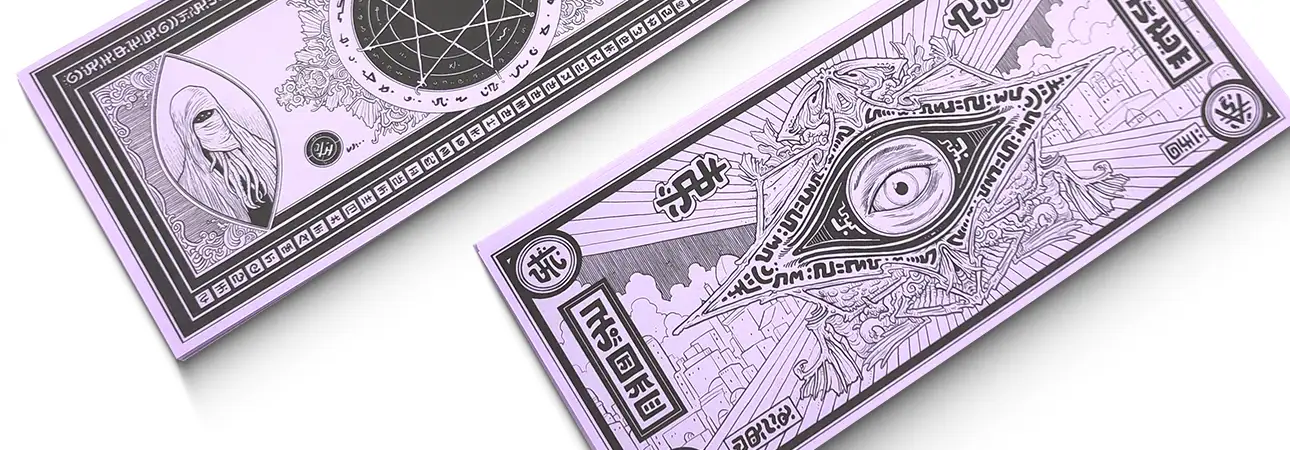
- Board game banknotes: colored paper in different colors is used to represent different denominations of in-game currency, making it easy for players to sort and identify values at a glance during gameplay.
Printing on Colored Paper
Standard CMYK offset printing is designed for white paper. When you print CMYK on colored paper, the paper color mixes with the ink color, which shifts the final appearance. For example, printing yellow ink on blue paper produces green, not yellow.
For accurate color results on colored paper, we recommend:
- UV printing with a white ink base: A layer of opaque white ink is printed first, then CMYK is printed on top. This blocks the paper color and produces accurate, predictable results.
- Foil stamping: Metallic or pigmented foil is applied using heat and a die. Foil sits on top of the paper surface and is not affected by the paper color. Gold, silver, white, and holographic foils are all popular choices on dark colored paper.
- Screen printing: For large text or simple graphic elements, screen printing deposits a thick, opaque ink layer that covers the paper color effectively.
If the paper color is light and the printed content is limited to simple black text or line art, standard offset printing can also produce acceptable results without a white ink base layer.
If you plan to print on colored paper, we always recommend requesting a printed proof first. The interaction between ink color and paper color can be unpredictable, and a proof ensures you are satisfied with the result before committing to a full run.
Related Resources