 Book Printing in China
 Custom Card Decks
 Custom Holographic Cards
 Free Wall Calendar Template
 Free Desk Calendar Template
 Folding Cartons
 Rigid Boxes
 Corrugated Boxes
 Custom Board Game
 Custom Card Game
 Kickstarter Print Solutions

Vellum Paper (Translucent Paper)
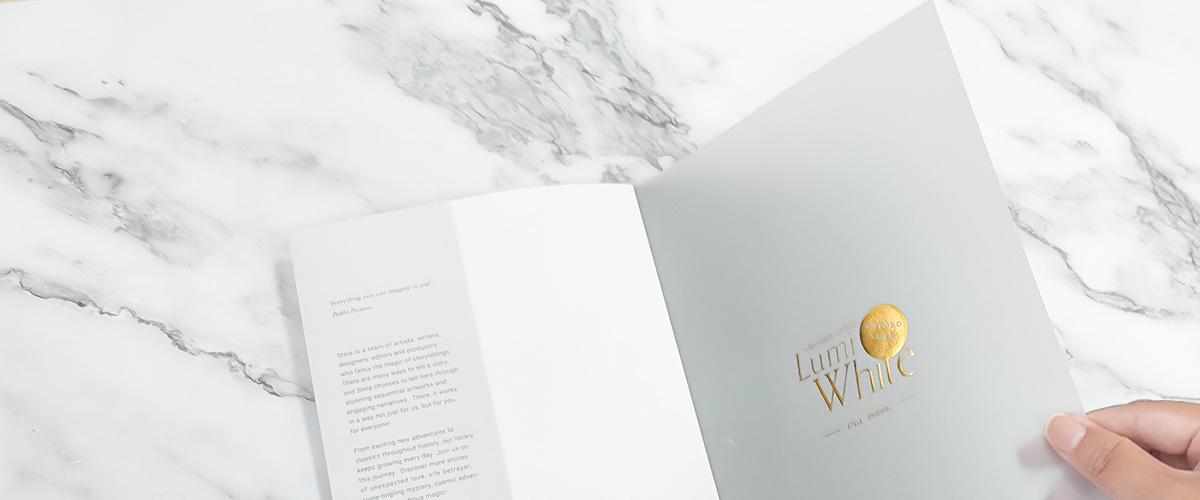
Vellum paper is a smooth, semi-transparent material that allows light and images to show through from behind. It is also known as tracing paper, translucent paper, or luminous paper. Despite the name, modern vellum paper is made from plant fibers, not animal skin. Its distinctive see-through quality and delicate feel make it a popular choice for decorative and artistic applications in book printing, packaging, and stationery.
Vellum is available in a natural frosted translucent finish as well as in a range of tinted colors. It can be printed on one side using offset or UV printing methods.
Available Weights
| Weight (gsm) | Approx. Thickness | Typical Use |
|---|---|---|
| 80 gsm | Very thin, highly translucent | Overlays, tissue-style inserts |
| 100 gsm | Thin, translucent | Standard overlays, invitations |
| 170 gsm | Medium, semi-translucent | Large book overlays |
| 200 gsm | Medium, semi-translucent | Invitations, photo prints |
| 250 gsm | Heavier, less translucent | Belly bands |
| 300 gsm | Heavier, less translucent | Packaging wraps, sleeves, heavier inserts |
The thinner the vellum, the more transparent it is. Heavier vellum (170 gsm and above) is easier to handle and print but allows less show-through. Choose the weight based on how much translucency your design requires.
Common Applications
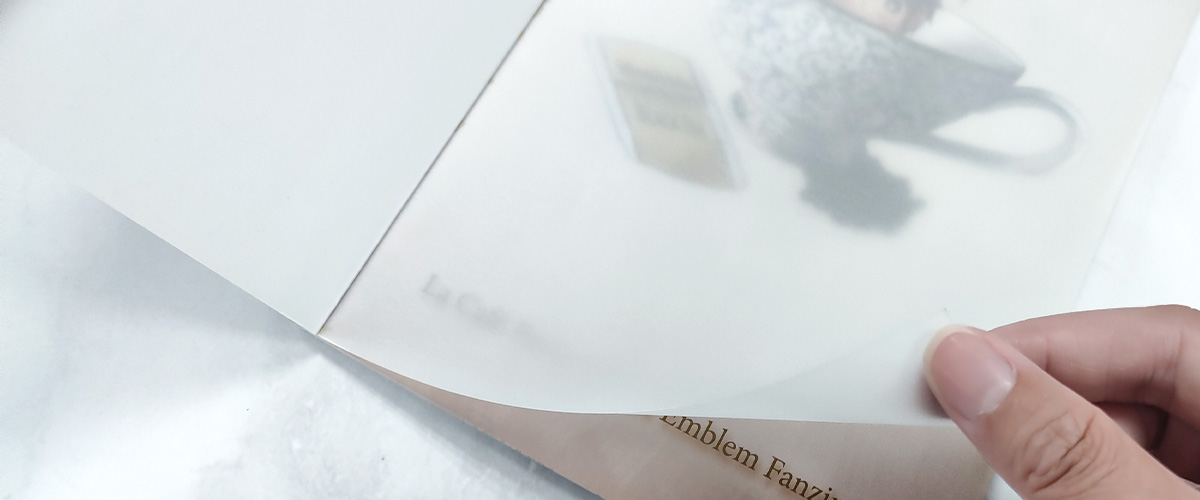
- Book overlays: vellum sheets inserted before full-page photographs or illustrations in art books and coffee table books create a layered, gallery-like presentation effect.
- Decorative end sheets and inserts: a vellum page at the front of a hardcover book adds an elegant, unexpected touch.
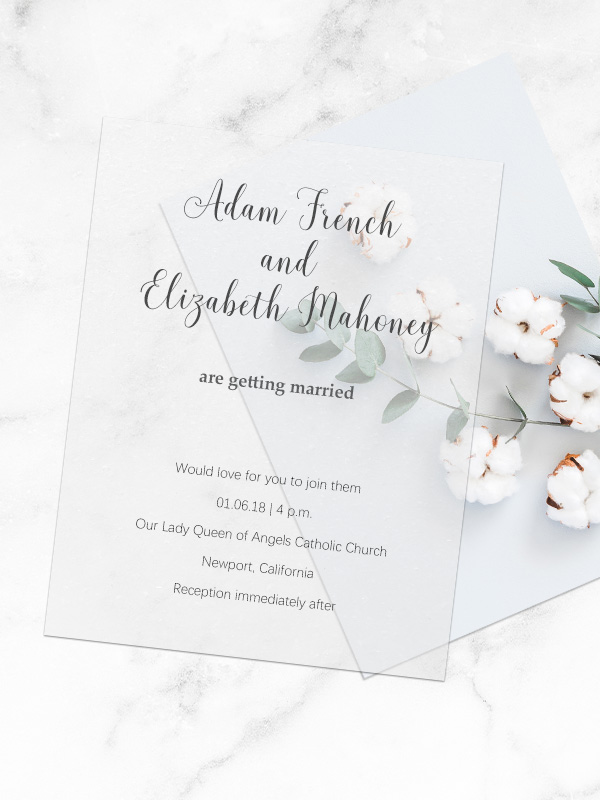
- Invitations and event stationery: vellum is a classic material for wedding invitations, christening announcements, and formal event programs. The translucency gives the piece a refined, layered appearance.
- Packaging accents: vellum wraps, belly bands, or window inserts in rigid boxes and gift packaging add a subtle, sophisticated detail.
- Photo printing: photographs printed directly on vellum have a soft, dreamlike quality that works well for artistic and editorial applications.
Properties to Keep in Mind
- Translucency: content on the reverse side or underlying page will be partially visible through the vellum. This can be used as a deliberate design feature, but it also means you should avoid placing vellum over content you want fully hidden.
- One-sided printing only: because the paper is transparent, printing on both sides would create overlapping, unreadable content. We print on one side only.
- Sensitivity to moisture and heat: vellum paper will curl if exposed to dampness or high temperatures. It should be stored in a dry environment and handled with care during production.
- Smooth surface: the surface is extremely smooth, which produces clean, sharp printing results but also means the paper can be slippery and may show fingerprints.
- Not suitable for sewn binding: vellum is too delicate and slippery for thread sewing. In most cases, printed and trimmed vellum sheets are tipped in (glued) to the finished book or product at the desired location. This means vellum is best used as individual inserts or overlays rather than as a continuous run of multiple consecutive pages bound into a book.
Printing Method
We print on vellum paper using sheet-fed offset or sheet-fed UV printing. Digital printing is not suitable for vellum because the toner does not adhere reliably to the smooth, non-absorbent surface. UV printing is preferred when printing on tinted vellum or when a more durable ink bond is needed.
Related Resources