 Book Printing in China
 Custom Card Decks
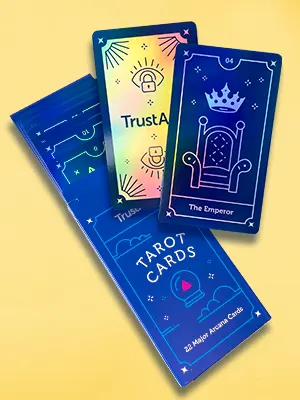 Custom Holographic Cards
 Free Wall Calendar Template
 Free Desk Calendar Template
 Folding Cartons
 Rigid Boxes
 Corrugated Boxes
 Custom Board Game
 Custom Card Game
 Kickstarter Print Solutions
Coated Paper (Art Paper)
Coated paper, also called art paper, is paper that has been treated with a mineral clay or polymer coating to create a smooth, uniform printing surface. The coating fills the gaps between paper fibers, which reduces ink absorption and allows printed colors to sit on top of the surface rather than soaking in. The result is sharper detail, more vibrant color, and better contrast compared to uncoated paper.
Coated paper is available in two finishes: gloss (a reflective, shiny surface) and matte (a smooth, non-reflective surface). Both finishes produce excellent color reproduction. Gloss tends to make images appear brighter and more saturated, while matte delivers a softer, more refined look with less glare.
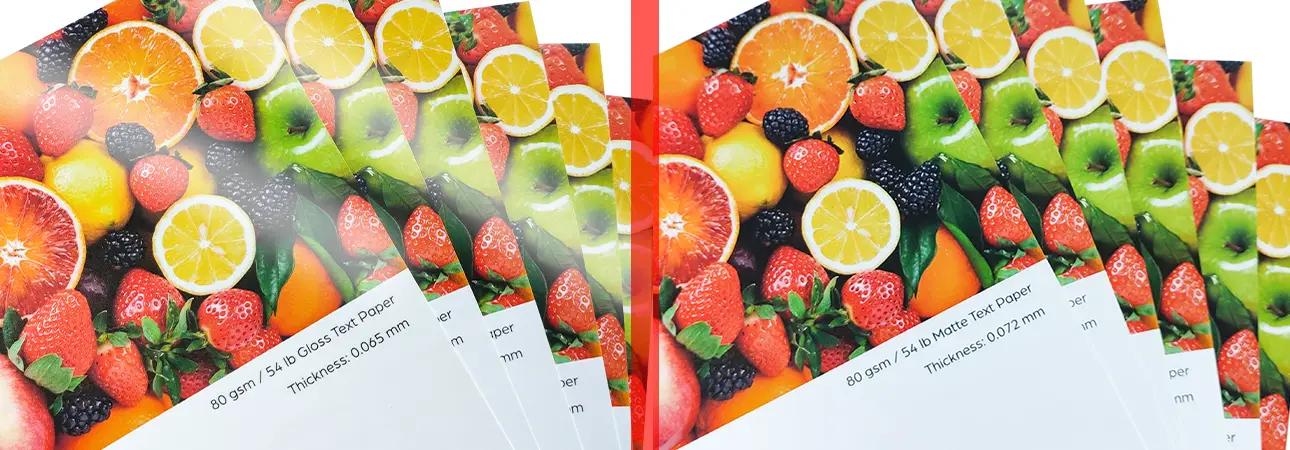
Available Weights and Thickness
| Weight (gsm) | Approx. lb | Gloss Thickness | Matte Thickness | Typical Use |
|---|---|---|---|---|
| 80 gsm | 54 lb text | 0.065 mm | 0.072 mm | Lightweight interiors, flyers |
| 105 gsm | 71 lb text | 0.086 mm | 0.090 mm | Magazine interiors, brochures |
| 128 gsm | 86 lb text | 0.105 mm | 0.110 mm | Standard book interiors, catalogs |
| 157 gsm | 106 lb text | 0.136 mm | 0.140 mm | Wrapped on grayboard for hardcovers, interiors, end sheets |
| 200 gsm | 135 lb text | 0.178 mm | 0.200 mm | Dust jackets, heavy-weight covers |
| 250 gsm | 92 lb cover | 0.225 mm | 0.250 mm | Paperback covers, postcards |
| 300 gsm | 110 lb cover | 0.270 mm | 0.285 mm | Card decks, paperback covers |
| 350 gsm | 129 lb cover | 0.41 mm | N/A | Premium card decks, paperback covers (gloss only) |
For books, 128 gsm and 157 gsm are the most popular interior weights. For hardcover book covers, 157 gsm coated paper with lamination, wrapped on grayboard, is the standard configuration. For paperback covers, 250, 300, or 350 gsm coated paper with lamination is typical. For card decks, 300 or 350 gsm is standard. Matte art paper is not available at 350 gsm. If you are unsure which weight to choose, our team can recommend the best option based on your project.
Gloss vs. Matte: How to Choose

Choose gloss
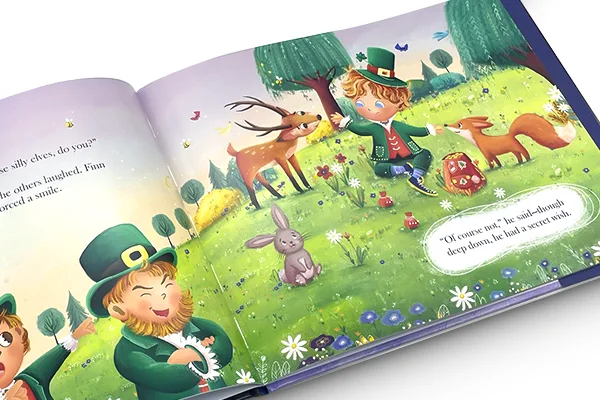
when your content is primarily photographs or full-color illustrations and you want maximum color vibrancy. Gloss is especially effective for photography books, children’s picture books, and fashion catalogs.
Choose matte
when you want a professional, understated look with reduced glare. Matte is a popular choice for art books, portfolios, coffee table books, and any book where the reader may spend extended time viewing images. Matte paper also pairs well with premium finishes like soft-touch lamination and spot UV.
When to Use Coated Paper
Coated paper is the best choice for any print project where visual quality is the priority. Typical uses include:
- Art books and photography books: the smooth surface reproduces fine detail and accurate color across large image areas.
- Coffee table books: gloss or matte art paper gives full-page photographs a professional, gallery-quality appearance.
- Children’s picture books: vibrant colors and crisp illustrations on coated paper hold a child’s attention.
- Catalogs, lookbooks, and magazines: product photography and lifestyle imagery need the color accuracy coated paper provides.
- Hardcover book covers: 157 gsm coated paper with lamination, wrapped on grayboard, is the standard configuration for hardcover cases.
- Paperback book covers: 250, 300, or 350 gsm coated paper with lamination provides a stiff, durable cover for softcover books.
- Card decks: premium coated paper at 300 to 350 gsm (or laminated C2S) is used for playing cards, tarot cards, and game cards.
- Posters and art prints: gloss art paper delivers the most vivid color for wall-display prints.
When Not to Use Coated Paper
Coated paper is not ideal for every situation:
- Text-heavy books (novels, memoirs, academic texts): the bright white surface and reflective finish can cause eye strain during extended reading. Use uncoated or cream paper instead.
- Coloring books, workbooks, or journals: coated paper does not absorb pencil, pen, or marker ink well. Use uncoated paper.
- Projects requiring a natural, organic feel: the smooth, manufactured surface of coated paper may not suit rustic or handmade aesthetics. Consider textured or uncoated paper.
Coated Paper and Lamination
For book covers and packaging, coated paper is almost always laminated after printing. Lamination adds a thin protective film to the surface, preventing scuffs, scratches, and moisture damage. The three lamination options are gloss (shiny, reflective), matte (smooth, non-reflective), and soft-touch (velvety, tactile). Lamination does not change the paper weight significantly, but it does affect how the surface feels and how light interacts with the printed image.
Related Resources