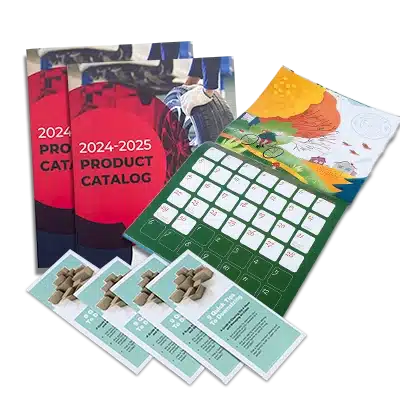
 Book Printing in China
 Custom Card Decks
 Custom Holographic Cards
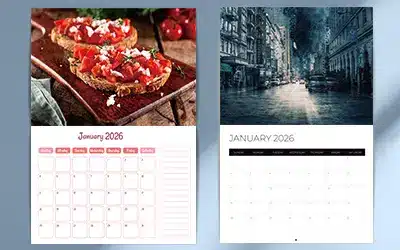 Free Wall Calendar Template
 Free Desk Calendar Template
 Folding Cartons
 Rigid Boxes
 Corrugated Boxes
 Custom Board Game
 Custom Card Game
 Kickstarter Print Solutions
Perforation Lines: A Complete Guide
Think of the satisfying, clean snap as you tear a ticket stub or a monthly page from a desktop calendar. That effortless separation is the result of precision perforation.
What Is Perforation?
Perforation is a finishing process that creates a row of small, evenly spaced holes or slits in a printed sheet, forming a line along which the material can be torn off cleanly and easily. It’s one of the simplest yet most practical finishing techniques in printing—adding interactivity and functionality to everything from books and calendars to tickets, coupons, and packaging.
Technically, perforation is a type of die-cutting. A perforation rule—a blade that alternates between cutting segments and gaps—is built into a standard cutting die. When the die presses into the sheet, it creates a controlled pattern of cuts and bridges that weaken the material along a precise line without severing it completely.
How Perforation Works
- A perforation rule is mounted in the cutting die alongside any other cutting or creasing rules required for the job.
- The printed sheet is fed through the die-cutting press.
- The perforation rule creates a series of evenly spaced slits, leaving small uncut bridges between them.
- The result is a material that holds together during normal handling but tears cleanly when the user pulls along the perforated line.
The balance between the cut segments and the uncut bridges is what determines the tear quality. This balance is called the perforation ratio.
Understanding Perforation Ratios
The perforation ratio describes the length of each cut relative to the length of each uncut bridge. For example, a 3:1 ratio means 3 mm of cut for every 1 mm of uncut paper. Common ratios include:
- 3:1 (standard): A good general-purpose ratio for most papers and applications. Tears cleanly with moderate effort.
- 5:1 (easy tear): More cut area, less bridge. Tears very easily—suitable for coupons, tickets, and tear-off reply cards.
- 2:1 (secure hold): More bridge area, harder to tear. Used where the perforated section must stay attached until intentionally removed.
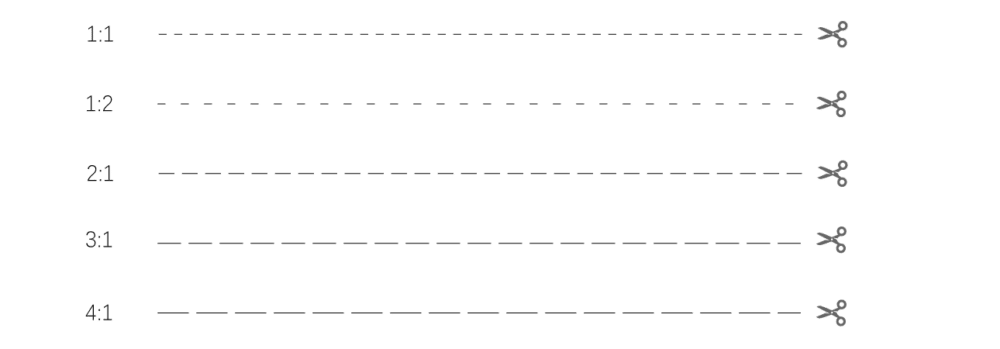
For thicker papers or laminated surfaces, a higher cut-to-gap ratio (longer cuts, shorter gaps) is typically required to ensure the tear is clean and effortless.
Common Types of Perforation
Single-Line Perforation
A single dashed line, typically used in coupon books, desk pad calendars, activity books, and flyers.
Double-Line Perforation (Rip Strip)
Two parallel perforated lines form a removable strip—like a zipper. This type is common in packaging, promotional booklets, and cookbooks.
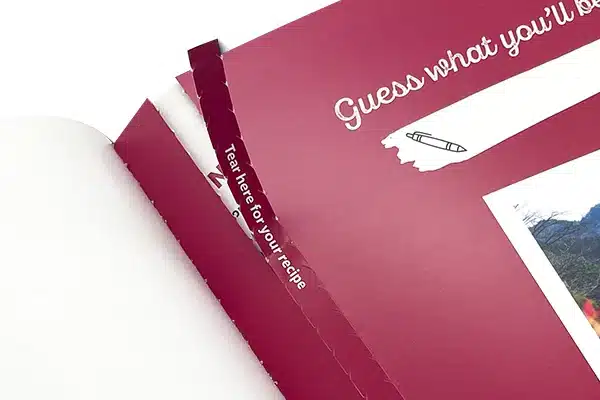
Perforation vs. Scoring
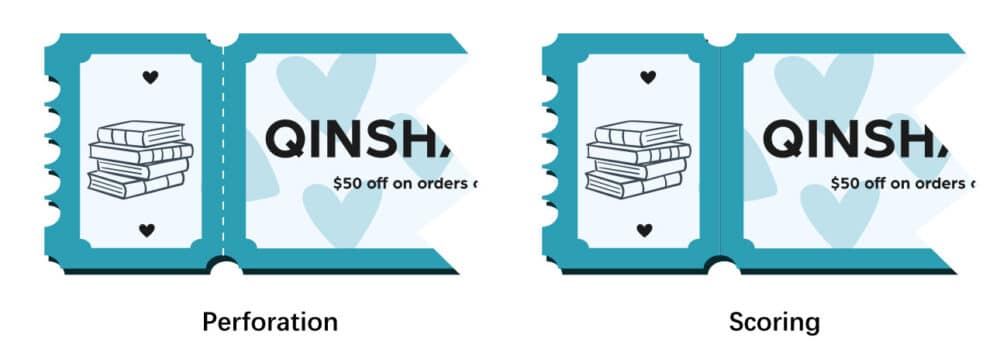
It’s worth understanding the difference between perforation and scoring, as both are die-based finishing processes:
- Perforation creates a tear line: The material is designed to be separated along the perforated line.
- Scoring creates a fold line: The material is compressed (not cut) to create a crease that allows clean folding without cracking.
Both can be incorporated into the same die. A packaging carton, for example, might include scoring rules for the fold lines and perforation rules for a tear-open tab.
Popular Applications
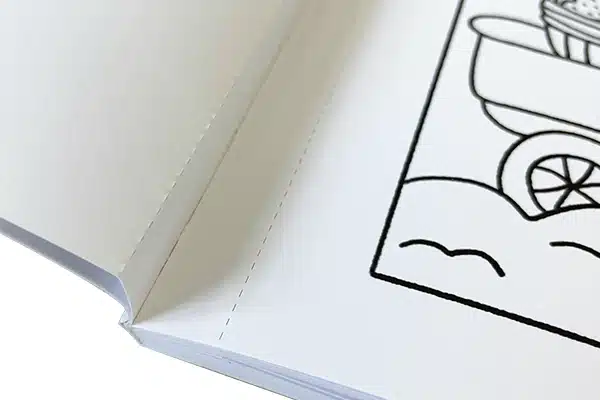
- Books and journals: Ideal for tear-out pages in coloring books, notebooks, workbooks, and activity books. Perforation allows individual pages or sections to be removed cleanly without damaging the binding. This is especially valuable for interactive workbooks or art journals where users may want to frame their finished artwork or share pages with others.
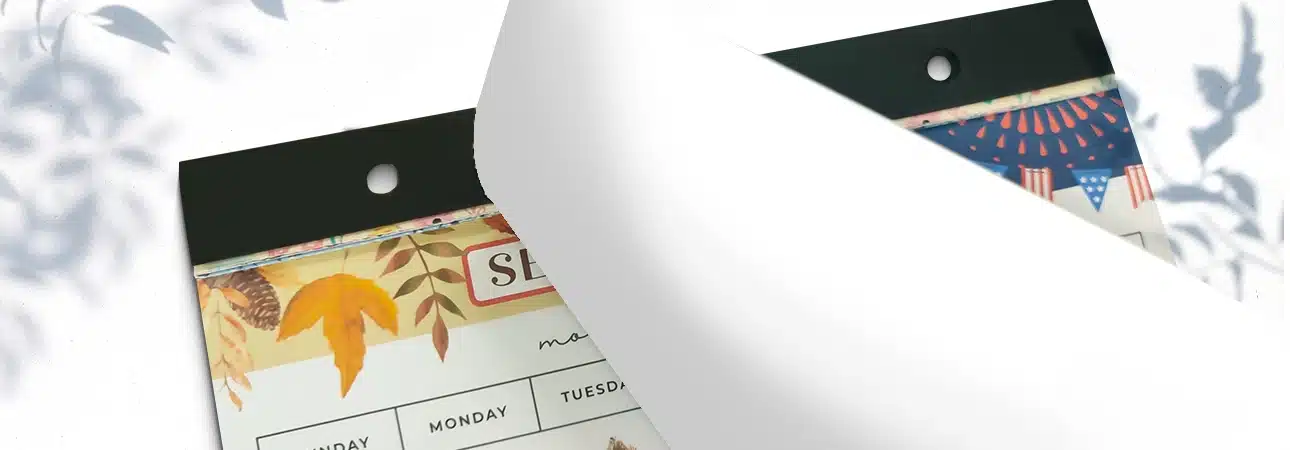
- Calendars: Monthly or daily tear-off calendar pages rely on perforation to separate cleanly from the pad or binding.
- Tickets and vouchers: Event tickets with a detachable stub, promotional vouchers with a tear-off coupon—perforation makes the separation clean and intentional.
- Packaging: Tear-open tabs, perforated windows, and easy-open features on folding cartons and display boxes.
- Stickers and labels: Perforated sheets allow individual stickers to be torn off one at a time.
Design Considerations
- Position perforations clearly: Make sure the perforated line is positioned where it makes functional sense—close enough to the edge to provide a useful tear-off section, but far enough from the binding or structural elements to preserve the integrity of the remaining piece.
- Keep content clear of the perforation line: Allow at least 3–5 mm of clear space between any text, images, or critical design elements and the perforation line.
- Laminated surfaces: If the sheet is laminated, the perforation needs to cut through both the laminate film and the paper. A higher cut-to-gap ratio is usually needed to ensure a clean tear.
How to Prepare Your Design Files
- Add perforations to your die-line layer: Place perforation lines on the same layer as your other die-cut and scoring rules.
- Use a dashed line: Represent perforation lines as dashed strokes to distinguish them from through-cut lines (solid) and scoring rules (dashed, different color).
- Assign a spot color: Use a distinct spot color for perforation rules and name it clearly (e.g., “Perf”).
- Maintain consistent stroke weight: Use the same stroke weight for all perforation lines.
- Export as PDF: Include perforation lines in your layered, high-resolution PDF alongside your artwork.
Have a question about whether perforation will work for your specific project? Reach out—we’re happy to advise.
Related Resources