 Book Printing in China
 Custom Card Decks
 Custom Holographic Cards
 Free Wall Calendar Template
 Free Desk Calendar Template
 Folding Cartons
 Rigid Boxes
 Corrugated Boxes
 Custom Board Game
 Custom Card Game
 Kickstarter Print Solutions
Inline UV Varnish
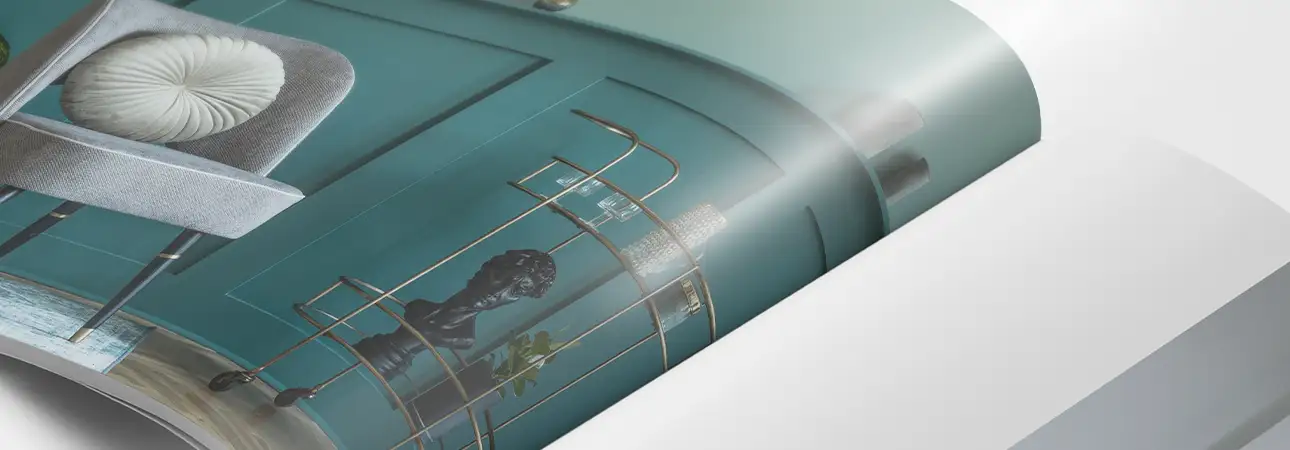
Inline UV varnish is a water-based coating applied on the offset printing press during the same run as CMYK printing. After the sheet passes through the four CMYK ink units, it enters an additional coating unit where the varnish is applied, and then passes through an ultraviolet light tunnel that instantly cures (hardens) the coating onto the printed surface.
The UV curing process produces a coating that is noticeably thicker, harder, and glossier than overprint varnish. The result is enhanced color vibrancy, sharper image contrast, and stronger surface protection against scratching, scuffing, and fingerprints. Inline UV varnish is the preferred choice when images need to look their best on the printed page.
How Inline UV Varnish Works
The production process begins the same way as any offset print job: the sheet passes through four ink units for CMYK printing. After the fourth unit, the sheet enters a fifth unit equipped with a coating applicator. This unit applies a thin, even layer of water-based varnish across the entire sheet as a flood coat — covering the full page from edge to edge. Spot (selected-area) application is not available for inline UV varnish.
Immediately after the coating is applied, the sheet passes through an ultraviolet light tunnel integrated into the press delivery. The UV light triggers a photochemical reaction that cross-links the varnish molecules, instantly curing the coating into a solid, durable film on the paper surface. Unlike overprint varnish, which dries slowly through absorption and oxidation, inline UV varnish is fully cured in a fraction of a second. This instant curing is what gives the coating its hardness, thickness, and gloss.
Because the entire process—CMYK printing, coating application, and UV curing—happens in a single pass through the press, there is no need for a separate production step. The sheets come off the press printed, coated, and fully dry.
Finish Options
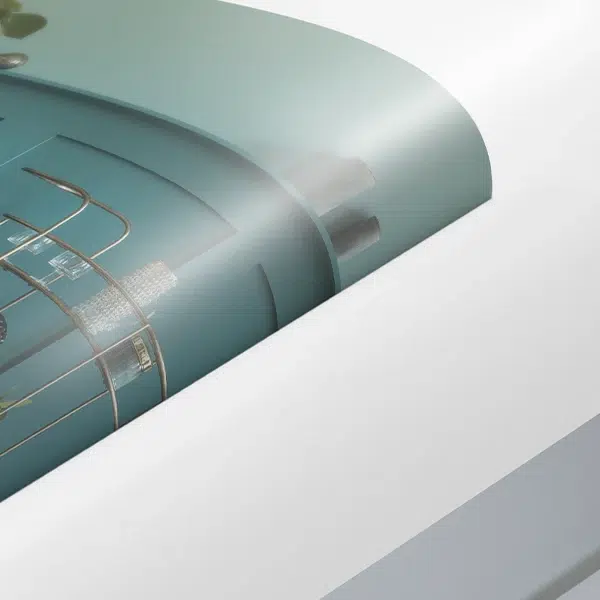
Gloss Inline UV Varnish
Gloss inline UV varnish enhances the reflective quality of the printed surface, making colors appear more saturated and images sharper. The gloss level is significantly higher than overprint varnish—printed images gain visible depth and vibrancy. This is the most common choice for photography books, art books, and catalogs where image quality is the priority.
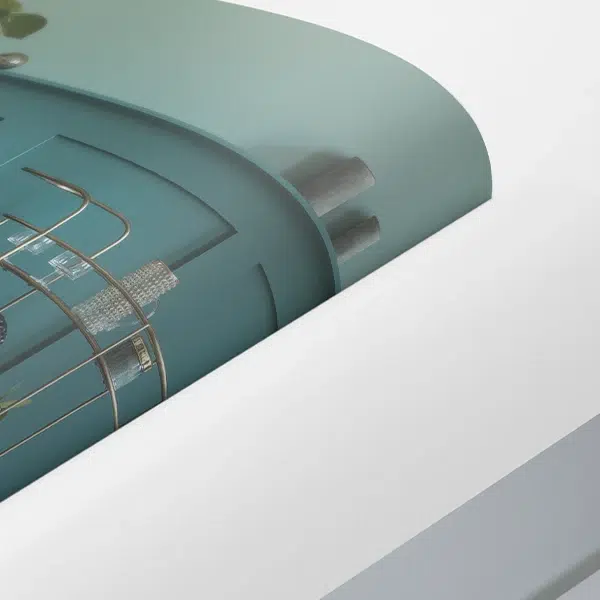
Matte Inline UV Varnish
Matte inline UV varnish provides the same thickness and protection as the gloss version but with a non-reflective, soft-sheen finish. It reduces glare on the page surface while still enhancing color depth compared to uncoated pages. Matte inline UV varnish is chosen when the design calls for a refined, understated look with strong surface durability.
Flood Application
Inline UV varnish is a flood-only coating. The varnish unit applies the coating across the entire printed surface of the page in a single, uniform layer. This is the standard application for book interiors and catalogs, where all pages receive the same treatment.
Spot (selected-area) application is not available for inline UV varnish. The varnish unit on our offset press is configured for full-sheet flood coating and does not support a separate spot plate for this process. If your design requires spot application — for example, glossy highlights on photographs against a matte background — please consider one of the following alternatives:
- Overprint varnish (spot or flood) for book interiors on 80–200 gsm paper.
- Spot UV coating (offline process) for a thicker, raised spot effect on covers and premium printed products.
- UV coating or sand UV coating on a UV offset press, which supports both spot and flood, for specialty cardstock (metallic, pearlescent, soft-touch).
Specifications
| Specification | Detail |
|---|---|
| Process | Inline — applied on the offset press during CMYK printing |
| Coating material | Water-based varnish |
| Drying / curing method | Ultraviolet (UV) light curing — instant cure |
| Finish options | Gloss, matte |
| Application | Flood only (entire page). Spot application is not available. |
| Paper weight range | 80–350 gsm |
| Coating thickness | Medium — noticeably thicker than overprint varnish |
| Protection level | Moderate — good scratch and scuff resistance |
| Cost | Approximately 3× overprint varnish |
Common Applications
- High-end book interiors where image quality and color vibrancy are critical: art books, photography books, coffee table books, and illustrated editions.
- Catalogs and lookbooks with full-color product photography that needs to appear sharp and vivid.
- Premium children’s books with richly colored illustrations.
- Brochures and marketing materials where print quality reflects brand positioning.
- Any printed interior where the client wants images to visibly “pop” on the page compared to standard uncoated or overprint-varnished pages.
When to Use Inline UV Varnish
- Your book or catalog interiors contain high-quality photographs or illustrations that need enhanced color and gloss.
- You want noticeably better surface protection than overprint varnish can provide.
- Your project is a premium product where print quality justifies the additional cost.
- You need both spot and flood varnish options within the same print run.
- You need full-page (flood) coating across all pages of the print run. (If your project requires spot coating, see the alternatives listed in the Flood Application section above.)
Why UV Curing Matters
The key difference between inline UV varnish and overprint varnish is the curing method. Overprint varnish dries through absorption and oxidation—a slow process that produces a thin, soft coating. UV curing is instantaneous: the ultraviolet light triggers a chemical reaction that hardens the varnish into a dense, cross-linked film in less than a second.
This instant cure has three practical consequences. First, the coating is harder and more scratch-resistant because the molecules are cross-linked rather than simply dried. Second, the coating can be thicker because it does not need to absorb into the paper—it sits on top of the surface as a solid film. Third, the gloss is higher because the smooth, hard surface reflects more light than a soft, absorbed coating.
The trade-off is cost. The UV curing system requires additional press equipment (the UV lamp tunnel), and the water-based varnish material is more expensive than standard ink varnish. This is why inline UV varnish costs approximately three times more than overprint varnish.
File Preparation
Because inline UV varnish is a flood coat only, no additional varnish layer is required in your print files. We apply the coating automatically across every sheet during the print run, using your standard CMYK files.
Frequently Asked Questions
Is inline UV varnish the same as spot UV?
No. Spot UV is typically an offline process where a thick UV coating is applied to selected areas on a separate machine after printing. Inline UV varnish is applied on the printing press during the same pass as CMYK printing. Inline UV varnish produces a thinner coating than offline spot UV, but it is faster and more cost-effective because it does not require a separate production step.
Can inline UV varnish be used on card decks?
Inline UV varnish can technically be applied to card-weight stock, but it is not the best choice for card decks. For decks that require shuffling, infrared varnish provides a smoother, more slippery surface. For decks that need heavy-duty protection on both sides, aqueous coating is a better option because it produces a thicker coating.
Does inline UV varnish yellow over time?
No. UV-cured coatings are resistant to yellowing. Unlike overprint varnish, which can develop a slight yellow tint over time on unprinted areas, inline UV varnish maintains its clarity.
Can I use inline UV varnish on uncoated paper?
Yes. Inline UV varnish works on both coated and uncoated paper. On uncoated paper, the visual effect is different—the coating sits more prominently on the surface because the paper does not absorb it the way it absorbs overprint varnish. This can create a striking contrast, especially with spot application on uncoated stock.
Can inline UV varnish be applied as a spot coat?
No. Inline UV varnish is a flood-only coating — it is applied across the entire sheet in a single uniform layer. For spot application, use overprint varnish (for book interiors), offline spot UV (for covers), or UV coating / sand UV coating on a UV offset press (for specialty cardstock).
Want to see the difference inline UV varnish makes? Contact us at [email protected]. We can provide sample pages printed with and without inline UV varnish so you can compare the effect on your chosen paper stock.
When to Consider Other Options
- Only need basic protection? → Overprint Varnish
- Card decks requiring shuffling? → Infrared Varnish
- Metallic or specialty cardstock? → UV Coating
- Card decks requiring thicker protection? → Aqueous Coating
- Need spot coating (selected areas only)? → Overprint Varnish, UV Coating, Spot UV