 Book Printing in China
 Custom Card Decks
 Custom Holographic Cards
 Free Wall Calendar Template
 Free Desk Calendar Template
 Folding Cartons
 Rigid Boxes
 Corrugated Boxes
 Custom Board Game
 Custom Card Game
 Kickstarter Print Solutions
Paper Box Styles
Paper box styles are the different structural designs of a folding carton, that is, the way the panels, flaps, and base are cut and folded. The right style depends on three things: how heavy your product is, how the box is filled and closed, and whether it needs tamper-evident sealing or a retail hang tab.
The 9 most common paper box styles
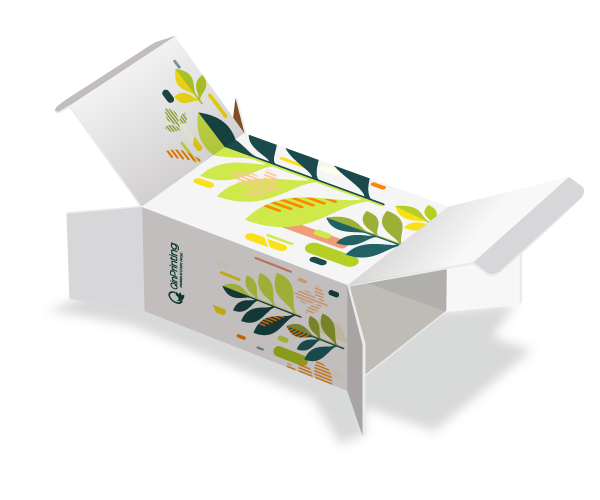
Both the top and bottom tuck flaps open from the same direction, usually the front. A clean, classic carton that is easy to fill by hand or by machine.
Best for: Cosmetics, supplements, and light retail goods.
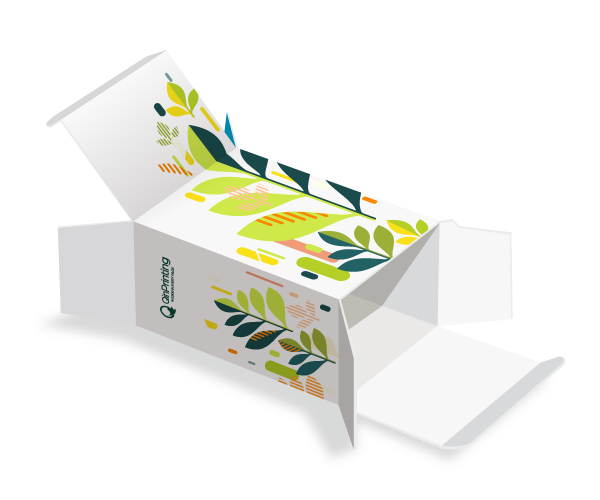
Like the straight tuck, but the top and bottom flaps tuck from opposite directions. The most economical and widely used folding carton.
Best for: General retail and light products where cost matters.
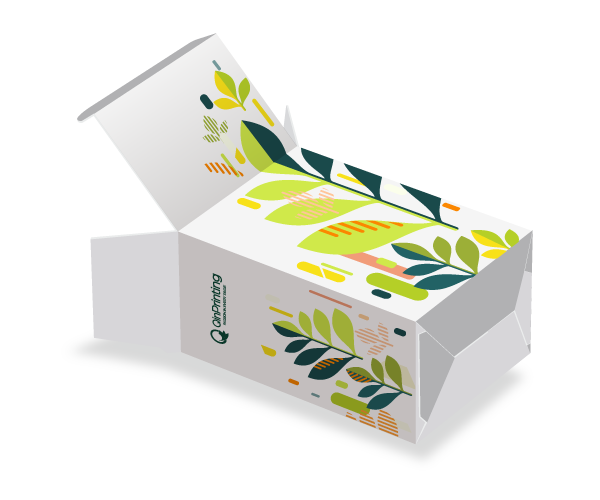
The base is pre-glued and pops open automatically when you square the box, while the top tucks closed. Saves assembly time and holds more weight.
Best for: Heavier products and high-volume packing lines.
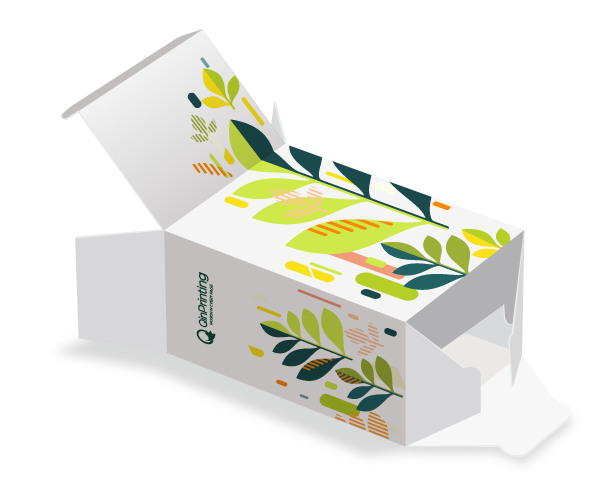
Interlocking bottom flaps lock together without glue, sometimes called a 1-2-3 bottom. A strong base at a lower cost than auto bottom.
Best for: Mid-weight products on a budget.
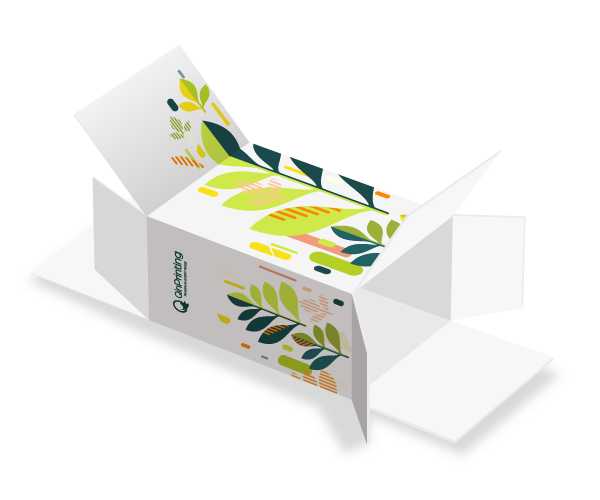
The top and bottom flaps are glued and sealed, often tamper-evident. Shipped flat and sealed at your facility on a gluing line.
Best for: Food, pharmaceuticals, and sealed retail products.
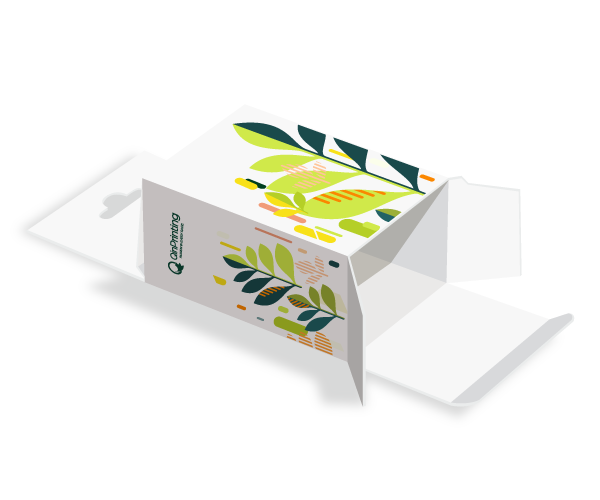
A tuck end box with a perforated hang tab so it can hang on a pegboard or hook. The tab is die-cut and reinforced for display.
Best for: Peg-display retail for lightweight items.
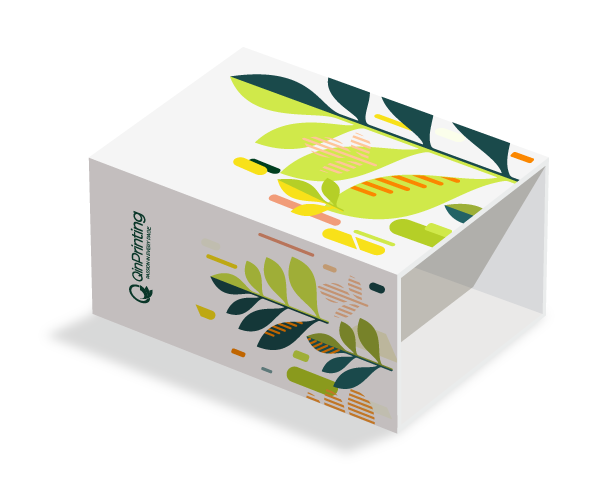
A printed wrap that slides over a tray, an existing box, or the product itself. A fast, low-cost way to add branding.
Best for: A branded layer over plain or kraft packaging.
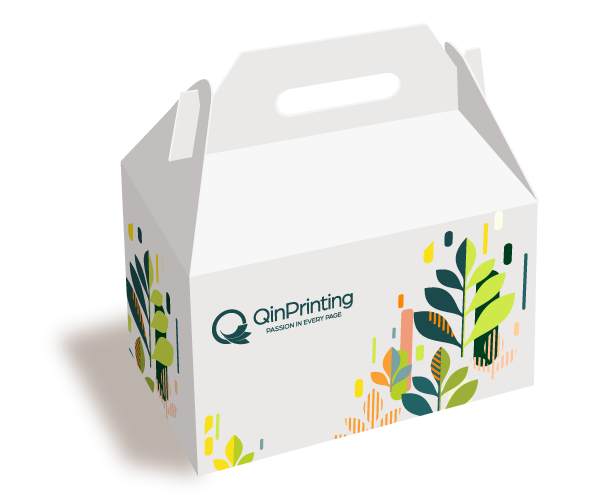
A carry-handle gable top with an auto-lock base. Opens into a handled carton that stands on its own.
Best for: Gift sets, food to-go, and party favors.

A rigid box shaped like a paper bag, with a fold-over handle top and an auto-lock base. A premium feel with the structure of a box.
Best for: Premium retail gifting and boutique packaging.
Start Your Custom Packaging Project. Get Instant Quote!
Quick comparison: which paper box style to choose
| Box style | Base strength | Best for | Seal / hang | Ships flat |
|---|---|---|---|---|
| Straight tuck end | Light | Cosmetics, supplements, light retail | — | Yes |
| Reverse tuck end | Light | General retail (most economical) | — | Yes |
| Tuck top auto bottom | Strong (pre-glued) | Heavier products, fast packing lines | — | Yes |
| Tuck top snap lock | Strong (glue-free lock) | Mid-weight products on a budget | — | Yes |
| Seal end | Strong (glued ends) | Food, pharma, sealed retail | Tamper-evident | Yes |
| Tuck end hanging tab | Light | Peg-display retail | Hang tab | Yes |
| Box sleeve | n/a (wrap) | Branding over existing packaging | — | Yes |
| Gable top auto bottom | Medium | Gift sets, food to-go, party favors | Carry handle | Yes |
| Bag box auto bottom | Medium | Premium retail gifting | Handle | Yes |
How paper boxes are made
Most paper box styles are die-cut from 250 to 350 gsm C1S paperboard, offset printed in CMYK or Pantone spot colors, finished with coatings or effects such as matte or gloss lamination, soft-touch, spot UV, foil stamping, or embossing, then shipped flat to save freight. At QinPrinting the minimum order is 300 units, and every style can be fully customized in size, board, print, and finish.
How to choose the right box style
Start with three questions. First, how heavy is the product? Light items suit tuck end styles, while heavier items need an auto-bottom or snap-lock base. Second, how is the box filled and closed? Hand packing favors tuck ends, while high-volume lines favor auto bottoms. Third, does it need sealing or hanging? Sealed goods need a seal end box, and peg displays need a hang tab. When in doubt, order a sample or a printed dummy before you commit to a full run.
FAQ
Which paper box style is most common?
The reverse tuck end box is the most widely used because it is economical, ships flat, and suits most light retail products. The straight tuck end is a close second when you want both flaps to open from the front for a cleaner face. For heavier items, an auto-bottom or snap-lock base adds strength, and sealed products use a seal end box.
How do I choose the right box style for my product?
Match the style to product weight, filling method, and closure needs. Light products suit tuck end styles, heavier ones need auto-bottom or snap-lock bases, sealed goods need seal end boxes, and peg displays need a hang tab. Each style page explains the structure, and you can request samples before you commit to production.
What paperboard is used for folding cartons?
Folding cartons are usually printed on 250 to 350 gsm C1S paperboard, which has one coated side for sharp print and one uncoated side for gluing. Kraft and recycled boards are also available when you want a natural or eco look. Heavier or rigid structures use thicker board or gray board.
What is the difference between an auto-bottom and a snap-lock bottom box?
An auto-bottom box has its base panels pre-glued at the factory, so the box pops open into a ready base when you square it, which is fast and holds more weight. A snap-lock bottom, sometimes called a 1-2-3 bottom, has interlocking flaps you fold and tuck by hand to lock the base without glue, which costs less. Both ship flat and give a sturdier base than a plain tuck end.
What does 'tuck end' mean on a box?
A tuck end is a closure where a flap folds down and tucks inside the box wall to hold it shut, with no glue. Straight tuck and reverse tuck end boxes use this closure on both the top and bottom. Tuck ends are easy to open and reclose, which makes them popular for light retail products that shoppers pick up and handle on the shelf.
Do paper box styles ship flat or pre-assembled?
Almost all folding carton styles ship flat to save freight and storage, then fold up by hand or on a machine at your facility. Tuck end and snap-lock styles assemble with no glue, auto-bottom styles pop open from a pre-glued base, and seal end styles are glued and sealed on a gluing line. Rigid boxes are the main exception and often ship set up or as collapsible blanks.
What is the difference between a folding carton and a rigid box?
A folding carton is die-cut from a single sheet of paperboard, usually 250 to 350 gsm, and folds flat, which is what every style in this guide is. A rigid box is built from thick gray board wrapped in printed paper, holds its shape permanently, and feels more premium, like a phone or jewelry box. Folding cartons cost less and ship flat; rigid boxes cost more and protect better.
Which paper box styles lock without glue?
Tuck end styles, both straight and reverse, and snap-lock bottom styles assemble entirely without glue, using tuck flaps and interlocking panels. Auto-bottom styles use a small amount of factory glue on the base only, then snap open. Seal end styles are fully glued and sealed. If you want a glue-free box you can assemble in house, choose a tuck end or snap-lock style.