 Book Printing in China
 Custom Card Decks
 Custom Holographic Cards
 Free Wall Calendar Template
 Free Desk Calendar Template
 Folding Cartons
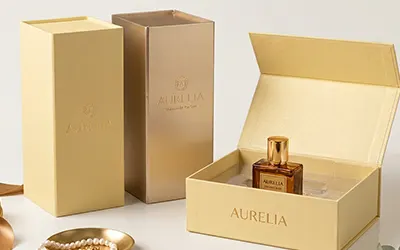 Rigid Boxes
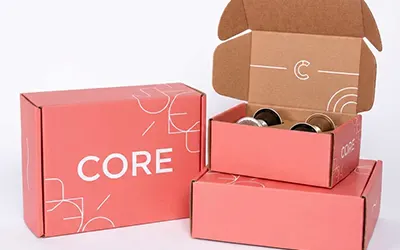 Corrugated Boxes
 Custom Board Game
 Custom Card Game
 Kickstarter Print Solutions

C1S Paper (Coated One Side)
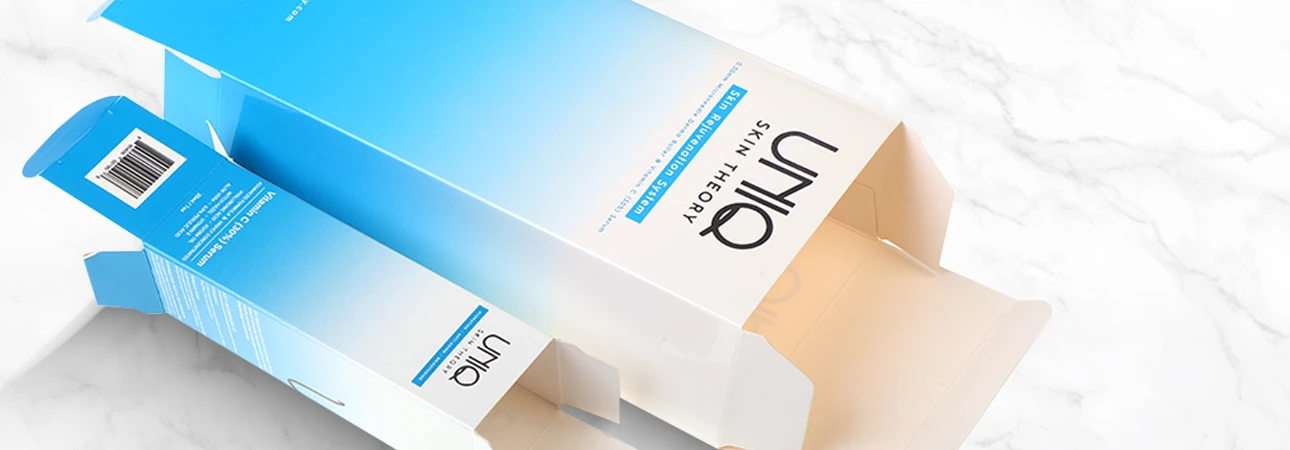
C1S stands for Coated One Side. It is a paper or cardstock that has a smooth, coated surface on one side (for high-quality color printing) and a raw, uncoated surface on the other side (typically used for gluing, mounting, or left blank). This dual-surface construction makes C1S paper the standard material for products that need a printed exterior and a functional interior, such as folding carton boxes, board book pages, and paperback book covers.
Compared to paper coated on both sides (C2S), C1S is stiffer at the same weight. This extra rigidity comes from the uncoated side retaining more of its natural fiber structure. The stiffness makes C1S well suited for structural applications where the paper needs to hold a shape, resist bending, or support the weight of a product inside a box.
Available Weights and Thickness
| Weight (gsm) | Approx. lb | PT | Thickness | Typical Use |
|---|---|---|---|---|
| 210 gsm | 74 lb cover | 12 | 0.29 mm | Lightweight covers, wrapping |
| 250 gsm | 92 lb cover | 14 | 0.35 mm | Paperback covers, card inserts, wrapped on corrugated board, wrapped on grayboard for tiles |
| 300 gsm | 111 lb cover | 16 | 0.41 mm | Folding cartons, flash cards, board book pages |
| 350 gsm | 129 lb cover | 20 | 0.50 mm | Premium packaging, thick cards, board book pages |
| 400 gsm | 148 lb cover | 22 | 0.55 mm | Heavy-duty packaging, large boxes |
C1S paper is slightly thicker and stiffer than C2S paper at the same weight. This is an advantage for packaging and board books, where structural rigidity matters.
Common Applications for C1S Paper
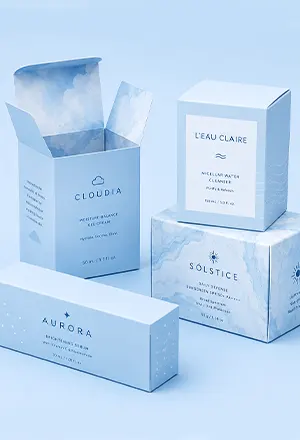
- Folding carton boxes: C1S is the primary material for printed packaging. The coated side carries your full-color branding and product imagery, while the uncoated side faces inward and is glued during box assembly.
- Board books: Self-cover board books are made by mounting two sheets of C1S paper together (coated sides facing outward) to create thick, rigid pages that young children can handle without tearing.
- Flash cards: Two sheets of C1S cardstock at 300 to 350 gsm, laminated on both sides, produce durable, rigid cards suitable for early childhood learning and infant development.
- Paperback book covers: C1S paper at 250 to 300 gsm provides a stiff, fold-resistant cover that holds its shape on a bookshelf.
- Packaging inserts and dividers: The rigidity of C1S makes it effective for structural inserts inside retail boxes and gift sets.
- Board game tiles: Printed C1S paper with varnish is wrapped onto 1.0 or 1.5 mm grayboard (coated side out, uncoated side glued to the board), then die-cut into the required tile shapes.
When Not to Use C1S Paper
- Double-sided full-color printing: the uncoated side will not produce the same color vibrancy or sharpness as the coated side. If you need excellent printing on both sides, use C2S (coated both sides) paper instead.
- Book interiors: C1S is too stiff for interior pages. Use standard coated or uncoated paper for book content.
C1S vs. C2S: What Is the Difference?
C1S (Coated One Side) has a smooth, printable surface on one side and a raw, uncoated surface on the other. C2S (Coated Two Sides, also called coated art paper) has a smooth surface on both sides. Choose C1S when one side will be glued, hidden, written, or left blank. Choose C2S when both sides need high-quality printing, such as double-sided cards, brochures, or book interiors.
C1S Paper and Die-Cutting
Because C1S paper is stiffer than standard coated paper, it requires die-cut guide lines (scoring) before it can be folded cleanly. Without scoring, the paper will crack along the fold. This is standard practice in packaging production, and our team handles it automatically as part of the prepress process.
Related Resources