Gilded Edges: A Complete Guide
Gold-edged pages have been a hallmark of fine bookmaking for centuries—from antique Bibles to leather-bound classics. Today, edge gilding is more accessible than ever, available in a wide range of metallic colors, and popular across everything from collector’s edition novels to luxury tarot decks.
What Are Gilded Edges?
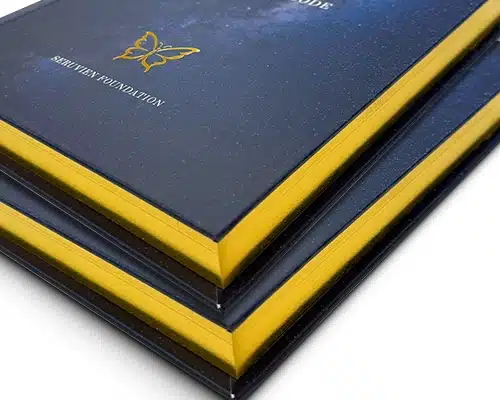
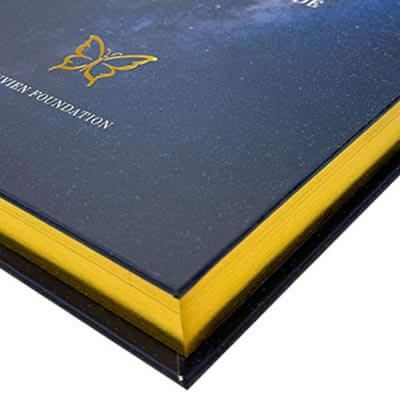
Gilded edges—also called gilt edges—are created by applying a thin layer of metallic foil to the trimmed edges of a book’s or card deck’s page block. The technique has its roots in centuries-old bookbinding craft, where gold leaf was applied by hand to protect page edges from dust, moisture, and insects. Today, the process uses machine-applied metallic foil, but the effect remains the same: a brilliant, reflective edge that transforms an ordinary book or card deck into something unmistakably premium.
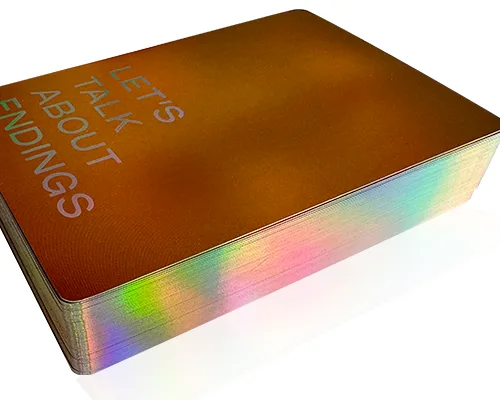
When the book or deck is closed, the gilded edges form a solid metallic surface. When fanned open, the foil catches the light in a way that immediately signals quality and luxury.
How Edge Gilding Works
Edge gilding is performed after the interior pages have been printed, collated, and trimmed into a tight, even page block:
- The trimmed page block is clamped firmly to ensure all edges are perfectly flush.
- Metallic foil is applied to the exposed edge using heat and pressure, bonding the foil uniformly to the paper fibers.
- The process is repeated on each edge to be gilded (top, bottom, and/or fore-edge, depending on your specification).
- The gilded block is then bound into the cover using the standard binding process.
The result is a smooth, continuous metallic surface that is both decorative and functional—gilding adds a subtle layer of protection against dust and moisture ingress at the page edges.
Available Foil Colors
While gold and silver are the most traditional and popular choices, modern foil technology offers a much wider palette:
- Classic metallic: Gold, silver, copper, bronze
- Fashion metallic: Rose gold, champagne, gunmetal
- Color metallic: Red, blue, green, purple, pink, light blue, light green
The specific foil options available may vary by production run. If you have a particular color in mind that isn’t listed, contact us to check availability.
Compatible Products
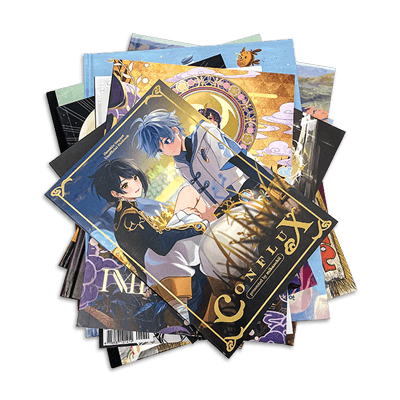
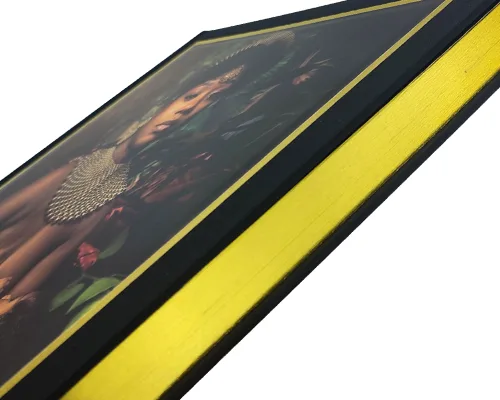
- Hardcover books: The most popular application. Gilded edges on a hardcover book create an unmistakable collector’s quality—widely used for Bibles, limited editions, special releases, and luxury art books.
- Paperback books: While less common, we can apply gilded edges to paperback editions as well, providing greater design flexibility and cost savings compared to hardcover.
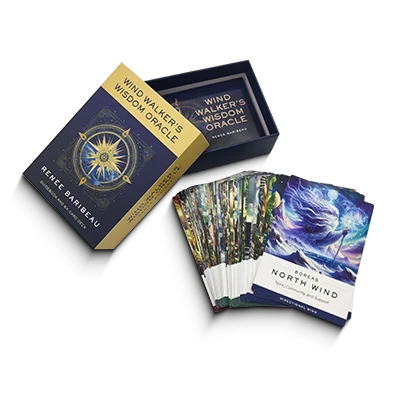
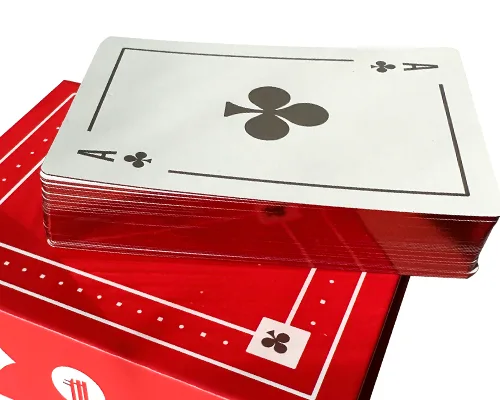
- Card decks: Custom gilded-edge card decks (tarot, oracle, playing cards, and game cards) have become extremely popular, especially in crowdfunded projects. The metallic edge gives the deck a premium weight and visual distinction.
- Notebooks and journals: Gilded edges on a premium notebook or journal add an element of luxury that justifies a higher retail price.
Design Considerations
- Edge gilding is applied after trimming: Your interior content should not extend to the very edge of the page, as the foil is applied to the trimmed edge surface. Standard bleed and margin settings are sufficient.
- No special artwork required: For solid-color gilding (which is the standard), you don’t need to prepare any additional artwork. Simply specify the foil color and which edges to gild.
- Paper surface matters: Before gilding, the trimmed edges of the page block must be sanded perfectly smooth to ensure the foil adheres evenly. If the paper surface has been laminated, the laminate film prevents the edges from being sanded to a clean, uniform finish—which means gilding cannot be applied reliably. For this reason, card decks with gilded edges should use varnishing rather than lamination as the surface finish. This ensures the edges can be properly prepared for foil application.
- Gilding vs. painted edges: Gilded edges use metallic foil for a reflective, mirror-like finish. Painted edges use ink for solid colors, gradients, or printed patterns. Both are applied to the trimmed page block, but the visual effect is quite different.
- Combination finishes: You can pair gilded edges with other premium features like foil-stamped covers, soft-touch lamination, and embossing for a fully luxurious product.
- A note on paperback gilding: On a perfect-bound paperback, the top and bottom edges of the spine expose a visible layer of binding adhesive. Gilding foil does not bond as reliably to adhesive as it does to paper fibers, which means the foil along the spine area may be more prone to flaking or peeling over time. This doesn’t prevent us from gilding paperbacks—we do it regularly—but it’s worth understanding this limitation when evaluating the finish for your project.
Gilded Edges vs. Painted Edges
| Feature | Gilded Edges | Painted Edges |
|---|---|---|
| Material | Metallic foil | Ink |
| Finish | Reflective, mirror-like | Solid, matte, or gradient |
| Color range | Metallic tones | Any solid color or CMYK color |
| Pattern capability | Solid color only | Solid, gradient, or printed image |
| Best for | Classic luxury, Bibles, collector editions | Modern design, branded color, patterned edges |
Want to see how gilded edges look and feel in person? Order a sample pack and compare gilded, painted, and sprayed edge finishes side by side.
Related Resources