 Book Printing in China
 Custom Card Decks
 Custom Holographic Cards
 Free Wall Calendar Template
 Free Desk Calendar Template
 Folding Cartons
 Rigid Boxes
 Corrugated Boxes
 Custom Board Game
 Custom Card Game
 Kickstarter Print Solutions
Smyth Sewn Binding
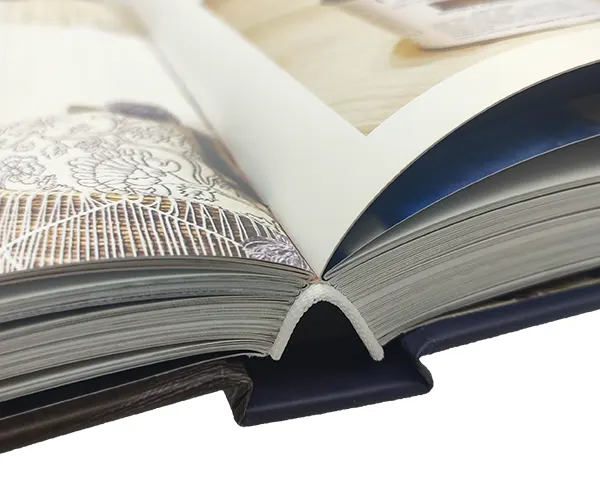
What Is Smyth Sewn Binding?
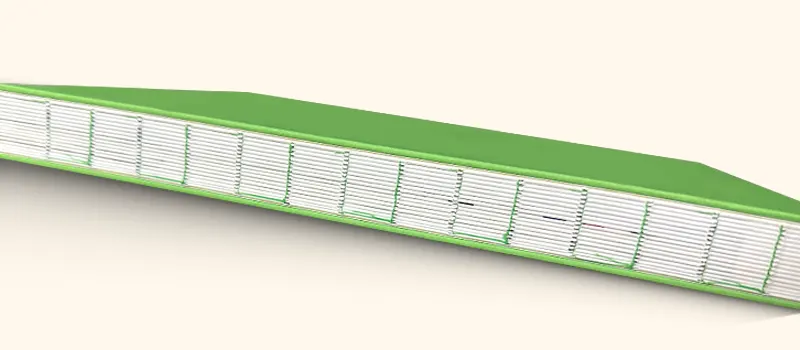
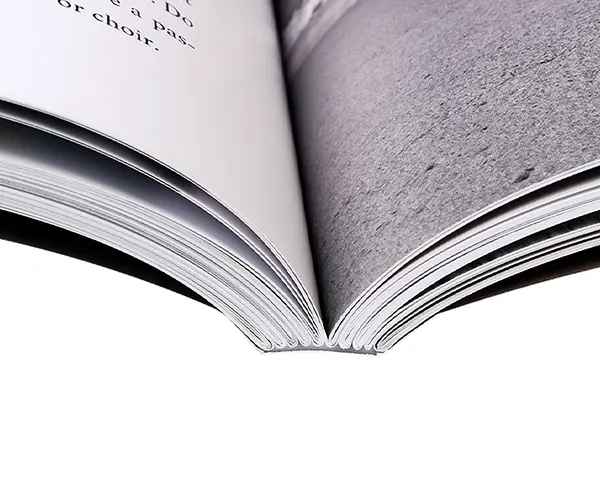
Smyth sewn binding is a traditional and highly durable bookbinding method used in professional book production. In this process, printed sheets are first folded into groups of pages called signatures.
These folded signatures are then sewn together with thread along the spine using a Smyth sewing machine. Instead of relying entirely on adhesive to hold the pages together, each signature is physically stitched to the next, creating a strong and flexible book block.
This structure creates a book that is significantly stronger than standard glued bindings.
How Smyth Sewn Binding Works
Smyth sewn binding is produced through a series of precise manufacturing steps that create a strong and flexible book block.
- First, printed sheets are folded into groups called signatures. Each signature typically contains multiple pages arranged in the correct order after folding.
- Next, the signatures are gathered in sequence to form the complete interior section of the book.
- These gathered signatures are then placed into a Smyth sewing machine, where thread is used to stitch all the signatures together along the spine. This sewing process creates a durable book block that is far stronger than pages held together only by adhesive.
- After sewing, the book block is transferred to a three-knife trimming machine, where the top, bottom, and front edges are trimmed to the final book size.
At this stage, the sewn book block can be finished in two different ways:
- For paperback books, adhesive is applied to the spine and the printed cover is attached, creating a sewn paperback binding that combines thread sewing with perfect binding.
- For hardcover books, the spine is reinforced with adhesive and a layer of gauze (super cloth) to strengthen the binding. Endpapers are then attached, and the book block is finally cased into the hardcover case to form the finished hardcover book.
- For flexibound books, the process is similar to hardcover production, but instead of a rigid grayboard cover, the sewn book block is connected to a soft cover—either leather or paperboard—using endpapers.
This process ensures that Smyth sewn books are durable, flexible, and able to open comfortably without pages loosening over time.
Smyth Sewn vs Perfect Binding
Perfect binding and Smyth sewn binding are two common methods used in modern book production, but their structures and durability differ significantly.
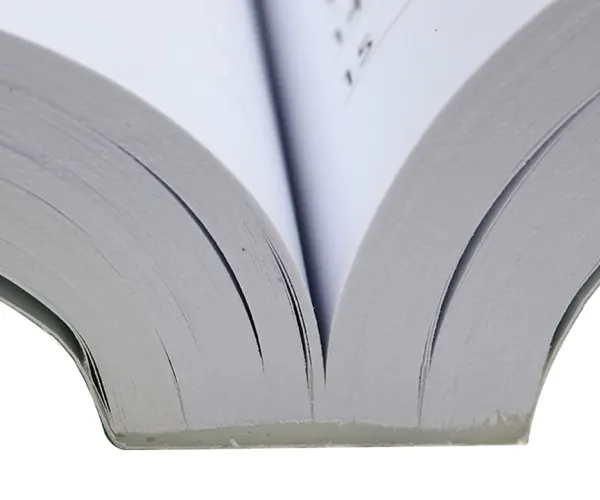
Perfect binding does not use thread. Instead, the pages are gathered together and adhesive is applied along the spine to hold the pages in place and form the book block.
The most commonly used adhesive for perfect binding is EVA hot-melt glue, which is widely used in commercial printing because it offers several advantages: low cost, fast curing speed, high production efficiency, and a mature manufacturing process. Another option is PUR adhesive, which provides stronger bonding and better flexibility than EVA. However, PUR adhesive is more expensive. Both EVA and PUR adhesive bindings are generally less durable than Smyth sewn binding.
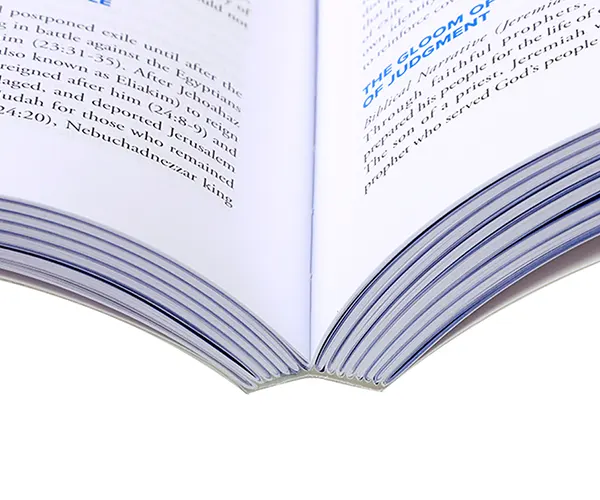
Smyth sewn binding uses thread to sew folded signatures together before the book block is assembled. This creates a much stronger structure that allows the book to open more comfortably and significantly reduces the risk of pages coming loose over time.
| Feature | Smyth Sewn Binding | Perfect Binding |
|---|---|---|
| Structure | Signatures sewn together with thread | Pages glued together |
| Adhesive | Reinforced glue + sewing | EVA or PUR adhesive |
| Durability | Very high | Moderate to high |
| Page opening | Opens easily and lies flatter | Often resists opening fully |
| Risk of pages loosening | Very low | Higher over time |
| Best for | Hardcover books, art books, premium books | Standard paperbacks |
How to Choose Between Smyth Sewn and Perfect Binding
When deciding between Smyth sewn binding and perfect binding, the most important factors are durability, reading experience, and budget.
One of the most noticeable advantages of Smyth sewn binding is that the book opens more easily and can lie much flatter. This makes reading more comfortable and allows images or text near the spine to be viewed more clearly. For books with detailed layouts, photographs, or illustrations, this can significantly improve the reading experience.
Perfect binding, by contrast, often resists opening fully and the pages tend to spring back toward the center.
Sewn binding also distributes the stress of opening across the thread and signatures rather than concentrating it on adhesive. This greatly reduces the risk of pages loosening or falling out over time, especially for thicker books or books that are frequently used.
In China, where automated sewing equipment is widely used, the cost of Smyth sewn binding is relatively low compared to Western markets. In many cases, the price difference between Smyth sewn binding and perfect binding is quite small. For this reason, many publishers choose Smyth sewn binding to achieve better durability and page flexibility.
When minimizing cost is the main goal, EVA perfect binding may be selected as the lowest-cost option.
What Types of Books Use Smyth Sewn Binding
Because of its strength, flexibility, and long lifespan, Smyth sewn binding is widely used for books that require higher durability and a better reading experience.
This binding method allows pages to open more naturally and lie flatter, making it especially suitable for books that contain detailed layouts, photographs, or illustrations where content near the spine needs to remain visible.
For this reason, Smyth sewn binding is commonly used for a variety of high-quality publications, including:
- Hardcover books
- Paperback Book
- Art books
- Photography books
- Children’s books
- Coffee table books
- Collector editions
For publishers, authors, and artists who want their books to maintain structural integrity and readability over many years, Smyth sewn binding remains one of the most reliable binding methods used in professional book printing.
Related Resources