 Book Printing in China
 Custom Card Decks
 Custom Holographic Cards
 Free Wall Calendar Template
 Free Desk Calendar Template
 Folding Cartons
 Rigid Boxes
 Corrugated Boxes
 Custom Board Game
 Custom Card Game
 Kickstarter Print Solutions
ISBN Guide: What You Need to Know
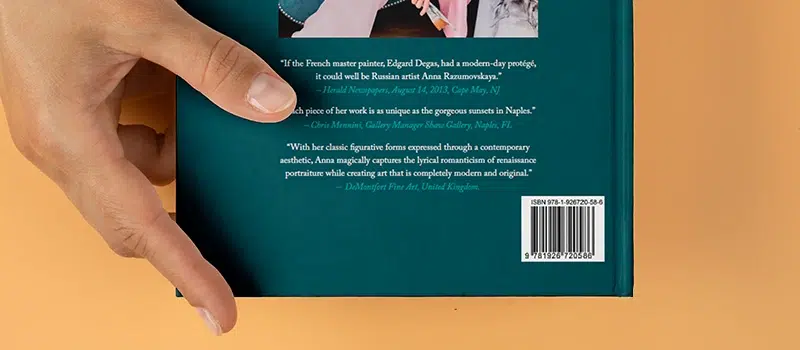
What is an ISBN?
ISBN (International Standard Book Number) is a globally recognized identifier used for books and other publications, ensuring their unique identification and traceability in the global market. Developed by the International Organization for Standardization (ISO), ISBN allows publishers, retailers, and libraries to track and manage books more efficiently. Each ISBN corresponds to one specific edition of a publication, making it essential for smooth global circulation.
How to Obtain an ISBN and Fees
Obtaining an ISBN varies by country and region. Here’s how you can get an ISBN, with costs updated as of February 2026:
| Country / Region | Official Agency / Channel | 1 ISBN | 10 ISBNs | 100 ISBNs | 1000 ISBNs |
|---|---|---|---|---|---|
| United States | R.R. Bowker | $125 | $295 | $575 | $1500 |
| Canada | ISBN Canada | Free | Free | Free | Free |
| United Kingdom & Ireland | Nielsen BookServices | £93 | £174 | £387 | £994 |
| Australia | R.R. Bowker | AU$44 | AU$88 | AU$480 | AU$3035 |
| Germany | MVB GmbH | €70 + VAT | €225 + VAT | €300 + VAT | €400 + VAT |
| France | AFNIL | €37 + VAT | / | / | / |
| New Zealand | National Library Wellington | Free | Free | Free | Free |
For other countries or regions, you can find the official ISBN agency for your location by visiting the International ISBN Agency’s directory.
On that page:
- Scroll to the list of countries.
- Select your country from the dropdown or list.
- Follow the link to the official ISBN agency website.
- Review local application procedures and pricing.
This ensures you get accurate, official information directly from the ISBN authority in your region.
Generates a Free ISBN Barcode
Who Can Purchase an ISBN?
Only publishers can purchase ISBNs. A publisher is a person, organization, company, or group responsible for initiating the production of a particular publication. Specifically, publishers assume the following responsibilities and risks:
- Initiating the Publication: Publishers are responsible for planning and producing books, magazines, maps, eBooks, and other media. They make decisions regarding the content, design, printing, and distribution of the publication.
- Financial Risks: Publishers typically bear the costs of bringing the publication to market, including printing, editing, and marketing expenses. They also assume the financial risk if the publication does not sell as expected.
- Copyright and Marketing: Publishers manage the copyright of the work, ensuring legal use of content, and handle the promotion of the book through various sales channels.
Who Can Be a Publisher?
A publisher can be:
- A company or organization: For example, a traditional publishing house or an independent press.
- An individual: If they take on the responsibilities of production, financing, and marketing of a book, especially in the case of self-publishing.
Publishers are generally not printers.
What Products Require an ISBN?
An ISBN is required for formal, market-ready publications, including:
- Books: Novels, comics, and other printed or digital books.
- Atlases and Maps: Published maps or map collections.
- Braille Publications: Books in Braille.
- Multimedia Publications: Publications combining text, images, audio, and video.
- E-books: Digital books sold on major platforms.
- Microform: Materials like microfilm or microfiche.
- Educational Videos or Films: Teaching-related video or film content.
Products That Don’t Require an ISBN:
How Many ISBNs Do You Need?
The number of ISBNs required depends on several factors, including the format, language, version, and distribution channels of the publication. Different versions, formats, or sales channels usually require separate ISBNs to ensure each version is tracked correctly. Here’s how to determine how many ISBNs you need:
- Different Formats of a Book:
If you have the same book in multiple formats (e.g., hardcover, paperback, eBook, audiobook), each format needs a separate ISBN. This is because they are typically sold through different channels and need unique identifiers. - Different Language Versions:
If you have multiple language versions of the same book, each one needs its own ISBN. For instance, a book in English will have a different ISBN than its French translation. - Different Publishers or Sales Channels:
If the same book is published by different publishers or sold through different channels, each publisher or channel may require a different ISBN. - Different Editions (Revised, Special, etc.):
If a book is released in different editions (e.g., revised edition, collector’s edition), each edition needs a new ISBN. Even if the content is similar, the edition number makes it distinct.
Example: How to Determine ISBN Quantity
If you’re publishing a book titled Exploring the Universe in different formats and languages, here’s how to determine the number of ISBNs needed:
- Print Editions: Hardcover (1 ISBN), Paperback (1 ISBN)
- eBook: (1 ISBN)
- French Version: (1 ISBN)
- Different Publishers: US Edition (1 ISBN), European Edition (1 ISBN)
Components of an ISBN
The current ISBN format consists of 13 digits. Since 2007, the 13-digit format has replaced the 10-digit format, though both are still recognized. An ISBN is divided into five parts, each of which represents different information to ensure proper classification and traceability.
ISBN 10 vs 13
ISBN-10: It consists of four parts:
- State Identifier: Identifies the country or language group.
- Publisher Identifier: Unique to the publisher.
- Title Identifier: Identifies the specific title or edition.
- Check Digit: A single digit used to validate the ISBN.
Example: ISBN-10: 0-545-01022-5
ISBN-13: It includes the same elements as ISBN-10, but with the addition of a prefix of 978 or 979, which are used to identify the book industry. The structure is as follows:
- Prefix (978 or 979).
- State Identifier: Identifies the country or region.
- Publisher Identifier: Unique to the publisher.
- Title Identifier: Identifies the specific book.
- Check Digit: A validation number to verify the ISBN.
Example: ISBN-13: 978-0-439-02348-1
How to Look Up an ISBN
If you need to check or verify an ISBN, there are several ways to do so. Here are the most common methods:
- Online ISBN Databases:
Various online databases allow you to search for ISBNs and retrieve detailed information about the publication. Some of the most popular websites for ISBN lookup include: ISBN Search, WorldCat. - Google Books:
Enter the ISBN in Google’s search bar, and it will show relevant information, including links to booksellers and libraries that offer the book. - Publisher’s Website:
You can also visit the publisher’s official website to look up information about a book using its ISBN. Most publishers list detailed records for each book they release, which can be useful for verifying an ISBN. - Library Catalogs:
Many libraries offer online catalog systems where you can search for books by ISBN. These systems often provide additional details, such as availability and borrowing information. - Bookstores and Retailers:
Major online retailers like Amazon, Barnes & Noble, and others allow you to search for books using ISBNs. Simply enter the ISBN into their search bar to retrieve the book’s page.
By using these methods, you can quickly find detailed information about any book by its ISBN, ensuring you have the correct version or edition.
What Does ISBN Stand for?
An ISBN (International Standard Book Number) serves several important functions in the publishing industry, ensuring the smooth operation of book distribution and sales worldwide. Here are the main purposes of an ISBN:
- Unique Identification: An ISBN provides a unique identifier for each book or publication. This ensures that every edition, format, and language version of a book is properly cataloged and easily distinguishable from others.
- Global Tracking: ISBNs are recognized internationally and allow books to be tracked globally by publishers, bookstores, libraries, and readers. This helps prevent confusion or duplication in the marketplace.
- Distribution and Sales: With an ISBN, books can be sold through bookstores, libraries, and online platforms worldwide. It enables efficient stock management, ordering, and sales reporting.
- Cataloging: ISBNs help libraries and retailers categorize books accurately. By assigning a unique code, libraries and online platforms can quickly retrieve book information and manage inventories.
- Professional Credibility: ISBNs are a mark of professionalism, showing that a book is part of the formal publishing industry. Having an ISBN can improve the legitimacy of self-published works and facilitate wider distribution.
- Easier for Retailers and Wholesalers: ISBNs enable retailers, wholesalers, and distributors to track inventory, place orders, and manage shipments more effectively. It simplifies the process for both the publishers and sellers.
In short, an ISBN is essential for any book that aims to reach a broad audience, ensuring that it is properly identified, cataloged, and available for sale worldwide.
FAQ: Common Questions About ISBNs
1. Does my book have to have an ISBN?
No, you are not required to have an ISBN, but if you plan to sell or distribute your book commercially, an ISBN is highly recommended. It provides a unique identifier, making it easier for bookstores, libraries, and online platforms to track and sell your book. Without an ISBN, your book may not be available through major distribution channels.
2. Do I need an ISBN for a doujinshi (fan comic or novel)?
If you’re self-publishing a doujinshi (fan-made comic or novel) and plan to sell or distribute it, you will need an ISBN. However, if it’s just a limited print run for personal use or given away to friends and not intended for resale, then an ISBN is not necessary.
3. Do tarot cards and oracle cards require an ISBN?
Generally, tarot cards and oracle cards do not require an ISBN, as ISBNs are typically for books or digital publications. If you would like to give your card set a more formal publishing status or want it to be tracked like a book in distribution channels, you can apply for an ISBN for the entire set, including the cards and the accompanying materials. It’s optional but could be beneficial for professional or commercial sales.
4. What happens if I don’t get an ISBN for my book?
If you don’t obtain an ISBN, your book won’t be listed in book databases used by bookstores, libraries, and other retailers. This could make it harder for people to find or purchase your book. Additionally, it may limit your options for distribution through larger retail channels, as most platforms and stores require ISBNs.
5. Do I need an ISBN for my personal art book?
If you plan to print and sell your personal art book, an ISBN is necessary to manage the book’s sale and distribution. However, if the book is for personal use, gifting to friends, or sold in limited quantities without wide distribution, you don’t need an ISBN.
6. Do I need an ISBN for a book I write for my family or friends?
If the book is a personal gift or a limited edition for family and friends, you do not need an ISBN. ISBNs are typically required for commercial publication. However, if you plan to distribute it more widely or sell it, an ISBN is necessary.
Related Resources