 Book Printing in China
 Custom Card Decks
 Custom Holographic Cards
 Free Wall Calendar Template
 Free Desk Calendar Template
 Folding Cartons
 Rigid Boxes
 Corrugated Boxes
 Custom Board Game
 Custom Card Game
 Kickstarter Print Solutions
Debossing: A Complete Guide
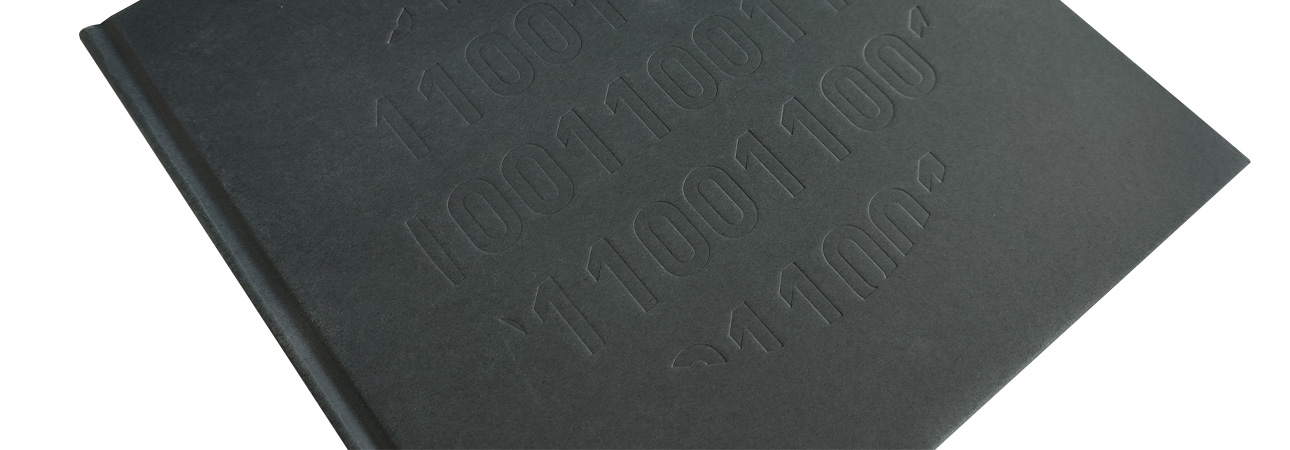
Debossing presses a design into the surface, creating a clean, recessed impression you can feel with your fingertips. It’s the inverse of embossing—quieter, more understated, and one of the most elegant finishing techniques in print.
What Is Debossing?
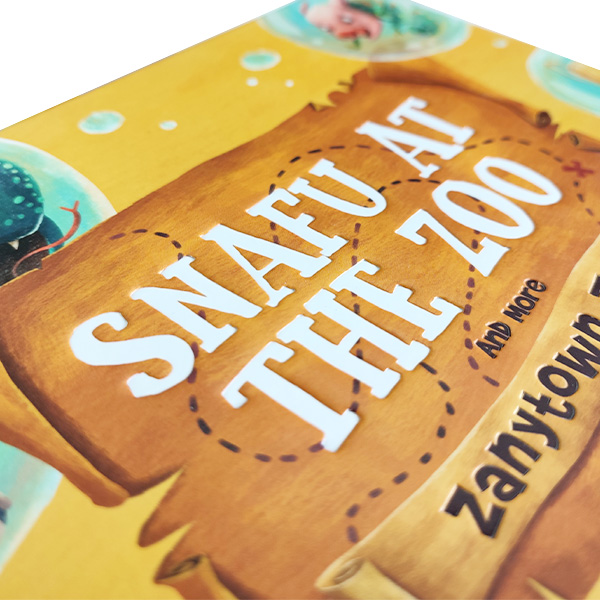
Debossing is a finishing technique that presses a design—such as text, a logo, or a graphic element—into the surface of a printed material, creating a recessed, indented impression. The result is a three-dimensional effect that you can both see and feel: the debossed area sits below the surrounding surface, producing subtle shadows and a tactile quality that flat printing alone cannot achieve.
The technique is the inverse of embossing, which raises elements above the surface. Where embossing pushes outward, debossing pushes inward. Both use custom-made metal dies and precision machinery, and both are valued for the premium, handcrafted quality they bring to printed products.
How Debossing Works
The debossing process involves a custom-engraved metal die (the male die), a precision press, and—depending on the material—a resin counter-die (the female die). The setup varies based on the thickness of the substrate:
For materials thicker than 0.5 mm (such as grayboard-mounted hardcover cases or heavy paperboard): We use only the male die and a precision press. The material is thick enough to absorb the impression cleanly without a counter-die. This is the most common setup for hardcover books and rigid boxes.
For materials thinner than 0.5 mm (such as lighter cover stocks or folding carton paper): We use both a male die and a female counter-die on the press. The counter-die sits beneath the material and receives the impression, allowing the thinner paper to be shaped with precision without tearing or distortion.
The depth of the deboss depends on the material thickness, the die engraving, and the amount of pressure applied. Heavier stocks and materials mounted on grayboard accept deeper, more defined impressions.
Types of Debossing
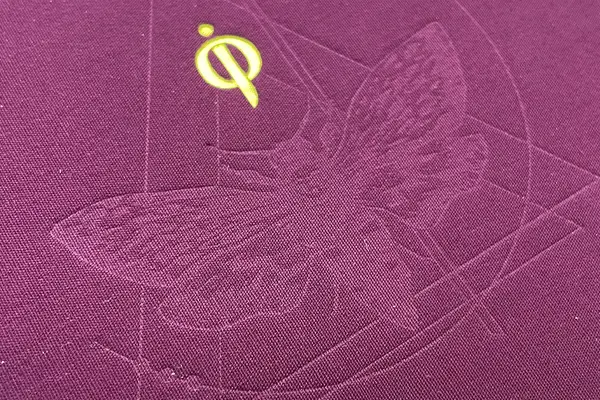
Blind debossing
The design is pressed into the material with no additional ink, foil, or coating. The effect relies entirely on light and shadow. This is the most understated and elegant option—ideal for minimalist designs and luxury products.
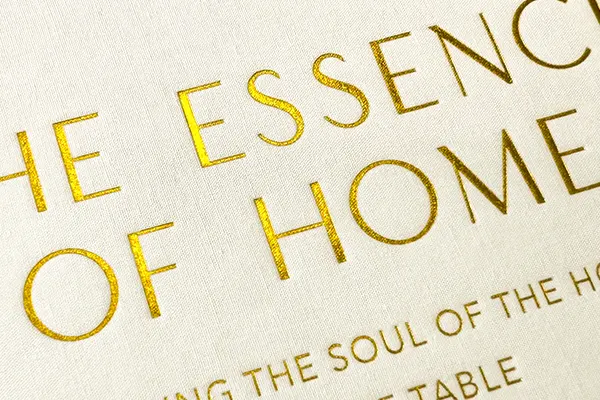
Debossing with foil
A metallic or pigmented foil is applied to the recessed area during the debossing process, combining the tactile depth of the impression with the visual brightness of foil stamping. This is a popular choice for titles, logos, and brand marks.
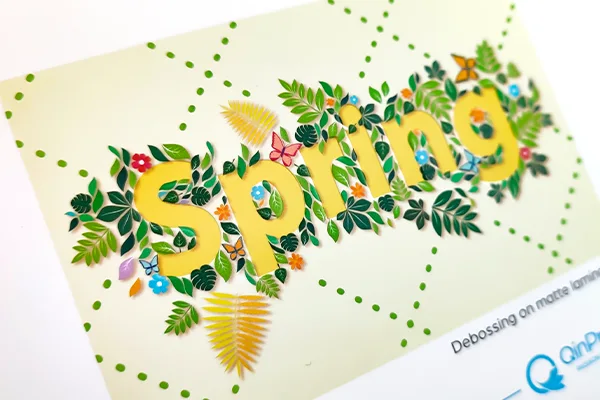
Debossing with ink fill
The recessed area is printed with color before or after the debossing step, adding both dimension and color to the design.
Ideal Materials and Substrates
Debossing works best on materials with enough thickness and fiber structure to hold a clean impression without tearing or cracking:
- Paper stocks of 250 gsm or heavier: Thicker coated or uncoated papers accept debossing well and produce crisp, defined edges.
- Grayboard-mounted covers: Hardcover book cases and rigid boxes—where paper is wrapped over a thick board substrate—are ideal for deep, dramatic debossing.
- Textured and uncoated stocks: Materials with natural fiber character can enhance the organic, handcrafted feel of debossing.
- Cloth and specialty materials: Debossing on cloth-covered or leather-look covers is a classic technique for premium book editions.
Popular Applications
- Hardcover books: A debossed title or logo on a matte-laminated or cloth-covered case creates an understated, luxurious first impression. This is one of the most requested finishes for special editions and collector’s items.
- Rigid packaging: Debossing a brand name, logo, or decorative pattern on a rigid box lid elevates the unboxing experience and positions the product at the premium end of the market.
- Art books and coffee-table books: Minimalist cover designs with blind debossing on a soft-touch laminated surface are a current design trend that communicates sophistication without visual noise.
- Board game boxes: Debossed elements on a deluxe game box signal quality and attention to detail—an important factor for Kickstarter-backed games and collector’s editions.
Debossing vs. Embossing: Which Should You Choose?
| Feature | Debossing | Embossing |
|---|---|---|
| Direction | Presses inward (recessed) | Pushes outward (raised) |
| Visual effect | Subtle shadow, understated | Prominent, catches light |
| Tactile feel | Indented, sculpted | Raised, three-dimensional |
| Best for | Minimalist luxury, cloth/leather covers | Bold branding, high-visibility designs |
| Common pairings | Foil stamping, blind (no ink) | Foil stamping, spot UV, ink fill |
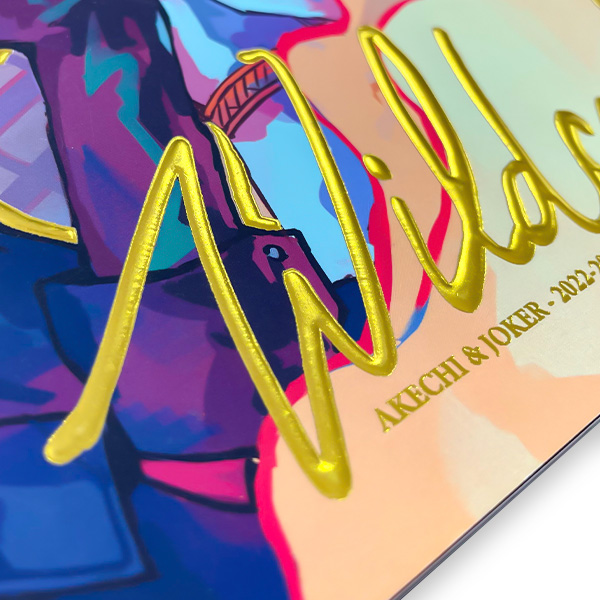
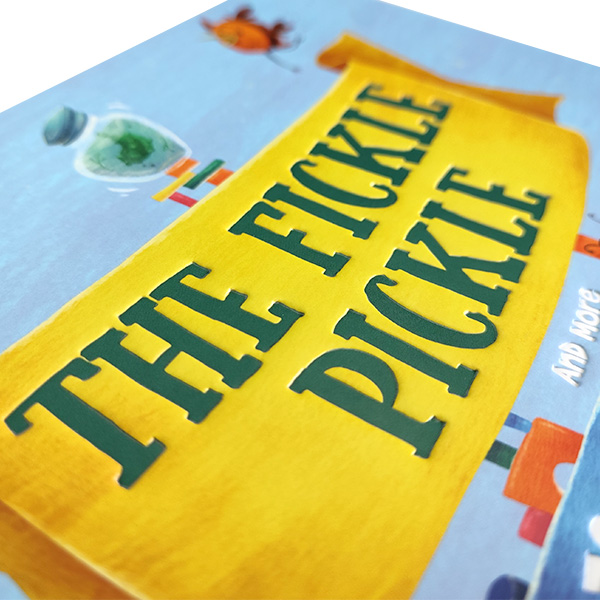
Both techniques use the same type of custom die and machinery. The choice comes down to the visual and tactile effect you’re after. Many premium products use both—embossing one element while debossing another—for maximum contrast and depth.
How to Prepare Your Design Files
- Create a separate file: In your design software (Adobe Illustrator or InDesign), place all debossing elements, then save as a PDF named “Deboss” or “Die.”
- Use vector artwork: All debossed elements must be vector-based for clean die production. Avoid raster images.
- Minimum detail size: For crisp results, keep line widths at 0.5 mm or above and text at 8 pt or larger. Very fine details may not hold a clean impression.
- Maximum area: Each debossing area can be up to approximately 8″ × 10″, depending on the material. For larger areas, contact us to discuss feasibility.
- Assign a spot color: Fill the deboss areas with a distinct spot color (not a CMYK build) to clearly identify them for prepress.
- Maintain alignment: Your deboss file must be the same dimensions as your artwork and align perfectly.
The Advantages of Debossing
At QinPrinting, our team works closely with you during prepress to ensure your design translates cleanly into a physical impression. Whether you’re looking for a subtle blind deboss on a matte cover or a deep, foil-filled deboss on a rigid box, we can help you achieve the effect you’re envisioning.
Not sure if debossing is the right fit? Order a sample pack to see and feel examples of debossed finishes on different substrates.
Related Resources