
 Book Printing in China
 Custom Card Decks
 Custom Holographic Cards
 Free Wall Calendar Template
 Free Desk Calendar Template
 Folding Cartons
 Rigid Boxes
 Corrugated Boxes
 Custom Board Game
 Custom Card Game
 Kickstarter Print Solutions
How to Measure Box Dimensions: Length, Width & Height Guide
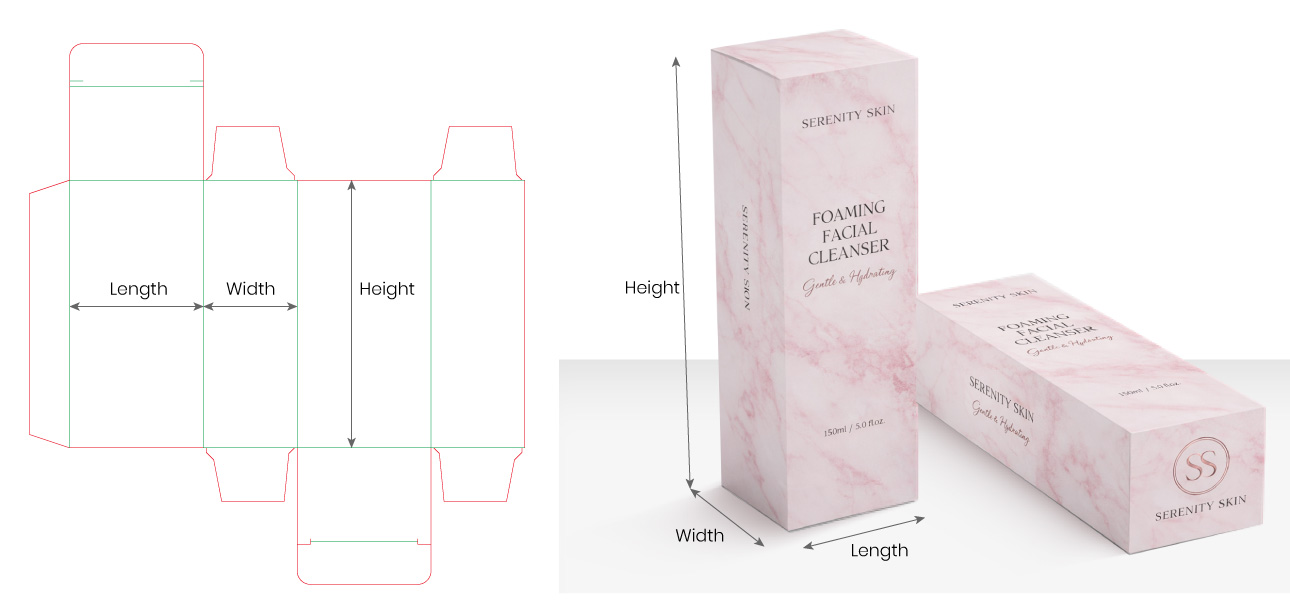
Understanding Box Dimensions: What Is L × W × H?
When ordering custom packaging, accurate measurements are essential. L × W × H stands for Length × Width × Height — the three dimensions that define the size of any box. Understanding how to measure a box correctly ensures your products fit perfectly and you avoid costly mistakes.
In the packaging industry, dimensions are always expressed in the same order: Length first, then Width, then Height. This universal standard helps manufacturers, shippers, and businesses communicate box sizes clearly and consistently.
How to Measure a Box: Step-by-Step Guide
Follow these steps to accurately measure the dimensions of any box. Always measure from the inside of the box when determining fit for your products, and from the outside when calculating shipping costs.
1, Position the Box Correctly
Place the box with the opening (flaps) facing up. This standard orientation determines which measurement is length, width, and height.
2, Measure the Length (L)
To measure the length, identify the longest side of the box opening and measure it from one end to the other. This is your length — it will always be the largest horizontal dimension. For most boxes, this corresponds to the longest edge across the opening.
3, Measure the Width (W)
Measure the shorter side of the box opening. The width runs perpendicular to the length and is always the smaller of the two horizontal measurements.
4, Measure the Height (H)
Measure from the base to the top of the box (where the flaps meet when closed). This vertical measurement is also called depth.
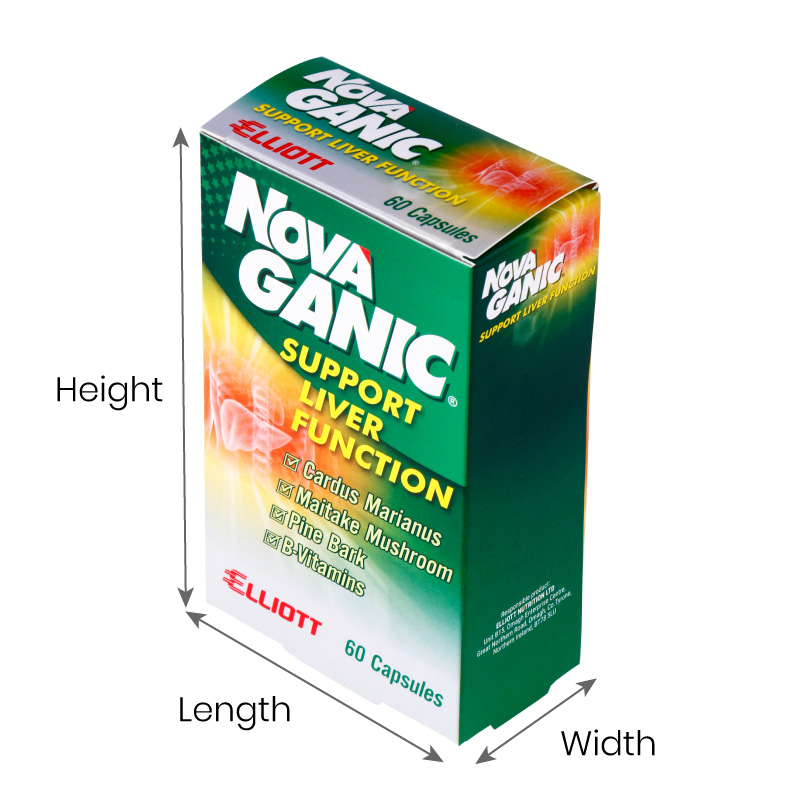
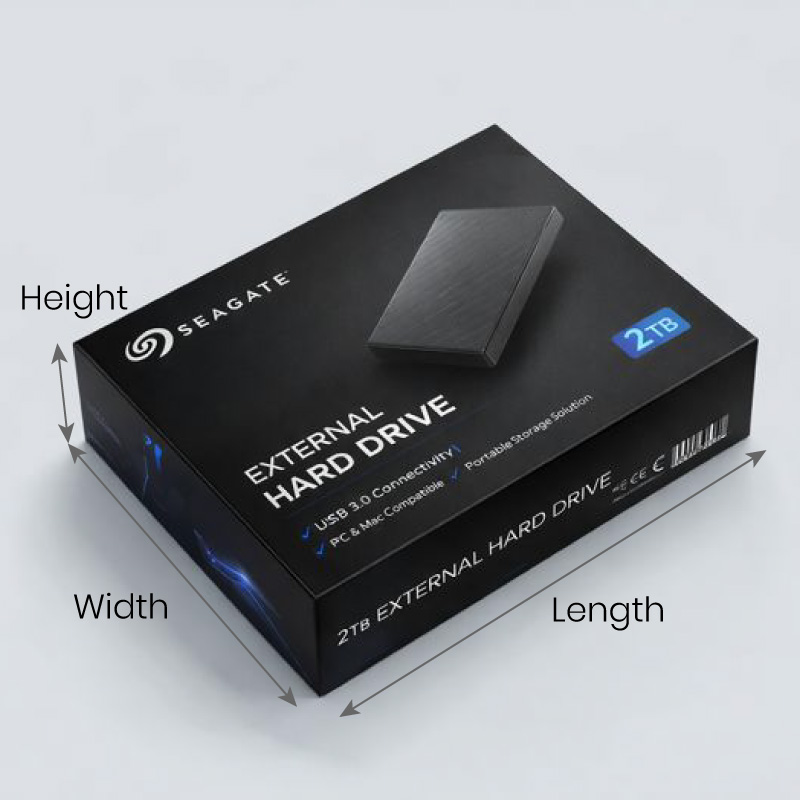
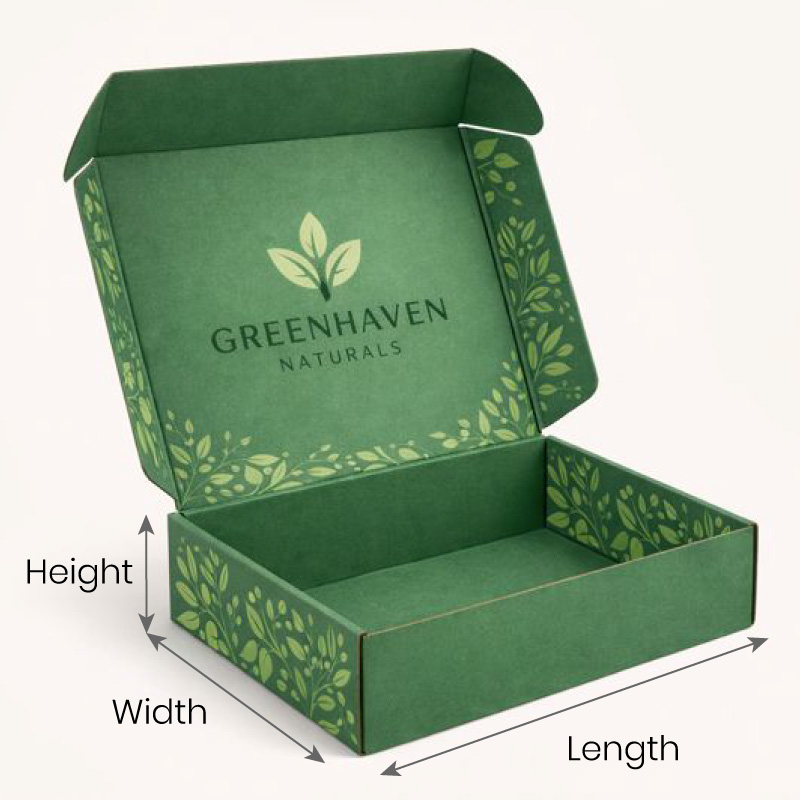
For boxes with a lid that is connected to the base, such as tuck end boxes, mailer boxes, or book-style rigid boxes, the length is typically defined as the edge that connects the lid to the bottom. The edge that does not connect the lid to the base is considered the width. This distinction helps in accurately describing and measuring the box, especially for packaging that involves a lid and base design.
What Comes First: Length, Width, or Height?
The packaging industry follows a consistent standard: Length always comes first, followed by Width, then Height. This L×W×H format is used worldwide to ensure clear communication between manufacturers, suppliers, and customers.
Here’s a simple way to remember the order:
| Dimension | Position | How to Identify |
|---|---|---|
| Length (L) | First | Longest side of the opening |
| Width (W) | Second | Shorter side of the opening |
| Height (H) | Third | Vertical distance (base to top) |
Example: Reading Box Dimensions
If a box is listed as 12 × 8 × 6 inches (approx. 305 × 203 × 152 mm), this means:
- The length is 12 inches (longest side of opening)
• The width is 8 inches (shorter side of opening)
• The height is 6 inches (vertical measurement)
Internal vs. External Dimensions
When measuring boxes, it’s crucial to understand the difference between internal and external dimensions:
Internal Dimensions measure the usable space inside the box. Use these when determining whether your product will fit. Account for any inserts, padding, or protective materials you plan to include.
External Dimensions measure the outside of the box, including material thickness. These are essential for calculating shipping costs, pallet configurations, and storage requirements.
The difference between internal and external dimensions depends on the box material:
- Folding carton boxes (paperboard): Walls are typically 0.3-0.5mm thick. These lightweight boxes are ideal for retail packaging. Learn more about custom folding carton boxes →
- Corrugated boxes: Walls range from 2-5mm depending on flute type (E, B, or C flute). Best for shipping and heavy products. Explore custom corrugated boxes →
- Rigid boxes: Walls are 2-3mm per side with chipboard core. These premium boxes offer superior protection and unboxing experience. Discover custom rigid boxes →
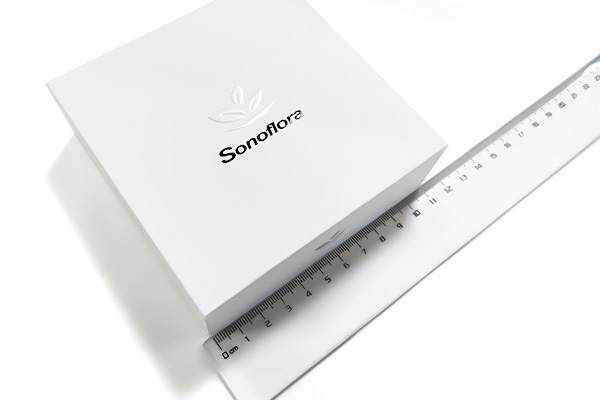
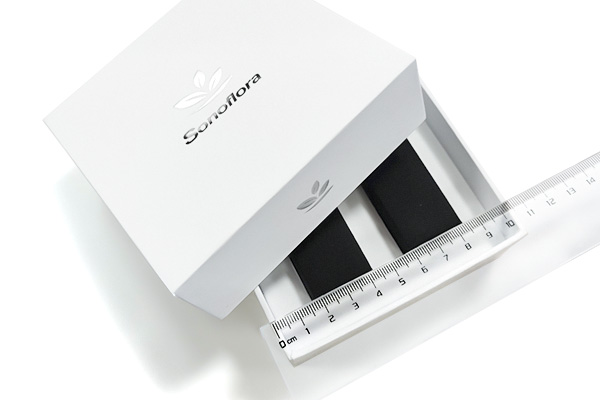
Need dieline templates? Download free box templates to help you visualize dimensions and prepare your artwork. Browse box templates →
Tips for Accurate Box Measurements
Use a rigid measuring tool. A metal ruler or measuring tape provides more accurate results than flexible fabric tapes, especially for larger boxes.
Measure at multiple points. Boxes can warp slightly. Take measurements at different points and use the average for the most accurate dimensions.
Account for material thickness. When designing custom packaging, factor in the wall thickness to ensure proper internal fit.
Consider product protection. Leave adequate space for cushioning materials like foam inserts, bubble wrap, or tissue paper when calculating internal dimensions.
Double-check before ordering. Always verify your measurements twice before placing a custom packaging order. A small measuring error can result in boxes that don’t fit your products.
Frequently Asked Questions
What comes first, length or width or height?
In the packaging industry, dimensions are always listed as Length × Width × Height (L×W×H). Length is the longest side of the opening, width is the shorter side, and height is the vertical measurement from base to top. This order is the universal standard for expressing box dimensions.
What is the size L × W × H?
L×W×H represents the three dimensions of a box: Length × Width × Height. For example, a box labeled “10×8×6 inches” is 10 inches long, 8 inches wide, and 6 inches tall. This format allows you to quickly understand the complete size and calculate the volume (multiply all three numbers together).
For example, if a box is 8” × 7” × 4” (L × W × H), it means:
- Length = 8 inches
- Width = 7 inches
- Height = 4 inches
What is the length, width, and height of a box?
With the box opening facing up: Length is the longest horizontal side of the opening, Width is the shorter horizontal side, and Height is the vertical distance from the bottom to the top. These three measurements completely define the size of any rectangular box.
What does L × W × H mean?
L×W×H is the standard abbreviation for Length × Width × Height. These three measurements define the complete dimensions of a box or package. The multiplication symbol (×) separates each dimension, making it easy to read and understand box sizes at a glance.
How do I measure a box for shipping?
For shipping purposes, always measure the external dimensions of the box. Measure the longest side (length), the shorter side (width), and the vertical distance (height) from outside edge to outside edge. Shipping carriers use these external measurements to calculate dimensional weight and shipping costs.
Should I measure inside or outside the box?
It depends on your purpose. Measure inside dimensions when determining product fit and internal space requirements. Measure outside dimensions for shipping calculations, storage planning, and pallet configurations. For custom packaging orders, always specify which measurement type you’re providing.
How do I calculate box volume?
Multiply Length × Width × Height. For example, a 12×8×6 inch box has a volume of 576 cubic inches (12×8×6=576).
Ready to Order Custom Packaging?
Now that you know how to measure boxes accurately, let us help you create the perfect packaging for your products.