 Book Printing in China
 Custom Card Decks
 Custom Holographic Cards
 Free Wall Calendar Template
 Free Desk Calendar Template
 Folding Cartons
 Rigid Boxes
 Corrugated Boxes
 Custom Board Game
 Custom Card Game
 Kickstarter Print Solutions
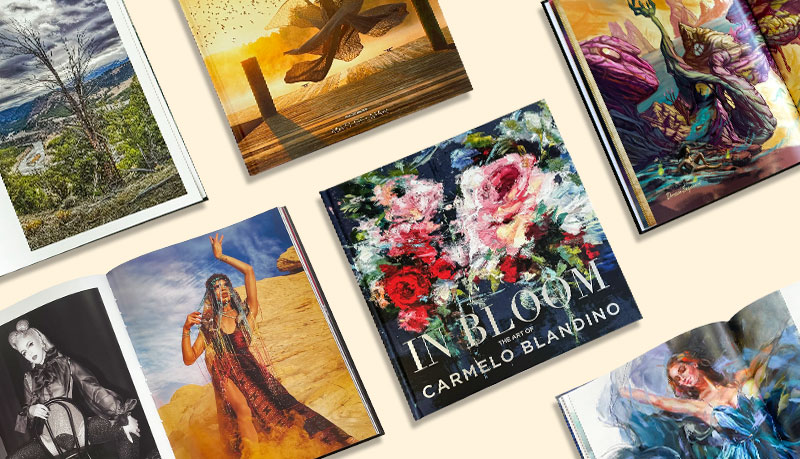
For most working artists, getting an art book published by a mainstream publishing house is an unrealistic option; but self-publishing has become a viable alternative. We walk you through everything you need to know to design and print your art book ready for self-publishing.
For showcasing your artwork, an art book can be a powerful tool. Whether you’re a seasoned artist or just starting out, self-publishing your own art book can provide many benefits. In this post, drawing on 35 years of success in the offset printing industry working with mainstream publishers and independent creatives alike, we will explore the process of self-publishing an art book, from design and layout to printing and promotion. We’ll also address some common questions and concerns, such as the best paper, size, and format for your art book.
What's the difference between an art catalog, a portfolio, and an art book?
Not infrequently, a potential client comes to us wanting to print an art book when what they really need is a catalog or a portfolio; or the other way round, they come asking for a catalog or a portfolio and during our talk, it’s clear that an art book would better serve their needs. So, to avoid misunderstandings and offer you the most helpful information we can, let’s explore the differences between an art catalog, a professional portfolio, and an art book first.
Art catalog
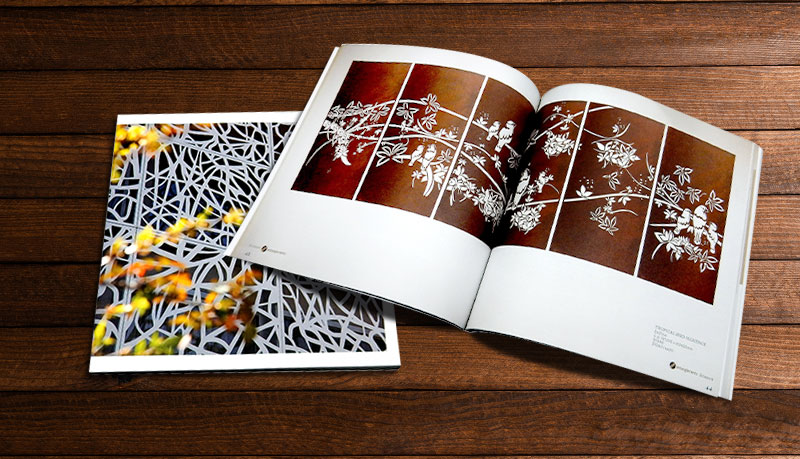
An art catalog is typically a souvenir of an exhibition or a specific body of work. It includes images of the work, an artist statement, and an introduction by a curator or other art expert that places your art in a wider context. Catalogs are more focused on the visual aspects of your work and often have less writing than an art book. The pieces are often numbered and may include sale prices. They are limited editions tied to a particular time, place, and event. They are usually limited in page numbers and printed on gloss or matte paper and bound in sewn perfect bound paperback.
Art portfolio
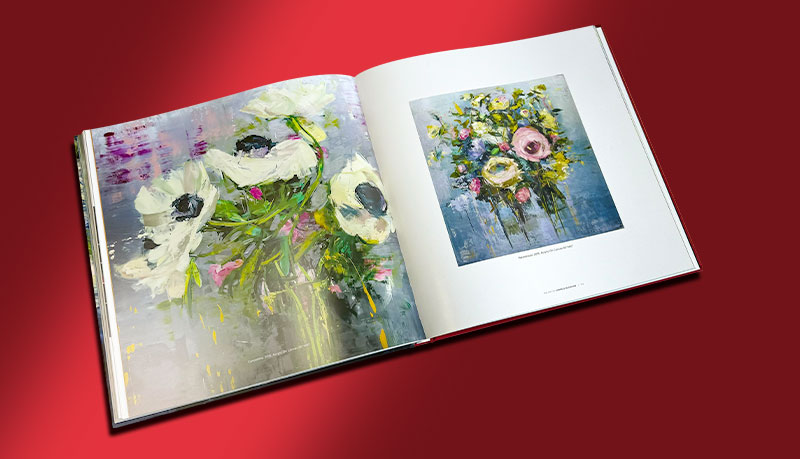
An art portfolio, while similar in design and style, differs from the catalog in significant ways. For example, its aim is to provide a broad overview of your work organized either chronologically or by theme. It will include a written introduction to you as an artist, your background, experience, and inspirations, but this will be short and sweet; typically under 1,500 words. Each piece is likely accompanied by an artist’s statement exploring why you created it and offering personal insights into your process. Again, these will be short and concise, no more than a paragraph apiece. A portfolio is aimed at presenting your work to gallery owners, exhibitions, art spaces, museums, festivals, corporate bodies and funders, and other places where you might obtain an exhibition or a commission. They will normally have more pages than a catalog, have more text, but similarly will be printed on gloss or matte paper and bound in sewn perfect bound paperback.
Art book
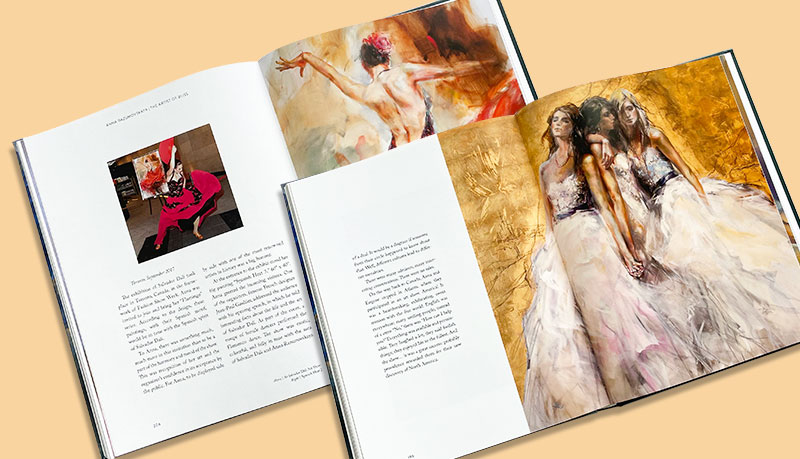
An art book is a testimony to your work and impact as an artist in the context of history and the contemporary scene. It’s a monument to your creativity, your contribution, and stands as a record of your work designed for posterity. An art book has a narrative flow and typically includes more writing than a catalog or a portfolio. It can tell a story, explore a theme, or venture deeper into your creative process, history, and development as an artist. Art books often provide a more comprehensive look at an artist’s work and can serve as a lasting testament to your artistic journey.
The chosen work is usually curated by you, the artist, or by an artistic biographer, and the written content will result from a collaboration between the artist, possibly a ghost writer, and an editor. It’s often printed in large format as a ‘coffee-table’ style book, with hardcover and a dust jacket and quite possibly also a slipcase. It will have special finishes, such as gold or silver foil stamping, embossing, and UV spot coating. It may have painted edges, marker ribbons, and more. In other words, it’s a no-holds-barred luxury edition to immortalize your work.
Creating content for an art book
An art book needs two types of content: visual and textual. The text may or may not always refer directly to the visual content, but in most cases it often will. One question you’ll need to resolve at the outset is which comes first — the selection of the artwork or the text? There are three answers to this question:
- Select the art first, organize it — thematically, chronologically, etc. — and then write a text which explains the thinking and process behind the work, gives biographical and historical context, and guides the reader on a journey through each piece.
- Write the text first, focusing on the artist’s professional biography, the development of their thought, how their style and subject choices have changed over time, and so on. Then, select pieces which illustrate the text and exemplify the points made.
- Work collaboratively with the writer from the outset in open discussions about the textual content and the visual elements to create content which arises as the result of an active dialogue between the text and the artwork.
How you approach this is a matter of choice and your vision for the book. It also depends on whether you’ll write the text yourself or commission a writer to develop the written content for you. Either way, you’ll need to engage an editor — and ideally one who already has experience in the art vertical.
Who should write the introduction?
When self-publishing an art book, finding the right person to write the introduction is crucial. Art historians and critics are traditional options, but you might also consider finding an expert in a field related to the subject of your art. For example, if your art deals with environmental themes, consider approaching a scientist or environmental activist. Likewise, if you can’t find someone with automatic authority or name recognition, don’t worry. You might ask your old school teacher or college professor, a gallery owner where you’ve recently exhibited, or the curator if you’ve had a museum show.
If you’re looking for someone to write an introduction outside of your personal acquaintance, you’ll need to take a professional approach and probably be prepared to offer a commensurate fee. The standard fee for writing an introduction is roughly one dollar per word, but this can vary depending on the writer’s experience and reputation.
Art book design and layout: DIY or hire a designer?
Having selected your artwork, written and edited your text, and commissioned an introduction, you can tackle the design and layout of the book itself. The question here is whether to take the DIY route or employ a professional book designer. Your choice will depend on your skills, inclination, and budget.
DIY art book design
If you have experience with design software and a good eye for aesthetics, designing your art book yourself can be a rewarding and cost-effective option. Look for inspiration in other art books and don’t be afraid to experiment with different layouts and design elements. We recommend Adobe InDesign and Illustrator for this kind of work. If you choose to print your art book with us, we’ll assign you a named personal consultant as a constant point of contact, and you can ask questions and get advice from our expert in-house design team. We also have a range of free book design templates, free file checking, and a host of other advantages to guide and support you.
When to hire a designer
If you’re not comfortable with design software or simply want a professional touch, hiring a designer can be a wise investment. A skilled designer can help you create a visually stunning art book that showcases your work to its fullest potential. A professional freelance designer will charge anything from a few hundred dollars up to several thousand, depending on the scale and scope of the project. When choosing a designer, check their back catalog, client testimonials, and whether they have experience with art book design.
How to prepare your files for printing
This is one of the most common — and most important — questions we receive from art book clients. Submitting correctly prepared files saves time, avoids costly reprints, and ensures your artwork is reproduced exactly as you intend. Here is what you need to know:
Resolution: 300 PPI minimum
All images must be at least 300 PPI (pixels per inch) at their final print size. Images sourced from the web are typically only 72–96 PPI, which will look blurry when printed. If you are scanning original artwork, scan at 600 PPI or higher and then resize down — never enlarge a low-resolution image.
-
Art Book Tip
QinPrinting's offset presses print at up to 200–220 LPI (lines per inch) — significantly higher than the standard 150 LPI used by most commercial printers — which means we can resolve far more fine detail from your source files. Ensure your images are at least 300 PPI at final print size to take full advantage of this capability.
Color mode: CMYK — and when to use Pantone
All files must be submitted in CMYK color mode, not RGB. RGB is a screen color space and will produce inaccurate, often oversaturated colors when printed. Convert all images and artwork to CMYK before submitting.
For projects where a very specific color must match exactly — such as a signature color used consistently across an artist’s body of work, or a commissioned piece for a brand — Pantone inks may be worth discussing with our team. Pantone inks are mixed to a precise formula, ensuring that a specific color reproduces identically every time, regardless of paper stock or press conditions. Let us know when you submit your files if you have a specific Pantone reference.
Bleed: 3mm on all sides
‘Bleed’ is the extra 3mm of artwork that extends beyond the final trim edge of each page. It ensures that when the pages are cut to their final size, there are no unexpected white borders along the edges. All background colors, images, or design elements that touch the edge of a page must extend fully to the bleed line. Keep all important text and logos at least 8mm inside the trim edge (the ‘safe zone’).
File format: high-resolution PDF with embedded fonts
Submit your finished files as high-resolution PDFs (PDF/X-1a or PDF/X-4 are preferred). Ensure all fonts are embedded within the PDF, not linked. Our pre-press team provides a free manual file check for every order — if we spot any issues, we will contact you before proceeding to print.
How to get an ISBN and barcode for an art book
An International Standard Book Number (ISBN) is a unique numeric commercial book identifier that, along with a barcode, is essential to get your book into booksellers’ catalogs, sell in stores, and be placed in libraries. While not strictly necessary to sell on other platforms, getting an ISBN and barcode lends a sense of professionalism to your art book and makes it more accessible to potential buyers.
You can purchase ISBNs online from Bowker in the US and from Nielsen in the UK. Once you have your ISBN, you can generate the associated barcode online using services such as TEC-IT. The traditional location for the ISBN barcode is in the bottom right-hand corner of the back cover. You may also want to list it on the copyright page.
Best paper for an art book
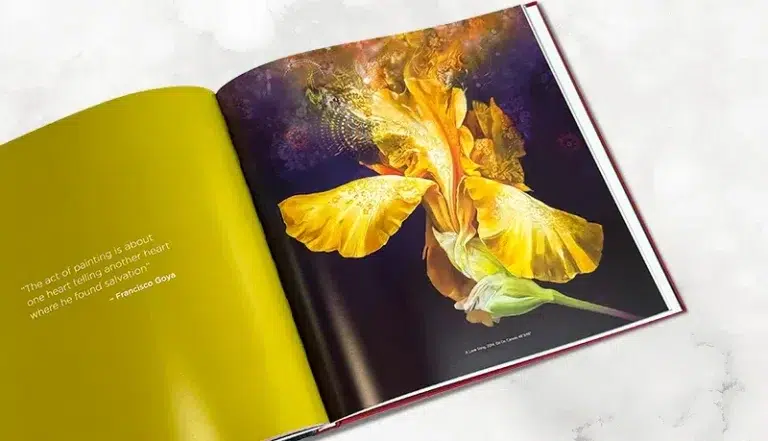
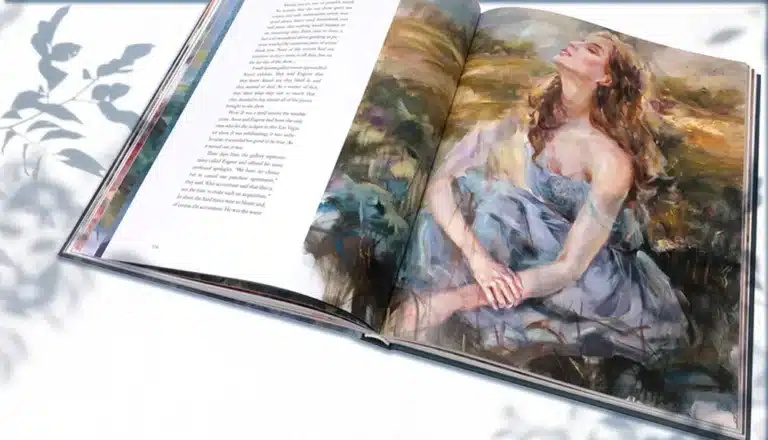
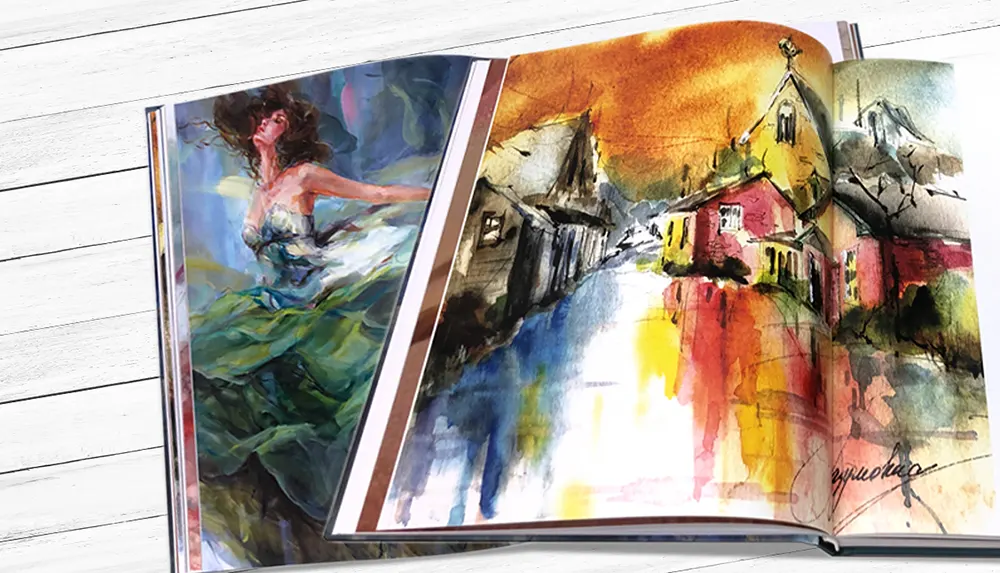
Art books require meticulous curation, just like galleries or exhibitions at museums. To achieve the most realistic and appealing results, print on high-quality gloss or matte coated art paper. Both options have coated finishes that reproduce your photos and artwork with correct colors, optimal contrast, and extremely fine detail.
Books with full-color layouts and little text frequently benefit from glossy paper, whereas publications with a greater amount of text gain more from matte paper. Matte papers will still reproduce beautiful black-and-white or color artwork and make the text clearer to read. You can also combine offset paper and coated paper — for example, offset paper for the written introduction and acknowledgments, then coated art paper for the artwork itself.
Recommended interior paper weights
- 157gsm / 106lb gloss or matte art paper — our most recommended interior paper for art books. Lovely to look at, has a luxury feel, and faithfully reproduces fine art photography and painting.
- 128gsm coated paper — a lighter, more economical option for books with higher page counts.
- Uncoated / offset paper — suitable for text-heavy sections such as introductions and essays where readability is the priority. Can be combined with coated art paper for interior plates.
Cover and endpapers
For a softcover (sewn perfect bound) art book, use gloss or matte art paper from 250gsm to 350gsm for the cover. For a hardcover, the standard option is 157gsm art paper wrapped over a 2mm to 3mm greyboard. Endpapers — the pages that connect the interior to the hardcover casing — are an ideal place for a colored or textured paper, or a full-bleed image. They add a sense of occasion and the perfect opportunity for book signings or special dedications.
-
Want to see and feel the paper options before committing?
We'll send you a free paper samples pack by post and you pay the shipping.
Why offset printing matters for art books
Not all printing is equal — and for art books, the difference between offset and digital print is significant. QinPrinting uses offset lithographic printing, which offers several critical advantages over digital or print-on-demand (POD) services:
- 200–220 LPI resolution: QinPrinting’s offset presses operate at 200 to 220 lines per inch (LPI), compared to the standard 150 LPI of most commercial printers. This means smoother gradients, finer detail, and more accurate tonal reproduction — essential for fine art photography, oil paintings, and works with subtle color transitions.
- Consistent color across the run: Offset printing ensures every copy in your print run is color-consistent. With digital printing, color can drift between copies.
- Superior paper choice: Offset printing is compatible with a far wider range of paper stocks, weights, and special finishes than digital or POD services allow.
- Special finishes: Foil stamping, spot UV, embossing, debossing, soft-touch lamination, painted edges, and gilded edges are all available exclusively through offset printing.
-
Note on print run size
Offset printing becomes most cost-effective at 100 copies or more. If you only need a small number of copies for proofing or personal use, digital or POD printing may be more appropriate. For 100+ copies — and especially for distribution, sale, or Kickstarter fulfillment — offset printing from QinPrinting gives you significantly better quality at a lower per-unit cost.
Hardcover vs. Softcover art book
Unlike certain coffee-table style books, art books must be opened, read, and viewed. They must therefore integrate high aesthetic standards with practicality. We favor two binding types for art books: sewn perfect bound (softcover) and sewn hardcover. Both can be opened flat without damaging the spine, making them excellent for viewing double-page spreads.
Sewn Perfect Bound (Softcover)
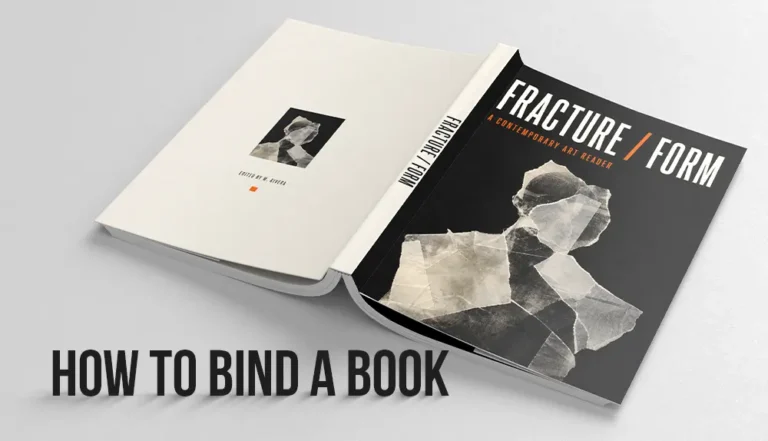
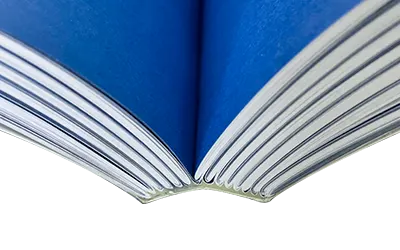
The interior pages are assembled in groups called signatures, which are sewn together and then glued into a wrap-around cover of heavier art paper or lightweight card stock. This binding is durable and can be opened flat. It offers a beautiful, professionally finished result at a more accessible price point — making it a strong choice for art books where budget is a key consideration or where a lighter, more portable format is preferred.
Sewn Hardcover
The interior signatures are sewn together and then glued and cased into a rigid hardcover — the strongest and most prestigious binding available. This binding is the obvious choice when you want to create a lasting, collectible edition. The hardcover can be enhanced with dust jackets, slipcases, marker ribbons, ornamental headbands, painted or gilded edges, foil stamping, embossing, and soft-touch lamination.
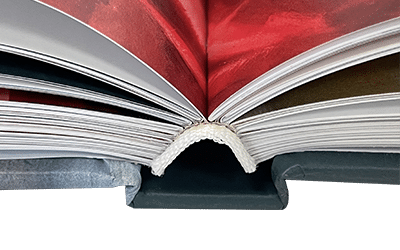
For the most ambitious art books — those intended as a definitive record of an artist’s career, a gallery retrospective, or a luxury gift edition — the sewn hardcover with dust jacket and slipcase is the gold standard.
What's the best size for an art book?
The optimal size for your art book depends on your work and your target audience. Consider how your book will be displayed and used, as well as the preferences of your potential buyers. Your finest pieces should be displayed in ample format so your artwork has the greatest potential to be appreciated.
Like all our custom book printing, art books can be produced at almost any trim size: we print most on superior art paper, wrapped in hardcovers, and ranging from 8.5″ x 11″ to 9″ x 12″ or larger, though specific dimensions will vary depending on your artwork, the number of images, the amount of text, and your layout choices. For machine-bound books, we can print up to 320mm x 420mm. For hand-bound books, the maximum is 350mm x 420mm.
-
Size tip
The most economical standard size is 8.5" x 11". If your artwork is landscape-oriented or very large-scale, an 11" x 11" or custom square format may serve it better — contact us to discuss your specific needs.
How long does art book printing take?
Planning your print timeline is important, especially if you have a launch date, exhibition opening, or Kickstarter fulfillment deadline. Here are our standard production times:
- Hardcover art books: approximately 2–3 weeks from approved print-ready files.
- Softcover (sewn perfect bound) art books: approximately 5–10 business days from approved print-ready files.
- Hand-bound books: typically 1–2 weeks longer than machine-bound books of equivalent specification.
- Shipping time: is additional to production time and depends on your destination and chosen shipping method (sea freight or air freight). Ask us for a shipping estimate when you request your quote.
If you have a specific deadline, please let us know when you get in touch and we will do our best to accommodate your schedule.
Frequently Asked Questions
What resolution do I need for art book images?
All images should be 300 PPI at their final print size. This is sufficient to take full advantage of our 200–220 LPI offset printing capability. Submitting files at higher resolutions will not improve print quality and will only increase file size.
What is the minimum print run for an art book at QinPrinting?
Our minimum print run is typically 100 copies for offset printing. For smaller quantities, digital printing options are available, though with more limited paper and finish options. Contact us to discuss the best approach for your specific project and budget.
Can I print an art book with full-bleed images on every page?
Yes. Full-bleed printing — where images extend to the very edge of the page — is a standard feature of our art book printing service. Simply ensure your files include the correct 3mm bleed on all sides and that no important content falls within the 8mm safe zone. Our pre-press team will check your files before production begins.
Can I use AI-generated images in my art book?
Yes — as long as they meet the technical requirements. AI-generated images are treated exactly like any other image: they should be 300 PPI at final print size and submitted in CMYK. Many AI tools generate images at lower resolutions by default, so you may need to use an AI upscaling tool such as Topaz Gigapixel or Let’s Enhance before your files are print-ready. Note: the ethical and copyright considerations of using AI-generated images in a published art book are your responsibility as the author and publisher.
Do I need an ISBN to print an art book?
You do not need an ISBN to print your art book — we can print it without one. However, if you intend to sell your book through bookstores, online retailers, or have it stocked in libraries, an ISBN is essential. It is also worth getting one simply for the sense of professionalism it lends to your publication. ISBNs are available from Bowker (bowker.com) in the US and Nielsen (nielsenisbnstore.com) in the UK.
Can I see a proof before the full print run?
Yes. We offer proofing services so you can review a physical copy of your art book before we proceed with the full print run. This ensures color, paper, and binding are exactly as you expect. We strongly recommend ordering a proof for any art book project — particularly where accurate color reproduction is critical.
Ready to print your art book?
Curating and collating your work, photographing it ready for digitalization, designing the layout, and printing your finished art book is often as challenging as it is rewarding. At QinPrinting, we take immense pride in our personalized customer service and our collective knowledge of the latest state-of-the-art printing processes and technology.
With 35 years of experience in the offset printing industry, we have helped thousands of artists, self-publishers, and independent creatives realize their vision in print. Your success is our success.
-
Let's talk about your art book project
Get in touch today for a free consultation and no-obligation quote. We can't wait to help you make your art book into a masterpiece.