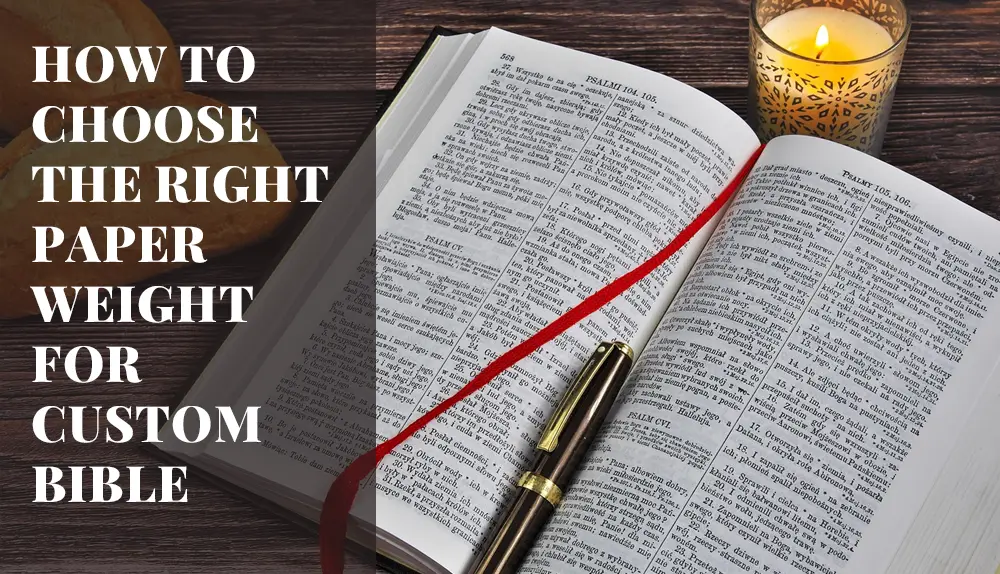
Paper selection is where Bible printing diverges most sharply from standard book production. In a typical book, paper weight is a straightforward decision: heavier paper feels more substantial, lighter paper reduces bulk and cost. In Bible printing, the decision carries a set of technical constraints that don’t apply to most books — because a complete Bible runs 600 to 1,400 pages, and at that page count, even moderate changes in paper weight have a significant effect on spine thickness, carrying weight, and how the finished book feels in the hand.
The challenge is opacity. Thinner paper transmits more light, which means text printed on one side shows through to the other — a problem called show-through or strike-through that makes pages difficult to read. Bible paper needs to be thin enough to keep the spine and weight manageable, but opaque enough that reading on either side of the page is comfortable. Managing this trade-off is the central technical decision in Bible paper selection.
This guide covers everything you need to know to make that decision for your project, based on the actual paper grades and press capabilities we work with at QinPrinting.
Our Presses and the Paper Grades We Work With
We print on sheet-fed offset presses — individual cut sheets of paper fed through the press one at a time. This is worth explaining clearly because it directly determines which paper grades are available for your Bible project.
Sheet-fed offset delivers sharper ink definition, better color accuracy, and cleaner registration than web (reel-fed) printing, making it the preferred production method for quality Bible work. The minimum paper weight our presses handle reliably is 60 gsm. This is the floor, not a target: papers below 60 gsm — the 30–50 gsm “India paper” range sometimes used for very thin pocket Bibles — require web printing and fall outside our production capabilities.
The three paper weights we work with for Bible printing are 60 gsm, 70 gsm, and 80 gsm uncoated offset paper, in both white and cream (ivory). These three grades cover the full practical range for the Bible formats we produce.
The Bible sizes we work with
Our Bible printing covers a range of formats, generally 5.5″×8.5″ and above. Common formats include 6″×9″, 7″×10″, and 8.5″×11″ (large-print or pulpit Bible). We can also accommodate smaller formats down to 5.5″×8.5″.
Very small pocket Bibles requiring paper below 60 gsm are a web-printing project and are not available from QinPrinting.
The Three Paper Weights: 60, 70, and 80 gsm
Each of the three weights involves a trade-off between opacity, spine thickness, and overall book weight. Here is what each option delivers in practice.
60 gsm — The Lightest Practical Option
At 60 gsm, you are at the thinnest end of what our sheet-fed presses can reliably handle. The paper is noticeably lighter and thinner than standard offset stock, which produces the thinnest spine and lightest book weight for any given page count. At 1,000 pages, 60 gsm produces a spine approximately 6 mm thinner than 70 gsm and 11 mm thinner than 80 gsm.
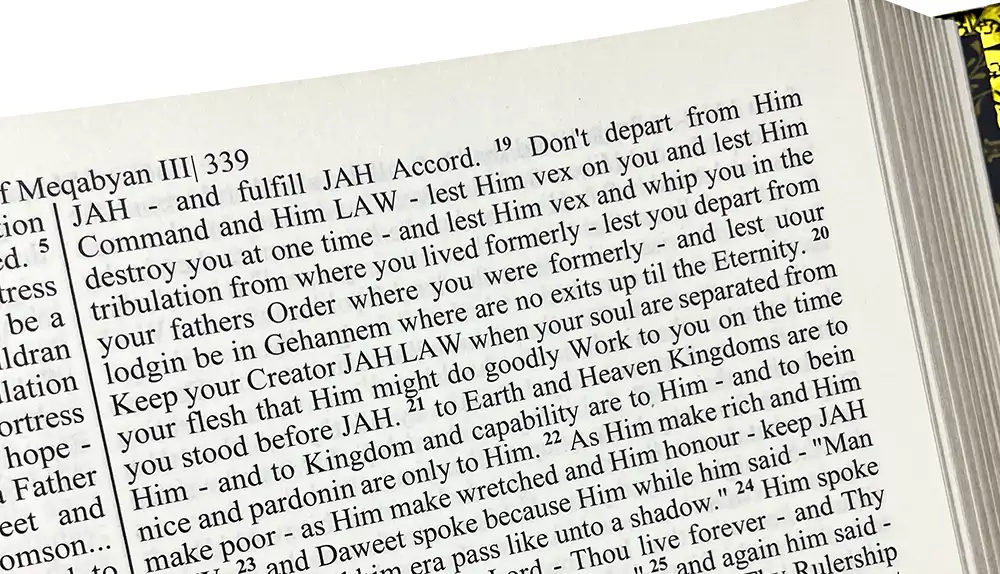
The trade-off at 60 gsm is opacity. Lighter paper is inherently more transparent, and while 60 gsm offset is manufactured to provide reasonable opacity for text content, show-through is more noticeable than at the heavier weights. For layouts with standard text and modest ink coverage — a single-column or two-column Bible text with minimal apparatus — 60 gsm performs acceptably. For Bibles with heavy study apparatus, frequent bold or italic text, maps, charts, or any full-color sections, 60 gsm may show more strike-through than is comfortable, and the heavier weights are worth considering.
For the formats we produce, 60 gsm is best suited for projects where minimizing book weight is a priority — for example, a study Bible intended for daily carrying where the 8.5″×11″ format already makes the book substantial, and shaving weight through lighter paper is a deliberate editorial choice.
60 gsm is best for: Bibles where reducing weight is a priority and the layout is predominantly text with modest ink coverage.
Not recommended for: Bibles with extensive study apparatus, full-color maps or photographs, or heavily typeset reference sections.
70 gsm — The Workhorse
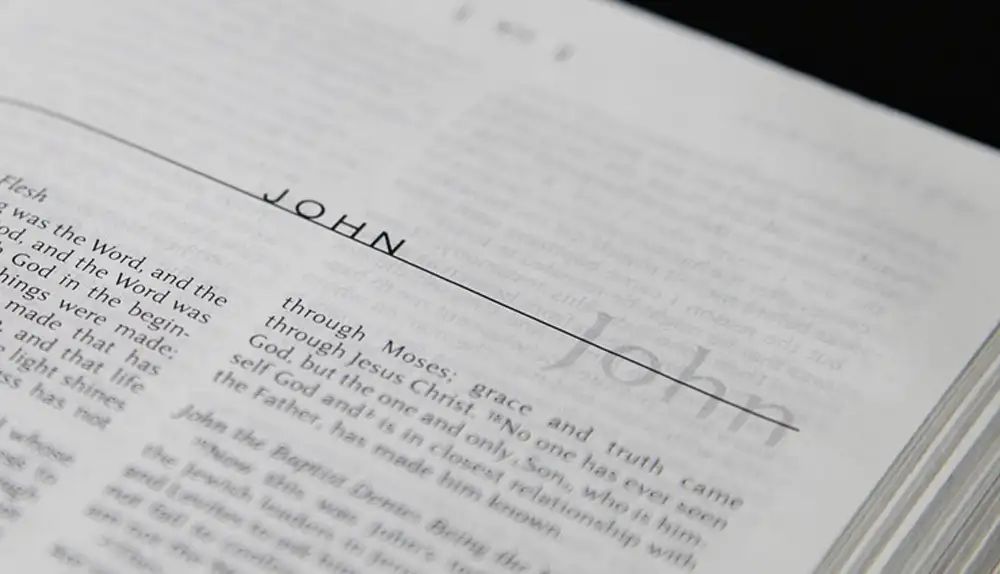
70 gsm is the most widely used paper weight in custom Bible production at QinPrinting. It provides significantly better opacity than 60 gsm — show-through is minimal under normal reading conditions — while still keeping the spine and weight of a complete Bible within a comfortable range. The finished book has more substance in the hand than a 60 gsm edition: the pages turn with a slightly firmer feel, the paper doesn’t feel fragile, and the overall quality impression is meaningfully higher.
70 gsm handles the full range of Bible layouts we print: single-column and two-column text, study apparatus with reference columns and section headings, cross-references, occasional charts and maps, and lightly illustrated content. For most custom Bible projects, without a specific reason pointing toward lighter or heavier paper, 70 gsm is the right default choice. At 1,000 pages, 70 gsm produces a spine approximately 5 mm thinner than 80 gsm.
70 gsm is best for: The majority of custom Bible projects. Reliable opacity, manageable spine and weight, suits all standard Bible layouts.
The right default if you are not sure which weight to choose.
80 gsm — For Premium Editions and Color Content
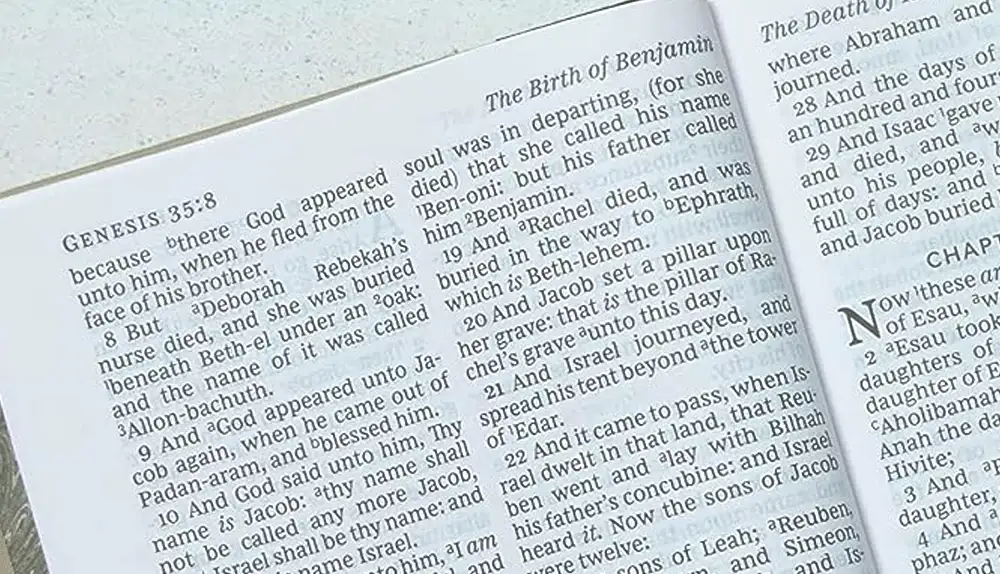
At 80 gsm, opacity is excellent — there is essentially no show-through under normal reading and lighting conditions, even with layouts that include heavy ink coverage, extensive bold text, or full-color sections. The paper has a noticeably more substantial, quality feel in the hand, and the finished book reads as a premium product.
The trade-off is spine thickness and weight. At 80 gsm, a complete Bible at 1,000 pages will produce a spine that is approximately 11 mm thicker than the same content at 60 gsm, and the book will be proportionally heavier. This is worth factoring in at the layout stage — confirm your paper weight before finalizing cover artwork and spine width.
80 gsm is the right choice in three specific situations. First, for Bibles with extensive full-color content — illustrated maps, photographic inserts, color-coded study apparatus — where the better opacity and ink hold of 80 gsm improves color accuracy and prevents color bleed-through. Second, for premium editions where the tactile quality of the paper is part of the product — a leather-bound hardcover Bible with gilded edges deserves paper that matches the quality of the cover and the occasion. Third, for custom Bibles with very heavy typographic apparatus where show-through at 70 gsm is borderline and 80 gsm provides a clear margin of comfort.
80 gsm is best for: Premium editions; Bibles with full-color maps or photographs; heavily typeset study Bibles where opacity is paramount.
Plan for: A thicker and heavier finished book. Confirm paper weight before finalizing cover artwork and spine width.
Paper Weight Comparison at a Glance
| GSM | Opacity | Paperback Spine width (1,000pp)* | Ink coverage | Best for |
|---|---|---|---|---|
| 60 gsm | Good | 38 mm (Thinnest) | Text-only or lightly typeset layouts | Projects where minimizing weight is the priority; straightforward text Bible layouts |
| 70 gsm | Very good | 44 mm (Moderate) | Standard study Bible layouts; occasional charts and maps | Most custom Bible projects — the right default for the majority of projects |
| 80 gsm | Excellent | 49 mm (Thickest) | Full-color sections; heavy study apparatus; dense typesetting | Premium editions; Bibles with illustrated color content; leather-bound pulpit Bibles |
* Based on 1,000 pages. Exact spine width depends on your specific page count and paper caliper — we calculate this precisely for every project before production.
Use our free book spine width calculator to estimate your spine at any page count and paper weight.
Paper Color: White or Cream?
Both white and cream (ivory) offset paper are available across all three weight grades. The choice is functional as well as aesthetic.
Cream / Ivory
Cream paper has been the traditional choice for Bible text printing for a straightforward reason: it reduces eye strain during extended reading. Pure white paper reflects a higher proportion of light, which creates more contrast between the page and the ink — sharper to look at, but more fatiguing over long reading sessions. The slightly warmer tone of cream paper softens this contrast to a level that most readers find more comfortable for reading of an hour or more.
Cream is the right choice for text-only and study Bible editions — translation text, commentary, cross-references, and other content that readers will engage with over extended periods. It is the traditional expectation for most Bible editions and pairs well with gold foil stamping on the cover.
White
White paper is the correct choice when the Bible includes full-color sections — maps, photographs, illustrated timelines, color-coded charts, or any content where color accuracy matters. Color printing on cream paper has a warm cast that shifts colors slightly from their intended values: a blue ocean on a map will appear slightly greener on cream than on white. For editions where text content and color sections are bound together, a practical approach is to use cream paper for the main text body and specify white paper for separately bound color insert sections.
How Paper Weight Interacts with Other Decisions
Spine Thickness and Cover Design
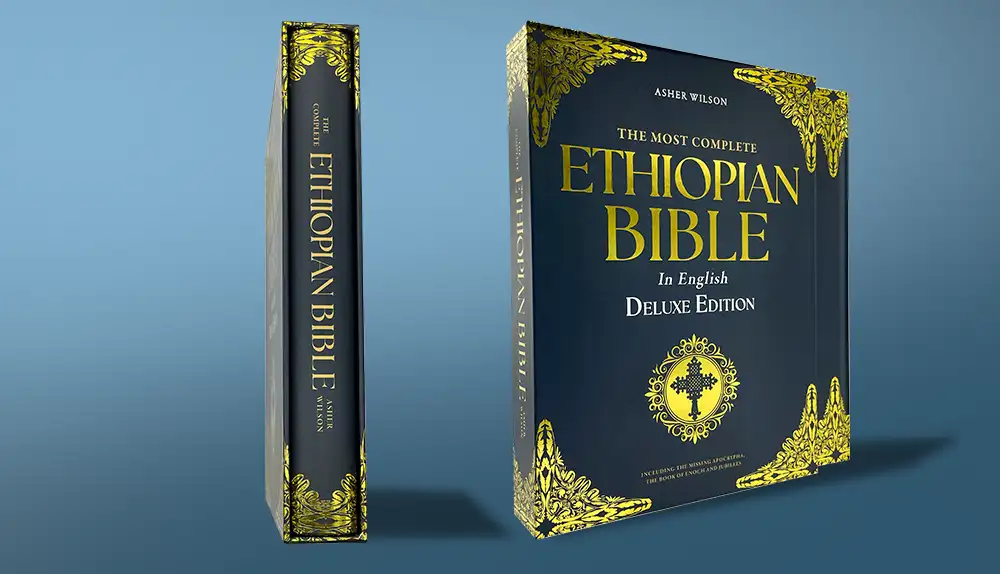
Spine thickness is calculated from two variables: page count and paper caliper (the measured thickness of a single sheet). A heavier paper has a higher caliper, which means a thicker spine at any given page count. For a Bible at 1,000 pages: 60 gsm produces a spine of approximately 38 mm; 70 gsm approximately 44 mm; 80 gsm approximately 49 mm. These differences are enough to meaningfully affect cover design. A spine title sized for 70 gsm may be too large or too small at 80 gsm. Confirm your paper weight before finalizing cover artwork.
Binding
Within the 60–80 gsm range, all three paper weights are fully compatible with Smyth-sewn case binding at Bible page counts. Smyth sewing — where signatures are sewn together with thread before casing in — is the correct binding method for Bibles, regardless of paper weight. It produces a binding that will flex open and close hundreds of times without spine failure, which is the durability standard a Bible needs. Lighter paper (60 gsm) produces a more flexible page block that opens with slightly less resistance; heavier paper (80 gsm) has more body and holds a flat-open position more firmly once the binding is broken in.
Gilded Edges
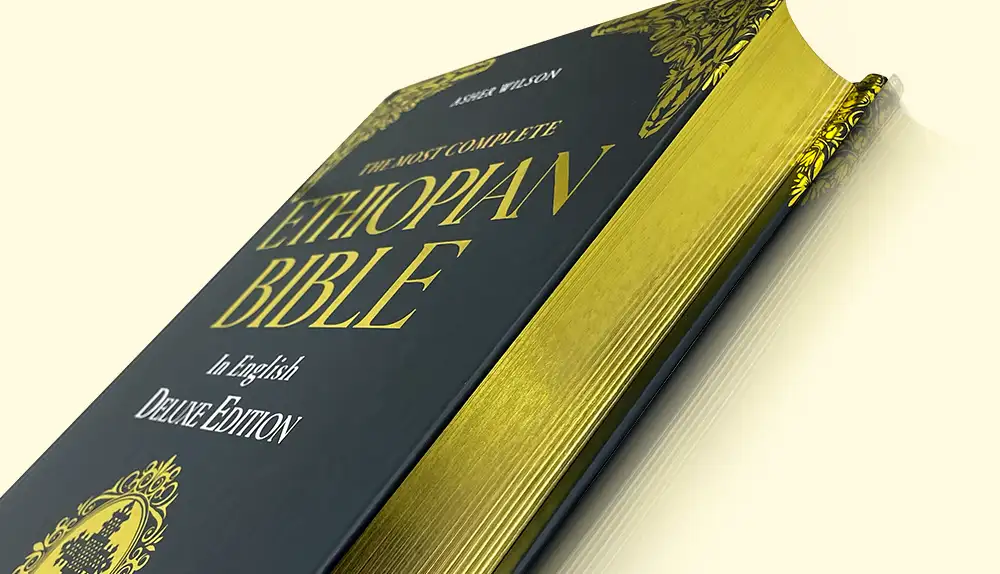
80 gsm paper is the recommended weight for Bibles with gilded or painted page edges. The heavier, stiffer page block provides a more stable surface during the gilding process, producing cleaner and more even edge coverage. At 60 and 70 gsm, gilded edges are achievable but require more careful handling during production. For leather-bound pulpit Bibles with gold-gilded edges — our most common premium Bible format — 80 gsm is the preferred specification.
Quick Decision Guide
Use this to narrow your paper choice before discussing with us.
| Your situation | Recommended weight |
|---|---|
| Bible with standard text layout, no color content, and reducing weight is a priority | 60 gsm |
| Bible with standard or study layout — the most common scenario | 70 gsm |
| Bible with full-color maps or photographs | 70 or 80 gsm — confirm with us based on color density |
| Hardcover Bible with gilded edges — premium specification | 80 gsm |
| Study Bible with very heavy apparatus, dense typesetting, or frequent bold/italic | 80 gsm |
| Very thin pocket Bible at 40–50 gsm India paper | Not available from QinPrinting — requires web printing |
Frequently Asked Questions
Q: What is the thinnest paper you can use for Bible printing?
The minimum paper weight we work with on our sheet-fed offset presses is 60 gsm. Papers thinner than 60 gsm — the 30–50 gsm range sometimes called India paper or Bible paper — require web (reel-fed) printing, which is used for very high-volume pocket Bible production in the hundreds of thousands of copies. For the custom Bibles we produce (5.5″×8.5″ and above), 60 gsm is the lightest practical option available.
Q: How much does paper weight affect spine thickness?
For a Bible at 1,000 pages, the spine width is approximately 38 mm at 60 gsm, 44 mm at 70 gsm, and 49 mm at 80 gsm — a difference of 11 mm between the lightest and heaviest option. These are meaningful differences for cover design and for how the finished book feels and sits on a shelf. We calculate the exact spine width for your page count and paper grade at the quoting stage — confirm your paper choice before finalizing cover artwork.
Q: Which paper weight is most commonly used for custom Bible printing?
70 gsm is the most common choice across our custom Bible projects. It provides reliable opacity with minimal show-through, handles standard and study Bible layouts well, and keeps the finished book’s weight within a manageable range. 80 gsm is the right upgrade for premium editions or projects with extensive full-color content. 60 gsm is used when minimizing book weight is a specific requirement and the layout is straightforward.
Q: Is cream paper or white paper better for a Bible?
For a text-only edition, cream paper is the traditional and ergonomically better choice — the warmer tone reduces eye strain during long reading sessions and is the expected standard for most Bible editions. For an edition with full-color maps, photographs, or illustrated content, white paper produces more accurate color reproduction. If your Bible includes both text and full-color sections, a practical approach is cream for the main text body and white paper for separately bound color insert sections.
Q: Can I use coated paper for a Bible?
Coated paper — the kind used for photography books and magazines — is not suitable for the main text body of a Bible. The coating significantly increases the weight and stiffness of the paper, making a high-page-count Bible impractically heavy and difficult to open flat. Coated paper is occasionally used for separately bound illustrated inserts — a full-color map section, for example — that are inserted into or bound alongside the main text body on uncoated paper. If your project requires a separately bound color section, contact us to discuss the options.
Q: Does paper weight affect the Smyth-sewn binding?
Within the 60–80 gsm range we work with, all three paper weights are fully compatible with Smyth-sewn case binding at Bible page counts. The sewn binding handles the structural demands of a 600–1,400 page book reliably at all three weights. Paper weight affects how the finished book opens and feels — lighter paper produces a more flexible block, heavier paper holds its position more firmly — but it does not affect the structural integrity of the Smyth-sewn binding.
Q: Do you print pocket Bibles?
Our sheet-fed offset presses work with paper from 60 gsm and above. Very small pocket Bibles — typically using 30–50 gsm India paper to achieve a very thin book at high page counts — require web printing, which we do not offer. We print Bibles from 5.5″×8.5″ through 8.5″×11″ and above. If you are looking to produce a pocket-format Bible on thin India paper, we would recommend discussing your project with a web printing specialist.
Ready to Discuss Your Bible Printing Project?
Paper selection depends on your page count, format, layout, and finishing specification — all of which interact. We’ll help you work through the right paper weight and color for your specific project and give you a clear quote with exact spine width calculations.