 Book Printing in China
 Custom Card Decks
 Custom Holographic Cards
 Free Wall Calendar Template
 Free Desk Calendar Template
 Folding Cartons
 Rigid Boxes
 Corrugated Boxes
 Custom Board Game
 Custom Card Game
 Kickstarter Print Solutions
Choosing book paper comes down to 4 things: your book’s genre, page count, binding style, and budget. This guide gives you a practical decision table, paper spec comparisons, and specific GSM recommendations — so you can make the right call in minutes, not hours.
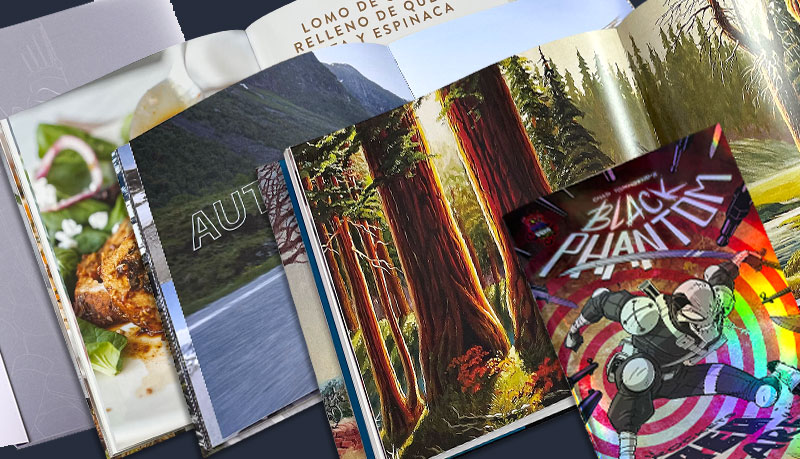
Why Paper Choice Matters More Than You Think
Most first-time publishers focus their energy on cover design and interior layout — and rightly so. But paper is the silent variable that determines how your book looks on a shelf, how it feels in a reader’s hands, how long it lasts, and ultimately, how much it costs to produce and ship. Getting paper right is one of the foundational decisions in any custom book printing project, so it’s worth taking a few minutes to understand your options before you order.
After more than 10 years printing books for publishers, independent authors, and creative studios worldwide, we’ve identified the exact questions you need to answer before placing a single print order. This guide walks you through every one of them — with real numbers, not vague guidance.
The 4 Factors That Drive Every Paper Decision
Before diving into paper types and weights, lock down these four variables for your project:
| Factor | Why It Matters | Key Questions to Answer |
|---|---|---|
| Genre & Content | A photo-heavy art book needs coated paper. A novel needs uncoated. Getting this wrong is the most costly mistake. | Text-only or image-heavy? Full color, B&W, or both? |
| Page Count | Affects spine thickness, paper weight limits, and binding options. | How many pages? Does it need a printable spine? |
| Binding Style | Saddle stitch, perfect bound, and hardcover each have different paper weight requirements. | Paperback, hardcover, saddle stitch, or spiral? |
| Budget | Heavier coated paper costs more per sheet and increases shipping weight. | Is this a premium edition or a budget-friendly run? |
The 3 Main Paper Types for Book Interiors
1. Uncoated Offset Paper — Best for Text-Heavy Books
Uncoated paper (also called “offset” or “woodfree” paper) has a natural, slightly textured surface that absorbs ink directly. It’s comfortable to read for long periods, works perfectly with ballpoint pens and pencils (great for journals, coloring books, and workbooks).
Best for: Novels, academic texts, workbooks, coloring books, journals, manuals.
Not ideal for: Full-color photography, art books, or high-quality image reproduction.
Common GSM range: 80 and 100 gsm (thin, light) → 120 and 140 gsm (heavier, more opaque) → 160–180 gsm (very thick, for short books needing spine width).
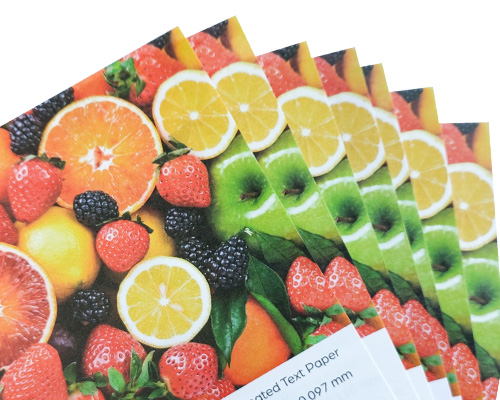
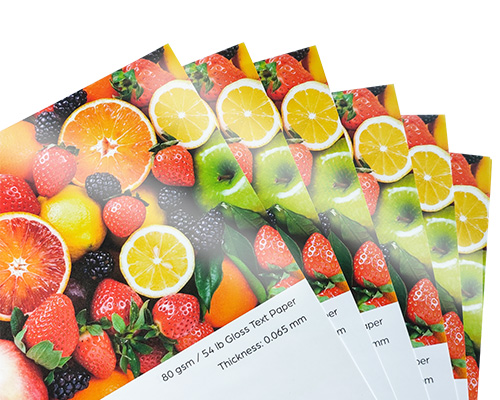
2. Gloss Art Paper — Best for Vivid Color & Photography
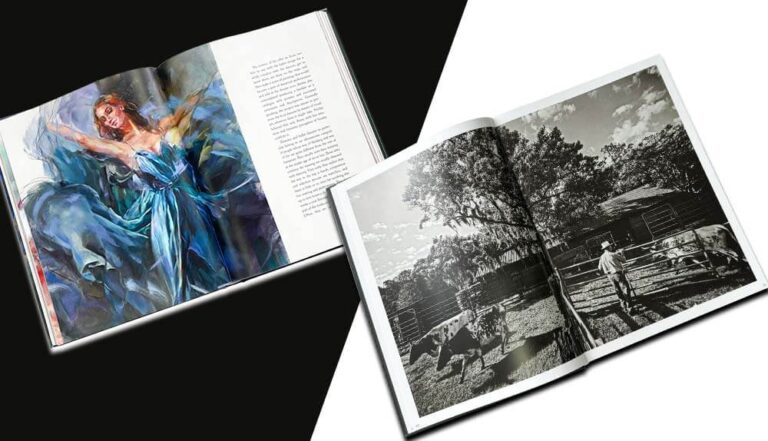
Gloss-coated paper has a smooth, reflective surface that enhances color saturation and produces sharp, bright images. It’s the go-to for coffee table books, children’s illustrated books, catalogs, and any publication where visual impact is the priority.
Best for: Photo books, art books, children’s picture books, graphic novels, and catalogs.
Trade-off: Glare can make extended text-reading tiring. Avoid for novels or long-form text.
Common GSM range: 80 gsm → 105 gsm → 128 gsm → 157 gsm → 200 gsm.
3. Matte Art Paper — The Versatile Middle Ground
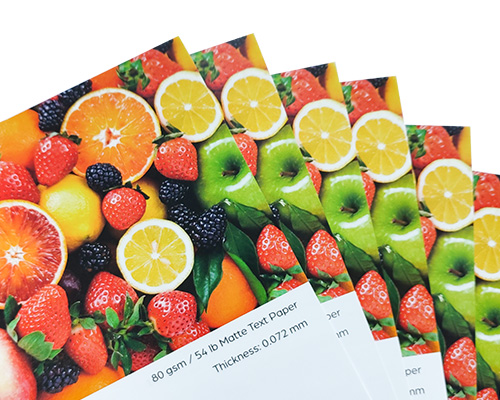
Matte-coated paper gives you excellent image quality without the reflective glare of gloss. It’s increasingly popular for high-quality illustrated books, literary fiction with photography, and upmarket non-fiction.
Best for: Mixed text-and-image books, coffee table books, literary non-fiction, premium paperbacks.
Common GSM range: 80 gsm → 105 gsm → 128 gsm → 157 gsm → 200 gsm.
Quick-Reference: Paper Recommendations by Book Type
Use this table to find a solid starting point based on your book type. Exact specs may vary by size and page count — contact us for a custom recommendation.
| Book Type | Interior Paper | Cover Paper | Notes |
|---|---|---|---|
| Novel / Literary Fiction | 80–100 gsm uncoated | 250 gsm matte or gloss art | Cream-tinted offset reduces eye strain |
| Children's Picture Book | 157–200 gsm gloss or matte art paper | 250–300 gsm gloss art + laminate | Higher gsm = more durable for young readers |
| Coffee Table / Photo Book | 128–157 gsm gloss or matte art paper | 300 gsm art + soft-touch laminate | Always use coated for image quality |
| Comic / Graphic Novel (B&W) | 80–120 gsm uncoated | 250 gsm gloss art | Self-cover saddle stitch also viable |
| Comic / Graphic Novel (Color) | 80–157 gsm gloss or matte art paper | 250 gsm gloss art + gloss laminate | Coated interior needed for color |
| Coloring Book | 100–180 gsm uncoated | 250 gsm matte art | Must lay flat; avoid heavy coated interior |
| Textbook / Academic | 80–100 gsm uncoated | 250–300 gsm matte art | Matte cover reduces library glare |
| Journal / Notebook | 80–120 gsm uncoated | 300 gsm art or kraft paper | Consider write-on texture for interior |
Understanding Paper Weight (GSM): A Practical Guide
GSM stands for grams per square meter — it’s the industry-standard measure of paper thickness and density. Higher GSM = thicker and heavier paper. Here’s a quick reference to put the numbers in context:
- 60–80 gsm uncoated — Standard office/copy paper. Too lightweight for most book interiors.
- 80–100 gsm uncoated — The sweet spot for novel and text-book interiors. Light, easy to read, cost-efficient.
- 105–128 gsm coated— Entry-level coated paper. Good for moderate image use. Common in magazines.
- 120–180 gsm uncoated — Ideal for coloring book interiors. Thick enough to prevent bleed-through.
- 157 gsm coated — Mid-weight coated paper. Excellent image reproduction. Used in art books, catalogs, and upscale illustrated books.
- 200 gsm coated — Heavy coated interior paper. Used for short-page-count books that need spine width (e.g., 24–32 page children’s books).
- 250–300 gsm coated — Cover paper territory. Stiff, protective, and ideal for paperback covers with lamination.
- 350 gsm coated — Premium covers, hardcover casing sheets, board books for very young children.
-
Rule of Thumb: Spine Width and Page Count
If your book has fewer than 24 pages, most papers under 200 gsm will work fine. For 24–32 pages with a printable spine, you'll need at least 157–200 gsm interior paper to achieve adequate spine thickness for perfect binding. For books over 100 pages, lighter paper (80–100 gsm), entry-level and mid-weight paper (105 gsm -157 gsm) is usually better to keep the book manageable in size and weight.
Cover Paper: The First Impression
Your cover does double duty: it protects the book and it sells it. The right cover paper choice depends on your binding style and finish preferences.
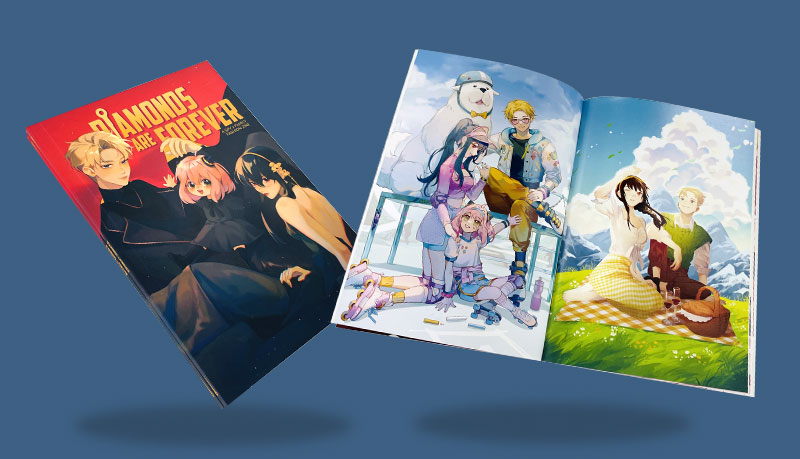
Paperback / Softcover
- Standard choice: 250 gsm gloss or matte art paper with lamination (gloss or matte).
- Large format (over 8.5″ × 11″): upgrade to 300 gsm for better rigidity.
- If inside covers won’t be printed: C1S (coated one side) is great.
- If inside covers are printed in full color: use 2-sided coated art paper.
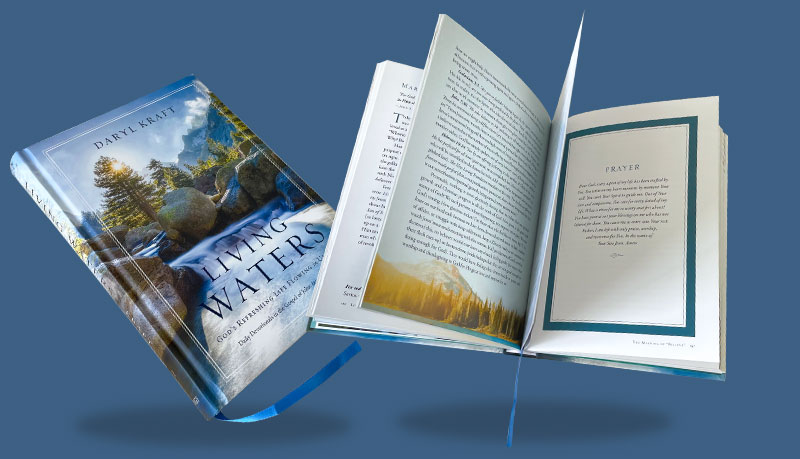
Hardcover
- Case wrapping: 157 gsm coated art paper, laminated, wrapped over 2–3 mm greyboard.
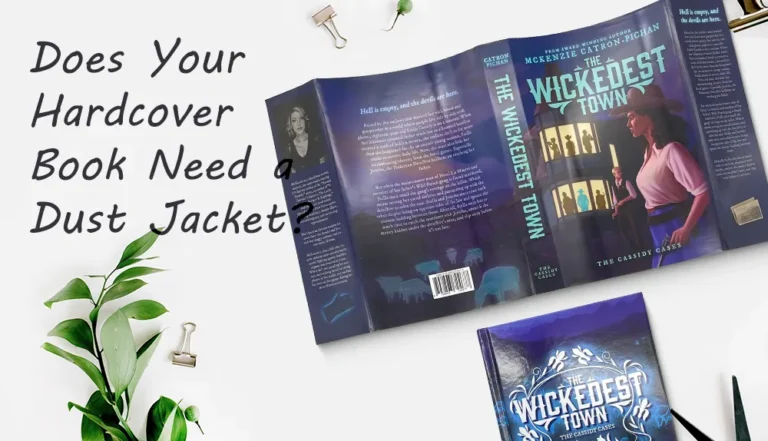
- Dust jacket: 200-250 gsm coated art paper with lamination or special finishes.
- Interior: 80–157 gsm uncoated or coated, depending on content.
- Endpapers: 140-180 gsm uncoated offset — these bind the block to the boards.
How Print Finishing Affects Your Paper Choice
If you’re planning special finishing effects on your cover, your paper choice must be compatible. Here’s what to watch for:
| Finish Type | Compatible Paper | What to Avoid |
|---|---|---|
| Gloss Lamination | 250–350 gsm art paper | Kraft or textured paper (adhesion issues) |
| Matte / Soft-touch Lamination | 250–350 gsm art paper | Very thin covers under 200 gsm |
| Spot UV Varnish | Matte or soft touch laminated surface | Gloss laminates (effect less visible) |
| Foil Stamping | Coated or uncoated paper or cloth or faux leather | Heavily textured uncoated paper |
| Emboss / Deboss | 250 gsm + work best | Thin paper may tear or distort |
Sustainability: FSC-Certified and Eco-Friendly Paper Options
Environmental responsibility is increasingly important to publishers, authors, and readers alike. At QinPrinting, you can choose FSC-certified paper — meaning they come from responsibly managed forests that provide environmental, social, and economic benefits.
If your brand or readership prioritizes sustainability, here are your best options:
- FSC-certified paper — Available across different weight ranges. Minimal visual difference from conventional paper.
- Recycled content papers — These cost more. Ideal for eco-conscious brands.
- Soy-based inks — We use soy-based inks across all offset printing, which are biodegradable and produce vibrant color.
Frequently Asked Questions
What's the best paper for a self-published novel?
For a standard novel, 80–100 gsm uncoated offset paper for the interior and 250 gsm gloss or matte art paper for the cover is the industry standard. Cream-tinted offset (rather than white) is popular for literary fiction as it reduces eye strain during long reading sessions.
Can I use the same paper for the cover and interior?
Technically yes, but it’s not recommended for most books. A self-cover (same paper throughout) is only practical for thin booklets (under 24 pages) with saddle stitch binding. For most books, you’ll want a heavier, coated cover and a lighter interior.
What does 'coated one side' (C1S) mean and when should I use it?
C1S means the paper is coated on one side only. It’s commonly used for paperback covers when the inside of the cover won’t be printed — the coated outside looks great, and the uncoated inside accepts glue binding better. If your cover has printing on the inside (e.g., an inside front cover a solid color), use 2-sided coated paper instead.
How does paper weight affect shipping costs?
Significantly. Heavier paper (157 gsm vs 80 gsm) can increase the weight of a 200-page book by 40–80%. For large print runs or international shipping, this can meaningfully impact your landed cost per unit. Ask us to calculate the weight difference when comparing paper specs — it’s a factor worth building into your budget.
Next Steps: Get Your Paper Samples & Quote
The best way to finalize your paper choice is to see and feel the paper in person. We offer a physical sample book including common paper stocks, finishes — available for just the cost of shipping.
Here’s how to move forward:
- Request a free paper sample book — see and touch the actual papers before you commit.
- Use our instant online quote tool — get a price in minutes based on your specs.
- Talk to our team — email or call us with your project details and we’ll recommend the ideal paper combination for your specific book.
Ready to print?
With more than 10 years of experience and hundreds of satisfied publishers worldwide, QinPrinting makes it easy to get professional results at competitive prices. Request your custom quote today — no obligations, no waiting.