 Book Printing in China
 Custom Card Decks
 Custom Holographic Cards
 Free Wall Calendar Template
 Free Desk Calendar Template
 Folding Cartons
 Rigid Boxes
 Corrugated Boxes
 Custom Board Game
 Custom Card Game
 Kickstarter Print Solutions
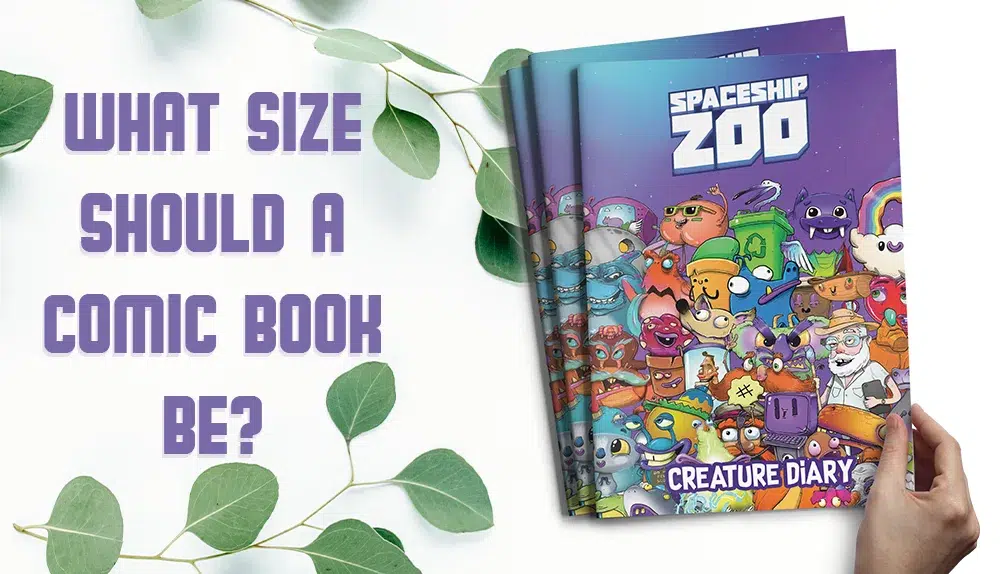
Comic book sizes aren’t as fixed as people assume. The “standard” American comic format is well established, but manga, graphic novels, digest editions, doujinshi, and oversized indie books all follow different conventions — and each one has real implications for how your story reads, how much it costs to print, and what your readers expect to hold in their hands.
This guide covers the sizes used across different comic formats, what drives the cost differences between them, and two finished projects from creators who’ve printed with us.
Which Comic Book Size Fits Your Format?
The right size depends almost entirely on what kind of comic you’re making. Here’s how the main formats break down:
| Format | Common Sizes | Binding | Best For |
|---|---|---|---|
| Standard American Comic | 6.625" x 10.25" | Saddle stitch / Perfect bind | Superhero, indie single issues |
| Manga (Japanese) | 5" x 7.5", 5.75" x 8.25" | Perfect bind / Saddle stitch | Manga, OEL manga, light novels |
| Digest | 5.5" x 8.5" | Perfect bind / Saddle stitch | Compact comics, collected editions |
| Graphic Novel (Trade) | 6" x 9", 6.625" x 10.25" | Perfect bind / Case-bound | Long-form stories, collected arcs |
| Magazine / Oversized | 8.5" x 11", 8" x 10" | Saddle stitch / Perfect bind | Indie zines, art-forward comics |
| Doujinshi | 5.8" x 8.3" , 7.2" x 10.2" | Saddle stitch / Perfect bind | Fan comics, self-published indie |
A few things worth noting:
- Standard American comic size (6.625″ x 10.25″) is the format readers recognize from superhero single issues and most indie comics on the shelf at comic shops. It’s also what most “comic book printing” searches are looking for.
- Manga sizes run small to keep books pocketable and printing costs low. The common range is 5″ x 7.5″ to 5.75″ x 8.25″ — close to the original Japanese tankōbon proportions, and a comfortable one-handed read for manga, OEL titles, and light novels. Manga also has established standard trim sizes, such as Japanese B6, and our manga printing is built to match them.
- Graphic novels often use the same trim as standard comics (6.625″ x 10.25″) or step down to 6″ x 9″ for trade paperback feel. If you’re going hardcover, see our graphic novel printing page for specs.
- Doujinshi follow Japanese self-publishing conventions — B5 is the most common size for manga-style fan comics, while A5 is the usual choice for text-heavy work like fan novels. We print both; see our doujinshi printing page for details.
- Oversized indie formats (8.5″ x 11″) give the artwork more room to breathe and work well for creators who prioritize visual impact over portability. Popular in the zine and art-comics space.
- Digest (5.5″ x 8.5″) is a compact format that reads closer to a paperback novel. Lower print cost per unit, easier to mail, and a good fit for collected editions or lower-budget print runs.
How Does Size Affect the Price?
The price differences between comic book sizes are smaller than you might expect at low print runs — but they compound quickly at higher quantities. The table below compares three common sizes at 60 pages, full color, sewn perfect binding. Size affects cost primarily through paper area and press sheet efficiency; if you want to understand the math in more detail, this post on how trim size affects printing cost is worth reading.
| Print Run | 6.625" x 10.25" | 8.5" x 11" | 5.5" x 8.5" |
|---|---|---|---|
| 500 copies | $821 ($1.64 / copy) | $868 ($1.74 / copy) | $607 ($1.21 / copy) |
| 1,000 copies | $956 ($0.96 / copy) | $1,028 ($1.03 / copy) | $701 ($0.70 / copy) |
| 2,000 copies | $1,385 ($0.69 / copy) | $1,524 ($0.76 / copy) | $988 ($0.49 / copy) |
| 5,000 copies | $2,837 ($0.57 / copy) | $3,190 ($0.64 / copy) | $2,001 ($0.40 / copy) |
Based on 60 pages, full color, sewn perfect binding. Get an instant quote for your project →
A few patterns worth noting:
- The standard 6.625″ x 10.25″ and the oversized 8.5″ x 11″ are priced closer together than most people expect — the difference at 500 copies is under $50.
- Digest size (5.5″ x 8.5″) is noticeably cheaper across all print runs. At 5,000 copies, it’s about $800 less than standard comic size for the same page count.
- The unit cost drop between 500 and 1,000 copies is significant for all three sizes. If you’re on the fence about quantity, running 1,000 instead of 500 often makes more financial sense.
What Do Real Comic Books Look Like?
Two projects from creators who’ve printed with us, showing how size choices play out in practice.
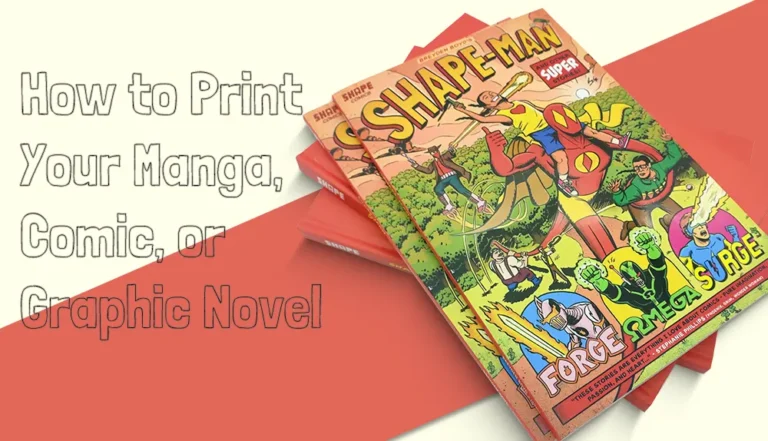
Shape-Man — Breyden Boyd
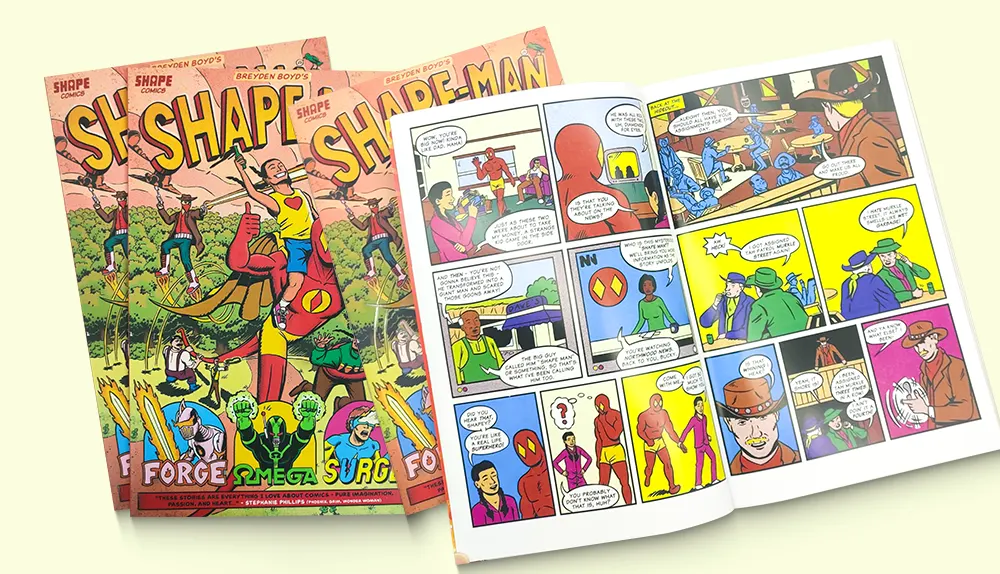
Size: 6.625″ x 10.25″ | Pages: 124
Shape-Man keeps the standard 6.625″ x 10.25″ comic trim, but at 124 pages it shows how far that one size stretches. The same dimensions that suit a short single issue also carry a full-length graphic novel — it still reads and shelves like a comic rather than dropping to a 6″ x 9″ trade paperback. What the higher page count changes isn’t the size but the binding: too thick for saddle stitch, so it runs as a perfect-bound paperback or a case-bound hardcover. Same comic size, much longer story.
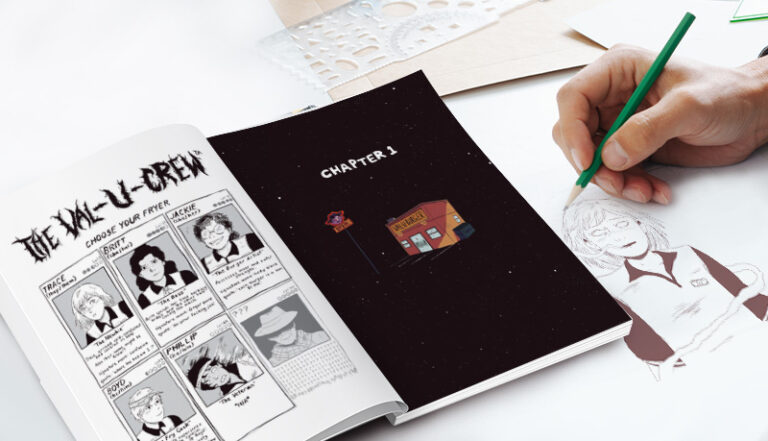
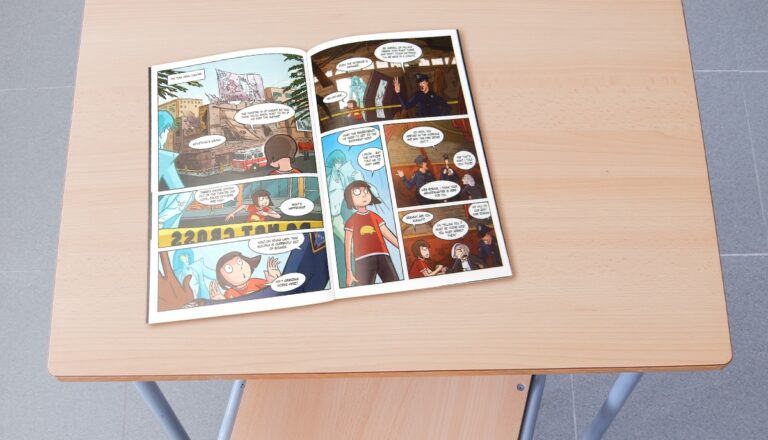
Wei Station Diner — Snack King Comics
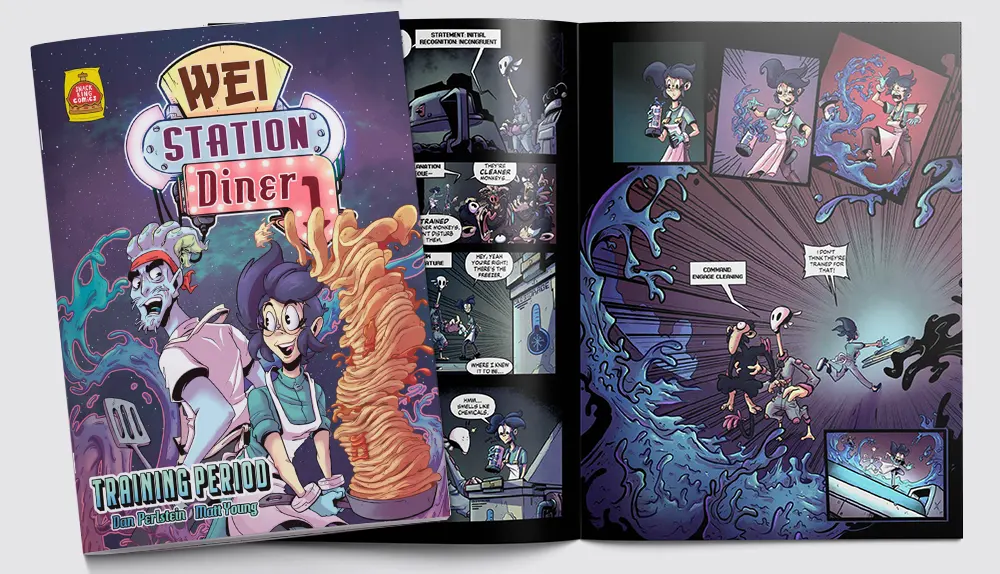
Size: 8.5″ x 11″ | Pages: 44 | Binding: Saddle stitch
8.5″ x 11″ is a deliberate choice — it’s bigger than the standard comic size, which means it stands out on a table at a convention or in a stack of zines. For Wei Station Diner, the oversized format gives the artwork more room and reinforces the indie, art-forward identity of the book. It’s also a common size in the self-publishing and small-press comic scene, where creators often prioritize visual presence over shelf compatibility. The tradeoff is that it doesn’t fit standard comic bags and boards and takes a little more storage space — worth knowing before you commit to a size.
Of Contracts and Promises
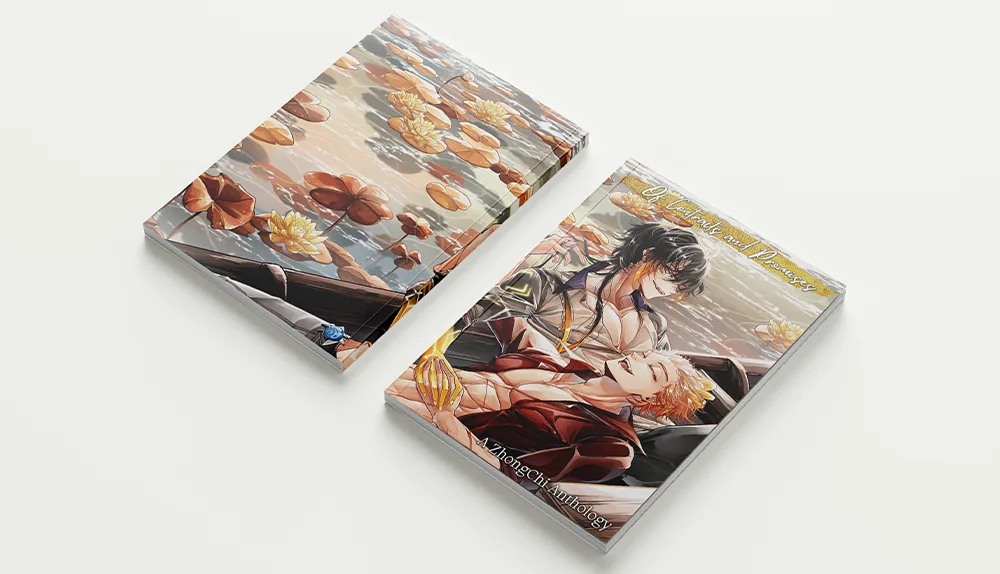
Size: 140 x 216 mm (5.5″ x 8.5″) | Pages: 156 | Binding: Sewn perfect binding
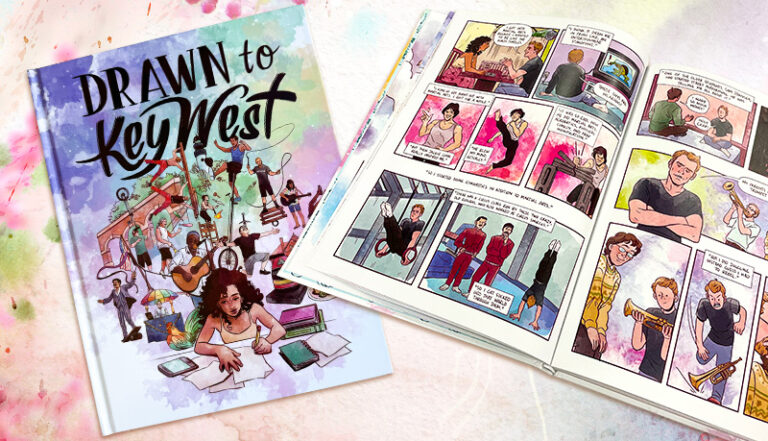
At 140 x 216 mm, the compact proportions of contracts and promises follow the compact proportions common to Japanese doujinshi — close to A5, small enough to hold comfortably and easy to carry home from an event. The 156-page interior is far past saddle-stitch range, so sewn perfect binding does the work: it holds a thick text block securely and opens reliably across a long read.
Ready to Print?
Use our comic book printing quote tool to price up your project in minutes, or contact us if you’d like to talk through your spec first.
Not sure whether saddle stitch or perfect binding is right for your page count? Or whether to go softcover or hardcover? Our sample pack lets you feel the difference before you decide.