 Book Printing in China
 Custom Card Decks
 Custom Holographic Cards
 Free Wall Calendar Template
 Free Desk Calendar Template
 Folding Cartons
 Rigid Boxes
 Corrugated Boxes
 Custom Board Game
 Custom Card Game
 Kickstarter Print Solutions
Quick Summary (as of May 2026)
- Printed books are exempt from the current Section 122 tariff as “informational materials.” A 7.5% Section 301 duty still applies to most non-children’s books.
- Children’s picture books and board books (HTS 4903) are fully duty-free—no Section 301, no Section 122.
- Bibles and religious books are also fully duty-free—exempt from all current tariffs including Section 301 and Section 122.
- Board games and card games face the 10% Section 122 surcharge (valid through July 24, 2026) plus any applicable pre-existing duties.
- Custom packaging is assessed based on the product it contains and its own HTS classification. Packaging shipped with exempt books may share the exemption; packaging shipped alone may not.
- Trade policy is changing rapidly. The Section 122 surcharge expires July 24, 2026, and new Section 301 investigations are ongoing. We update this page as conditions change.
If you’re printing books, card decks, board games, or custom packaging in China for the US market, tariffs are probably on your mind. The trade landscape has shifted dramatically over the past year—from the IEEPA-based tariffs of 2025 to the Supreme Court ruling in February 2026, and now the temporary Section 122 surcharge that replaced them.
The good news is that the situation for printed products is more favorable than the headlines suggest. Most books remain exempt from the newest tariffs, and even for product categories that are affected, understanding the rules can help you plan costs accurately and avoid surprises.
In this guide, we break down the current tariff landscape by product category, explain the key HTS classifications, and share practical steps you can take to keep your landed costs under control. This article reflects conditions as of May 2026—we’ll update it as the situation evolves.
A Brief Background: How We Got Here
In 2025, the Trump administration imposed sweeping tariffs on Chinese imports using the International Emergency Economic Powers Act (IEEPA). At their peak in April 2025, tariffs on Chinese goods reached 145% in certain categories, causing major disruption across industries—including printing, publishing, and tabletop gaming.
On February 20, 2026, the US Supreme Court ruled 6–3 that the President’s use of IEEPA to impose broad tariffs was unconstitutional. The Court found that IEEPA—originally designed for responding to foreign security threats—does not authorize the kind of long-term trade restructuring the tariffs represented.
Within hours of the ruling, the White House invoked Section 122 of the Trade Act of 1974 to impose a temporary 10% surcharge on virtually all US imports, effective February 24, 2026. This surcharge is capped at 150 days (expiring July 24, 2026) and cannot exceed 15% under the statute. As of today, the official rate remains 10%, although the administration has announced an intent to raise it to 15%—no formal order has been published.
Importantly, many of the exemptions that existed under IEEPA carried over to Section 122, including the critical “informational materials” exemption that protects printed books. Pre-existing Section 301 tariffs (dating back to 2018) also remain in place and are unaffected by the Supreme Court ruling.
Printed Books
This is the best news in this article. Printed books enjoy a unique level of protection in US trade law, thanks to the “informational materials” exemption—rooted in First Amendment principles and codified in federal law.
Current Tariff Status
Section 122 surcharge (10%): Exempt. Printed books qualify as informational materials under HTS entry 9903.03.11 and are explicitly excluded from the surcharge.
Section 301 tariff (7.5%): Applies to most printed books imported from China. This tariff has been in place since the first Trump administration (2018–2019) and was maintained through the Biden administration. It remains in effect today.
Children’s books (HTS 4903): Fully exempt from both Section 122 and Section 301. Children’s picture books, drawing books, coloring books, and board books classified under HTS 4903 carry a 0% tariff rate.
Bibles and religious books (HTS 4901.99.00.40): Fully duty-free. Bibles, testaments, prayer books, and other religious texts carry a base duty rate of 0% and are also exempt from the Section 122 surcharge—both as informational materials and as religious items specifically excluded under HTS 9903.03.04. If you’re printing Bibles or religious books in China for the US market, you pay zero tariff.
Key HTS Codes for Books
| HTS Code | Description | Current Duty |
|---|---|---|
| 4901.10.00 | Printed books, brochures, leaflets (single sheets) | 0% + 7.5% (Section 301) |
| 4901.99.00 | Printed books, brochures, leaflets (other) | 0% + 7.5% (Section 301) |
| 4903.00.00 | Children's picture, drawing, or coloring books | 0% (fully duty-free) |
| 4901.99.00.40 | Bibles, testaments, prayer books, and other religious books | 0% (fully duty-free) |
What this means in practice: If you’re printing a standard book (novel, art book, cookbook, comic book, catalog) in China and importing it to the US, you’ll pay 7.5% duty on the declared value. If you’re printing a children’s picture book, board book, Bible, or other religious text, you pay nothing. None of these categories are subject to the current Section 122 surcharge.
Important Nuances
- Journals and notebooks without printed content may not qualify as “informational materials” and could be subject to the Section 122 surcharge. The exemption applies to publications that convey information, not blank goods.
- Mixed shipments matter. If you ship books together with non-exempt products (such as board game components or packaging), each item may be assessed separately. Clear documentation and accurate HTS classification on every line item are essential.
- Accurate classification reduces risk. Working with an experienced printer who understands HTS codes and customs documentation significantly reduces the chance of incorrect classification—and the unexpected costs that come with it.
Board Games and Card Games
Board games and card games are in a very different position from books. They do not qualify as informational materials and are therefore subject to the current Section 122 surcharge, along with any pre-existing duties.
Current Tariff Status
Section 122 surcharge (10%): Applies. Board games and card games are not exempt.
Base HTS duty rate: Most board games fall under HTS 9504.90.60, which has a base duty rate of 0% (duty-free). However, the Section 122 surcharge is added on top of this base rate.
Children’s games: Games explicitly marketed to children may be classified under HTS 9503 (toys), which carries its own classification rules and may require CPSIA compliance, CPC certification, and third-party safety testing. The tariff treatment for children’s games is different from adult games and requires careful classification.
Key HTS Codes for Games
| HTS Code | Description | Current Duty |
|---|---|---|
| 9504.90.60 | Board games, card games (adult/general) | 0% + 10% (Section 122) |
| 9503.00 | Children's games and toys | Varies + 10% (Section 122) |
What this means in practice: A board game manufactured in China and imported to the US will currently face a 10% surcharge on its declared customs value. For a game with a production cost of $10 per unit, that’s an additional $1 per unit in duties. This is significantly lower than the 145% peak in April 2025, but it’s still a real cost that needs to be factored into your pricing.
Planning Considerations for Game Publishers
- The Section 122 surcharge expires July 24, 2026. If it is not renewed or replaced, the tariff burden on games will drop back to the base rate (0% for most board games under HTS 9504.90.60).
- New Section 301 investigations were initiated in March 2026. These could result in new product-specific tariffs on Chinese goods, including games. No new rates have been announced yet, but publishers should monitor developments.
- Invoice splitting: Most manufacturers can separate their invoices into services (design, prepress, project management) and goods (the physical products). Only the goods portion is subject to tariffs. This is a legitimate and common practice that can reduce the tariff burden on each shipment.
- Timing your shipments around the July 24 expiration date could make a meaningful difference to your landed costs, depending on how the policy evolves.
Custom Packaging
Packaging tariffs are more nuanced than books or games because the classification depends on what the packaging contains and how it’s being shipped.
General Rules
- Packaging shipped with exempt products: If your custom box is shipped as the retail packaging for printed books (which are exempt), the packaging generally shares the book’s tariff classification. A rigid box containing a book set, for example, would typically be classified under the same HTS heading as the books inside it.
- Packaging shipped separately: If you ship empty boxes, paper bags, or packaging materials on their own—without the products they’re designed to contain—they’ll be classified under their own HTS code (typically Chapter 48 for paper-based products). These may be subject to the 10% Section 122 surcharge.
- Packaging for non-exempt products: If your packaging contains board games, card decks, or other non-exempt products, it’s typically assessed as part of the same shipment and subject to the same tariff rate as the goods inside.
Practical Advice
The key takeaway for packaging is that documentation matters. Make sure your commercial invoices clearly describe the contents, the packaging’s relationship to the product, and the correct HTS classification for each line item. When packaging is shipped with its intended contents, there are rarely issues. Problems arise when packaging is shipped separately and classified incorrectly.
How QinPrinting Helps You Navigate Tariffs
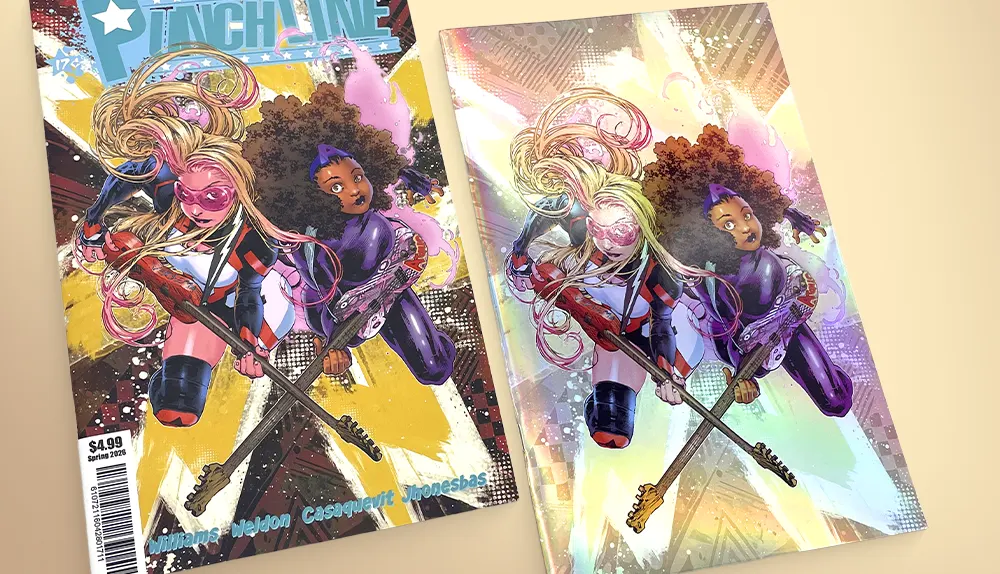
At QinPrinting, we’ve been shipping printed products to the United States for over a decade, through multiple rounds of tariff changes. Here’s how we help our clients manage the process:
- Accurate HTS classification: We work with experienced freight partners to ensure every shipment is classified correctly. For books, this means claiming the informational materials exemption (HTS 9903.03.11) with the proper supporting documentation. For games and other products, we ensure the most favorable applicable classification is used.
- Clear commercial invoices: We prepare detailed invoices that separate products by HTS code, clearly describe each item, and distinguish between goods and services where applicable. This reduces the risk of misclassification at customs.
- Flexible shipping options: We offer sea freight, air freight, express courier, and combined shipping methods. Our team helps you choose the option that balances cost, speed, and duty exposure for your specific situation.
- Invoice structure: Where appropriate, we can separate production invoices into services and goods, so tariffs are applied only to the portion that represents physical products—not to design, prepress, or project management fees.
- Ongoing monitoring: We track tariff changes as they happen and proactively notify our clients when changes affect their product categories. You don’t have to follow trade policy yourself—we do it for you.
What to Watch: Key Dates and Developments
- July 24, 2026: The Section 122 surcharge is set to expire on this date unless Congress extends it or the administration finds an alternative legal authority.
- April 10, 2026: Oral arguments in two lawsuits challenging the Section 122 surcharge are scheduled at the US Court of International Trade. A ruling to suspend duties could come at any time after this hearing.
- Ongoing Section 301 investigations: New investigations initiated in March 2026 could result in product-specific tariffs that replace or supplement the current Section 122 structure. These could take months to conclude.
- IEEPA refunds: The Supreme Court’s ruling means that the approximately $166 billion in IEEPA tariffs collected in 2025 were unconstitutional. US Customs is working on a refund process, though the timeline and mechanics are still being determined.
The Bottom Line
Tariff policy is complex and changing quickly, but the core picture for printed products is more favorable than you might expect from the headlines. Books remain largely protected, children’s books are fully duty-free, and even for categories like board games that are subject to the current surcharge, the rates are far lower than the peaks of 2025.
The most important thing you can do is work with a manufacturer who understands how tariffs apply to your specific products and who can help you document and classify your shipments correctly. Getting the paperwork right is the single biggest factor in avoiding unexpected costs at the border.
If you have questions about how current tariffs affect your project—or if you want help planning your next print run with tariff costs factored in—our team is here to help. Get in touch anytime.
Disclaimer: This article is provided for informational purposes only and does not constitute legal or tax advice. Tariff rates, exemptions, and trade policies are subject to change. For specific guidance on your import situation, consult a licensed customs broker or trade attorney.