 Book Printing in China
 Custom Card Decks
 Custom Holographic Cards
 Free Wall Calendar Template
 Free Desk Calendar Template
 Folding Cartons
 Rigid Boxes
 Corrugated Boxes
 Custom Board Game
 Custom Card Game
 Kickstarter Print Solutions
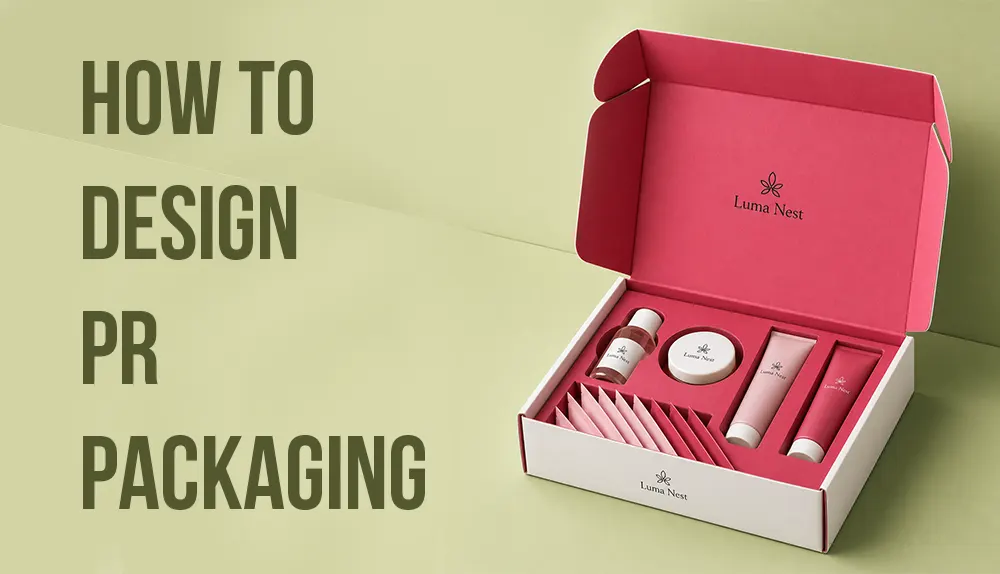
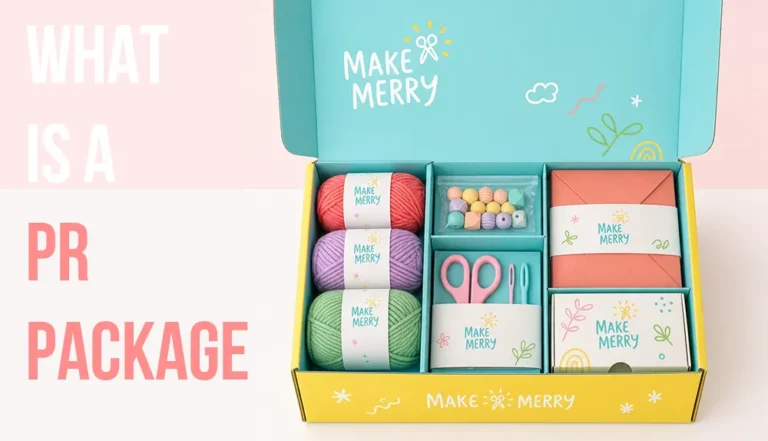
Send the same product in a plain mailer and a beautifully designed PR box to ten creators, and you’ll get very different results. PR packaging — the branded box you send to influencers, press, and VIP customers — is the difference between a product that quietly arrives and one that becomes content. When the packaging itself is part of the story, creators film the open, audiences watch, and your unboxing moment turns into organic reach you didn’t have to buy.
This guide breaks down what makes PR packaging work: the formats that photograph well, the finishes that feel premium on camera, the inserts that guide the unboxing, and a real project breakdown showing how the pieces come together. Whether you’re planning your first creator seeding campaign or upgrading an existing one, you’ll leave knowing how to design a box people actually want to open on camera.
PR Packaging vs. Retail Packaging: One Key Difference
If you’re new to the concept, start with our overview of what a PR package is and what goes inside one. This guide picks up where that leaves off and focuses on the design decisions that make a PR box worth filming.
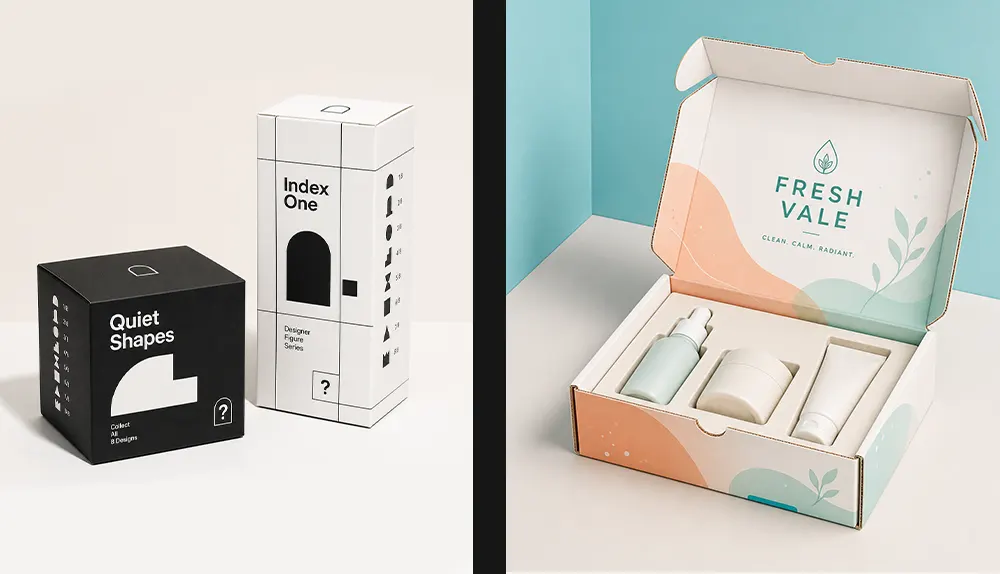
The defining difference is purpose. Retail packaging optimizes for shelf appeal and cost per unit at scale; PR packaging optimizes for emotional impact and shareability across a smaller, hand-picked send list. It’s a marketing asset first and a shipping container second — which is why brands invest in heavier rigid boxes, tactile finishes, and printed inserts they’d never use for a routine order.
Why PR Packaging Drives Influencer Marketing Results
- It turns delivery into content. A striking box gives creators a reason to film the open, generating posts and reach you didn’t pay for directly.
- It signals brand value. Premium materials and finishes communicate quality before the product is even seen — and that perception transfers to the product.
- It creates a guided moment. Inserts, tissue, and reveal sequencing control the order in which creators discover each element, shaping the story they tell.
- It’s reusable brand equity. A well-designed PR box keeps working: creators keep it, re-photograph it, and audiences associate the look with your brand.
How to Design PR Packaging That Gets Opened on Camera
Five design levers separate a forgettable mailer from a PR box creators rush to film.
1. Choose a Format That Photographs Well
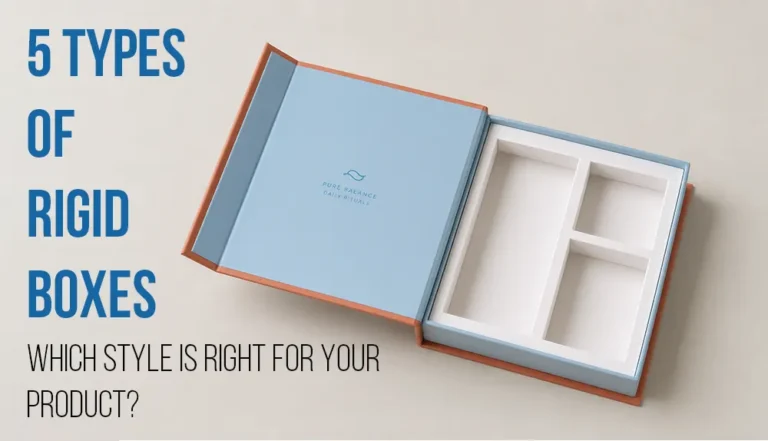
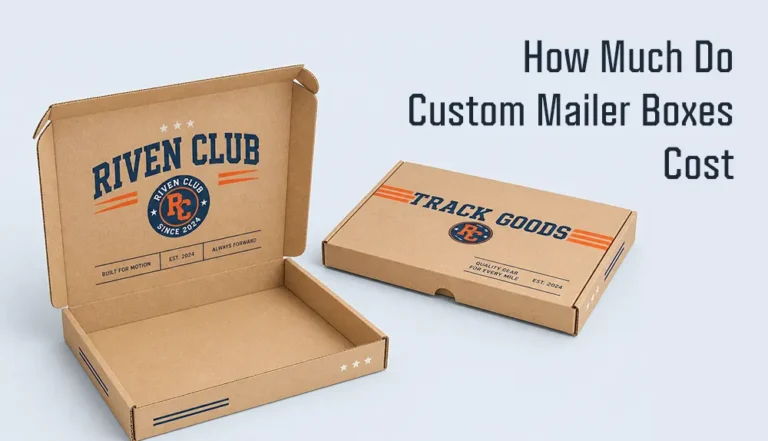
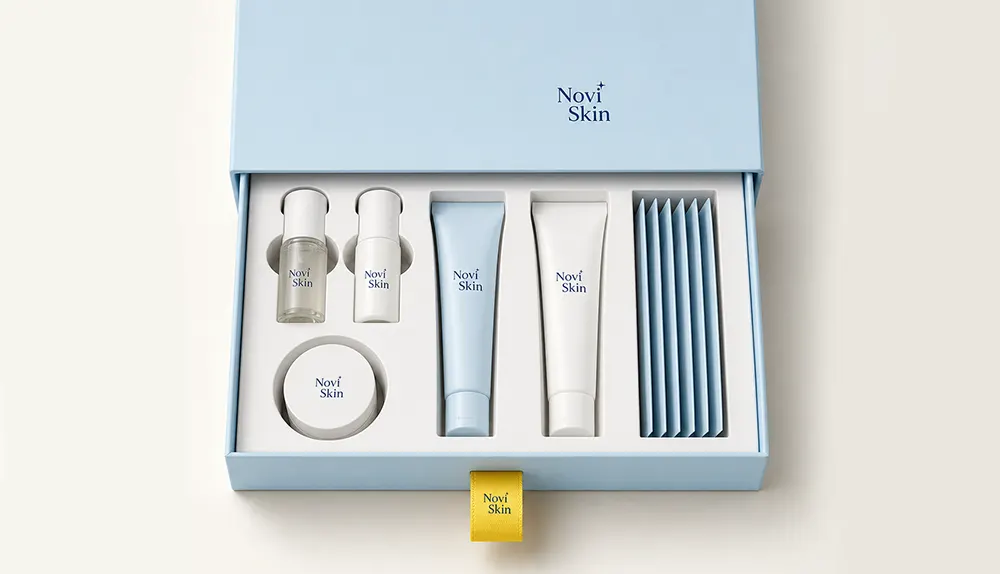
Format sets the tone before anything else. For premium seeding, a rigid box delivers the weight, structure, and clean lines that read as high-value on camera. A telescope (two-piece lid-and-base) rigid box adds a slow, satisfying lid-lift reveal that’s ideal for video. For lighter or higher-volume sends, a branded mailer box offers a more economical option that still prints edge to edge.
2. Use Finishes That Feel Premium on Camera
Texture reads on video. Matte lamination gives a soft, glare-free surface that photographs cleanly under ring lights, while soft-touch lamination adds a velvety, tactile finish people instinctively comment on. Selective accents — foil stamping, spot UV, or embossing — catch light and add a moment of “wow” without overdesigning the whole box.
3. Engineer the Reveal with Inserts
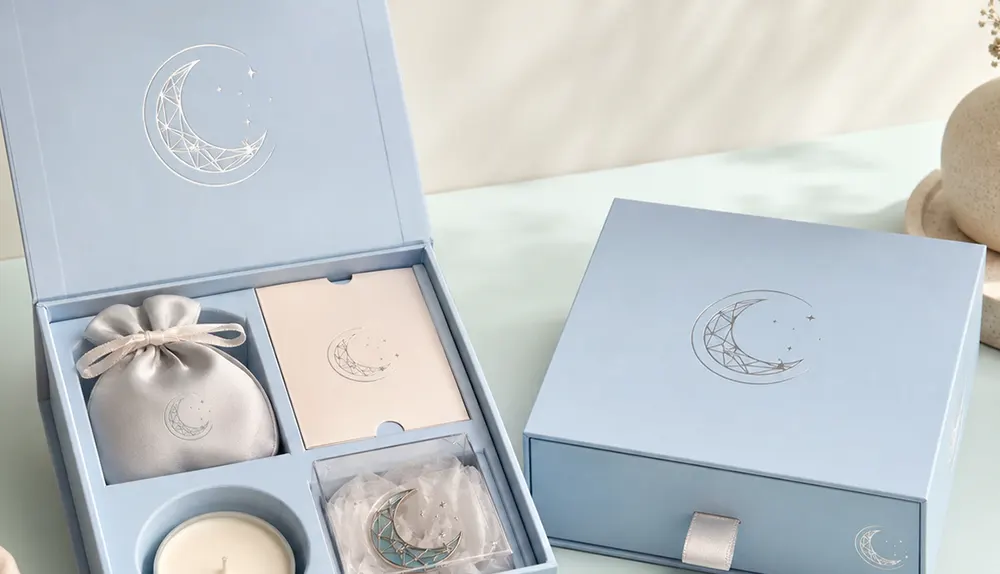
A custom insert (foam, paperboard, or molded pulp) does double duty: it protects the product and stages it, so each item sits in its place and is revealed in the order you intend. Paired with a ribbon pull or fabric tab, the insert turns a flat box into a choreographed unboxing.
4. Add Branded Print Details
Small printed touches deepen the experience: a welcome card, a creator’s name, a QR code linking to content, or a branded interior print revealed when the lid lifts. For end-to-end brand consistency, custom boxes printed with your logo tie the structure, finish, and print into one cohesive identity.
5. Don't Forget Transit Protection
A beautiful PR box that arrives dented kills the moment. Make sure the presentation box ships inside a sturdy corrugated shipper, or specify board and inserts that survive the carrier. The creator should see the box exactly as you designed it.
Project Spotlight: A Mindfulness Coloring-Book Brand
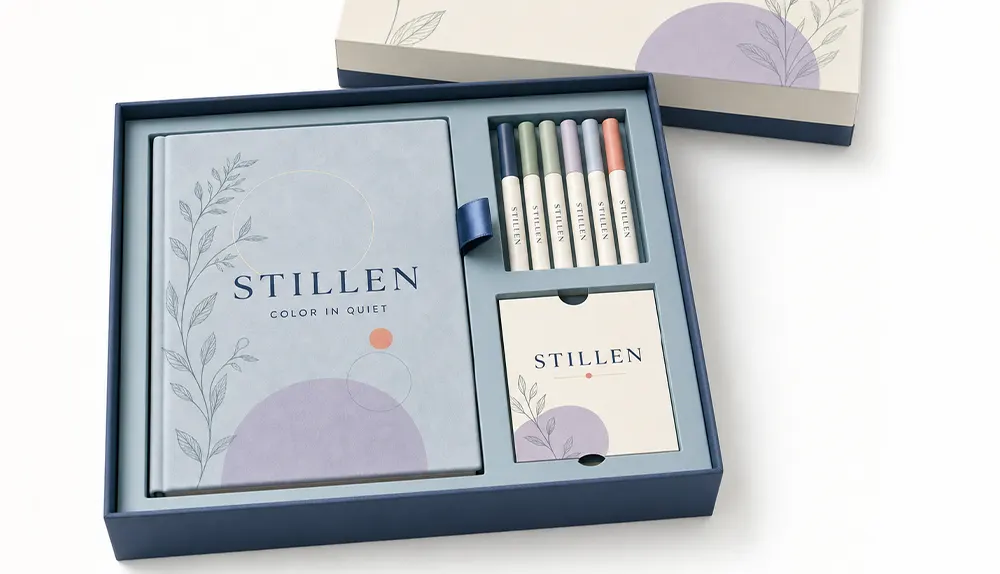
Here’s how these principles came together in a real PR and retail packaging project we produced for a wellness brand built around mindful, screen-free coloring.
The brief. The brand offers calming adult coloring books sold as curated kits, and needed packaging that felt like part of the relaxation ritual — something premium enough to anchor a creator-seeding and gifting campaign across two product tiers.
The structure. We produced a telescope (two-piece) rigid box with a custom insert and a ribbon pull. The telescope lid creates a slow, deliberate reveal, while the fitted insert stages the books, markers, and cards so each element appears in sequence as the box is opened.
The finishes. The outer box was finished with matte lamination for a soft, glare-free surface that photographs cleanly. The book covers used soft-touch lamination for a velvety, tactile feel — a deliberate contrast in texture between opening the box and handling the books inside.
The product detail. Interior pages were produced with perforated lines so finished artwork tears out cleanly for display or gifting — a functional touch that supports the brand’s “create and share” experience.
Two tiers, one system. The packaging system scaled across two kits — a starter set and a larger harmony set — keeping a consistent premium unboxing while accommodating different contents and price points.
The takeaway: the impact came from coordinated decisions — a reveal-friendly rigid box format, contrasting tactile finishes, a staging insert, and product details that reinforced the brand’s story — not from any single “luxury” add-on. The telescope structure was chosen specifically because a two-piece lid lifts slowly and cleanly on camera, where a tuck or flap would crease; the matte-versus-soft-touch contrast was deliberate so the box and the books inside felt different in the hand; and the perforated pages tied the packaging back to the product’s core promise of creating and sharing. Every decision pointed at the same goal: a send worth filming and a product worth keeping.
Finishes Compared: Which Looks Best on Camera
Finish is where a PR box reads as premium — or doesn’t — on video. Here’s how the common options behave under a creator’s lights, and when to reach for each.
| Finish | How it reads on camera | Best for |
|---|---|---|
| Matte lamination | Soft, glare-free surface; photographs cleanly under ring lights | The default outer-box finish for most PR sends |
| Soft-touch lamination | Velvety, tactile feel viewers instinctively comment on | When the in-hand feel is part of the story |
| Gloss lamination | Vivid color but can reflect studio lights as hot spots | Bold, colorful brands shot with controlled lighting |
| Foil stamping | Catches and throws light — a moment of shine on the reveal | Logos and accents, used sparingly |
| Spot UV / emboss | Subtle texture and contrast that rewards a close-up | Tactile detail without changing the whole surface |
PR Packaging Ideas by Budget
| Budget Level | Format & Finish | Reveal & Extras |
|---|---|---|
| Entry | Branded mailer box, full-color print, matte lamination | Tissue wrap, printed thank-you card, sticker seal |
| Mid | Rigid box, matte or soft-touch lamination, one accent finish | Fitted insert, ribbon pull, QR code to content |
| Premium | Telescope rigid box, layered finishes (foil/emboss/spot UV) | Custom insert staging, personalization, multi-step reveal |
PR Box Design Checklist
Before you sign off on a PR box design, run through these quick checks — each maps to one of the levers above:
- Does the format have a clear, filmable reveal? A lift-off lid or slide-out drawer beats a flap that creases on camera.
- Do the finishes read on video, not just in person? Matte to kill glare; a tactile finish where the feel matters.
- Does the insert stage the contents in a deliberate order? The creator should discover items in the sequence you intend.
- Is there a printed brand touch? A welcome card, interior print, or QR code that makes it feel made-for-them.
- Will it survive transit looking perfect? Spec the outer shipper and insert so the box arrives exactly as designed.
Bring Your PR Packaging to Life
The best PR packaging is a coordinated system: the right format, finishes that feel premium on camera, an insert that choreographs the reveal, and print details that tell your brand story. QinPrinting produces custom rigid boxes — including telescope styles — along with mailer boxes, custom boxes with your logo, inserts, ribbons, and premium finishes like matte and soft-touch lamination, foil, and embossing — with manageable minimums and free pre-production samples.
Planning a creator campaign? Contact our team with your concept, product specs, and quantity, and we’ll help you design a PR box built to be opened on camera — and provide a transparent, all-in quote.
Frequently Asked Questions
How do I make my packaging more unboxing-friendly?
Use a format with a clear reveal (like a lift-off lid), add a fitted insert and ribbon to stage the contents, choose tactile finishes such as soft-touch lamination, and include printed touches like a welcome card or QR code. Always ship inside protective transit packaging.
Telescope rigid box or magnetic-closure rigid box for PR?
Both feel premium. A telescope (two-piece lid-and-base) rigid box gives a slow lid-lift reveal that films beautifully; a magnetic-closure box offers a quick, satisfying snap and a flat-opening front. Choose the telescope for a dramatic reveal, the magnetic for repeat handling and a book-like open.
How do I personalize PR packaging at scale?
Keep the box structure and finish consistent across the campaign, then personalize the printed layer: a creator’s name on a welcome card, a tailored note, or a QR code linking to content made for them. This balances a repeatable production run with a one-to-one feel.
What finishes look best on camera for PR boxes?
Matte lamination reduces glare under ring lights and photographs cleanly; soft-touch lamination adds a velvety feel viewers comment on. Use selective foil, spot UV, or embossing as accents that catch light — not across the whole box, which can look busy on video.